
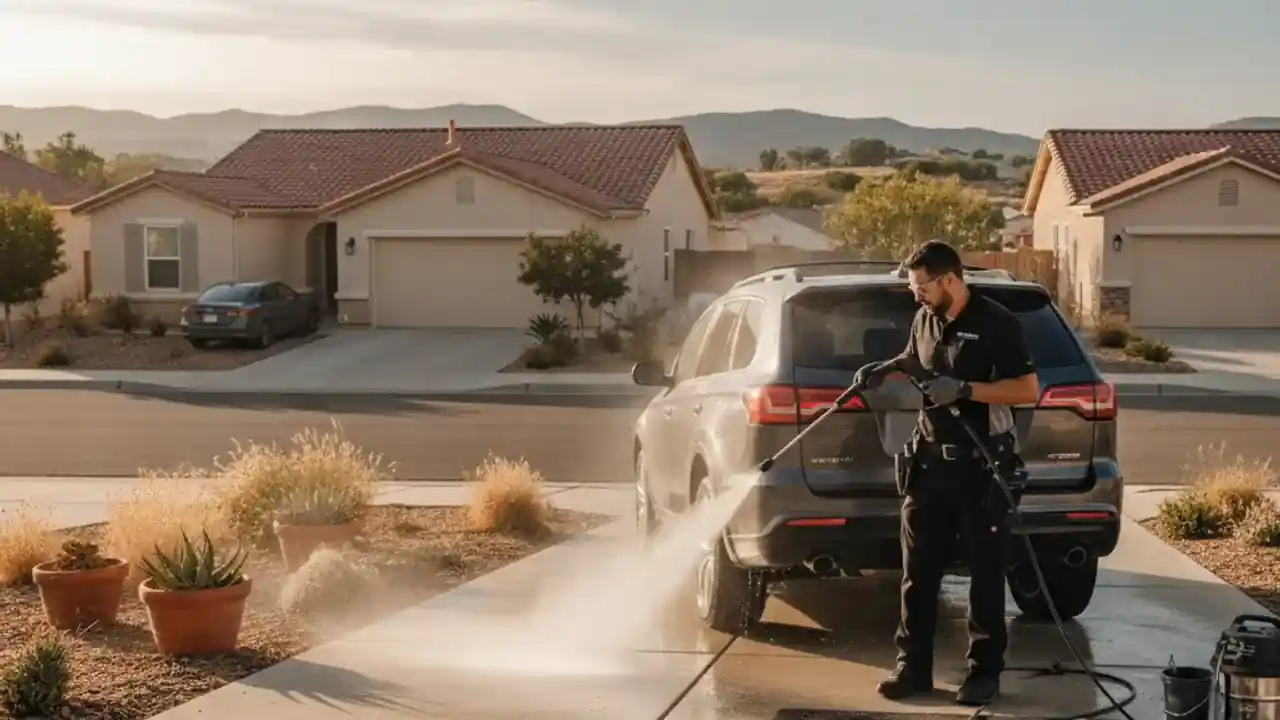
Ceramic Coating After Wildfire Season: Removing Ash and Smoke Residue Safely
TL;DR
- Wildfire ash isn’t just dirt — it’s acidic and abrasive, and it can etch clear coat within hours if left to sit, especially in San Diego’s heat.
- The single biggest mistake: wiping ash off dry. That’s what actually scratches paint, not the ash sitting there.
- Rinse first with low-pressure water, always. Never wipe, brush, or use a dry towel on ash-covered paint.
- East County and backcountry San Diego (El Cajon, Alpine, Ramona, Descanso, Julian) face the highest ash-exposure risk each fire season.
- Ceramic coating doesn’t stop ash from landing on your car, but it makes removal dramatically safer and easier — and protects paint that’s already been exposed.
If you live anywhere east of the I-15 corridor, you already know the sequence: a red-flag warning, a smoke column on the horizon, and then a fine gray dusting on every car parked outside. It happens fast, and by the time most people notice their car is covered in ash, their first instinct is to grab a towel and wipe it off before it “sets in.” That instinct is exactly backwards — and it’s the single most common way San Diego drivers turn a survivable ash exposure into permanent paint damage.
Why Wildfire Ash Is Different from Regular Dust
Ordinary road dust and pollen are mostly inert — annoying, but not chemically aggressive. Wildfire ash is a different problem entirely. It’s made up of partially combusted plant material, mineral particles, and soot, and it carries a mildly acidic pH, especially once it picks up moisture from morning marine layer or dew. Left on a hot hood or roof panel, that acidity can begin etching into clear coat within hours, not days. Add in the abrasive mineral content of the ash itself, and you have a substance that’s actively working against your paint from the moment it lands — well before anyone touches it with a towel.
That’s the part most people miss. The ash sitting there is bad, but manageable if you act correctly. The damage that actually shows up in paint correction consultations almost always traces back to how the ash was removed, not the ash exposure itself.
Do This, Not That: Ash Removal
✅ DO THIS
- Rinse first with a gentle, low-pressure stream of water
- Let the water do the work of floating the ash off the surface
- Move to a foam wash and clean microfiber only after the bulk of the ash is rinsed away
- Park under cover when a fire is active nearby, if possible
❌ NOT THAT
- Never wipe ash off with a dry towel or your hand
- Never use a duster, brush, or chamois before rinsing
- Never run it through an automatic wash with spinning brushes while ash is still present
- Never let it sit through multiple hot afternoons “until you have time”
Every grain of ash dragged across dry paint by a towel acts like sandpaper. Multiply that across a hood, roof, and trunk covered in a visible layer, and a single “quick wipe” can leave hundreds of fine swirl marks — the kind that aren’t obvious until you’re standing in direct sunlight, and by then it’s a paint correction job instead of a five-minute rinse.
Why This Matters More in San Diego’s East County and Backcountry
San Diego’s fire season runs roughly from late spring through the Santa Ana wind events of fall, and it hits inland communities hardest. Areas like El Cajon, Alpine, Ramona, Descanso, and Julian sit closest to the chaparral and backcountry terrain where most local fires start and spread, which means vehicles there see ashfall more often and in heavier concentrations than cars parked closer to the coast. Combine that with East County’s already-harsher climate — more dust, higher UV, bigger temperature swings — and paint out there is dealing with compounding stress most of the year, not just during an active fire.
If you’re in one of these communities, ash exposure isn’t a rare, one-time event to plan around. It’s a recurring seasonal risk, which is exactly why the removal process and the protection strategy both need to be dialed in ahead of time, not figured out during an active smoke event.
If Ash Already Sat Too Long: Decontamination and Correction
If ash has already been sitting on your paint for a while, or if it was wiped dry before anyone knew better, rinsing alone usually isn’t enough to undo the damage. At that point the process looks like this:
- Decontamination wash — a multi-stage wash and clay bar treatment to lift bonded ash and mineral particles out of the clear coat before any polishing begins.
- Paint correction — machine polishing to remove the fine swirl marks and etching left behind by acidic ash contact or improper dry wiping. Our paint correction service covers single-stage touch-ups through multi-step correction depending on how much damage is present.
- Ceramic coating — applied once the paint is corrected, as the forward-looking layer that makes the next ash event dramatically easier to deal with.
That third step is the important one for anyone thinking beyond this fire season. Decontamination and correction fix what already happened. Ceramic coating changes what happens next time.
Coated vs. Uncoated: How Ash Exposure Plays Out Differently
Ceramic coating doesn’t stop ash from landing on your hood — nothing short of a covered garage does that. What it changes is everything that happens after the ash lands, which is where the real risk lives.
On uncoated paint, ash sits in direct contact with the clear coat. Its acidity has nothing between it and the factory finish, and any abrasive particles that get dragged across the surface are grinding directly against paint that has no sacrificial layer to protect it. On a ceramic-coated vehicle, the coating itself is the sacrificial, chemically resistant layer sitting between the ash and your actual paint. The coating’s hydrophobic, slick surface also means ash and soot bond far less aggressively to begin with — a low-pressure rinse floats debris off a coated hood noticeably faster and more completely than it does on bare clear coat, which lowers the temptation to “just wipe it” out of impatience.
In practical terms: a coated car that gets rinsed properly after an ash event usually shows zero lasting marks. An uncoated car that gets the same ash event and the same rinse still carries more risk simply because there’s no protective barrier absorbing the exposure — and if anyone in the household grabs a towel before you get to it, the coated car is far more forgiving of that mistake than bare paint is.
“Did an awesome job — super convenient, will definitely be a repeat customer.” — David H., verified Google review, El Cajon
Dennis Auto Details serves San Diego County’s inland and backcountry communities year-round, with a mobile setup built specifically for East County’s climate demands — the same conditions that make ash exposure a recurring issue during fire season.
Key Takeaways
- Ash is acidic and abrasive — the ash itself does less damage than removing it incorrectly
- Rinse first, always — low-pressure water before any towel, brush, or automatic wash
- East County and backcountry San Diego face the highest recurring exposure risk each fire season
- Ash that sat too long usually needs decontamination and paint correction, not just a wash
- Ceramic coating is the forward-looking protection layer — it doesn’t block ash, but it makes safe removal easier and paint far more forgiving of mistakes
- 400+ Five-Star Reviews from San Diego County customers, including inland and East County communities
Frequently Asked Questions
Is it safe to wash ash off a ceramic coated car myself? Yes, as long as you rinse first with low-pressure water before any contact wash or wiping. The coating’s slick surface makes this easier than on bare paint, but the same “rinse before you touch it” rule still applies — the coating reduces risk, it doesn’t eliminate it.
Can I use my regular garden hose, or do I need a pressure washer? A standard garden hose with a gentle spray setting is enough for most ashfall. The goal is a steady, low-pressure stream that floats particles off — not high pressure, which can drive abrasive particles into the surface at close range.
What if ash already dried onto my paint before I could rinse it? Don’t wipe it dry to “test” the damage. Rinse first regardless of how long it’s been sitting — this softens and lifts what you can, and shows you what actually needs professional decontamination and correction versus what comes off safely on its own.
Does ceramic coating protect against smoke odor getting into the interior, too? Coating is an exterior paint protection product and doesn’t address cabin air or upholstery. For smoke odor that’s made its way into the interior, see our ozone treatment service, which is built specifically for smoke and odor removal at the molecular level.
How soon before fire season should I get ceramic coating applied? Anytime is better than during an active fire event, since the application needs clean, dry conditions and a proper cure time. Late winter or early spring — ahead of San Diego’s typical fire season ramp-up — is the ideal window.
Dealing with ash on your paint right now, or want to get ahead of next fire season with ceramic coating? Book your mobile detail or ceramic coating appointment today or call 858-295-7259. We serve East County, backcountry, and all of San Diego County with certified technicians and 400+ Five-Star Reviews.