
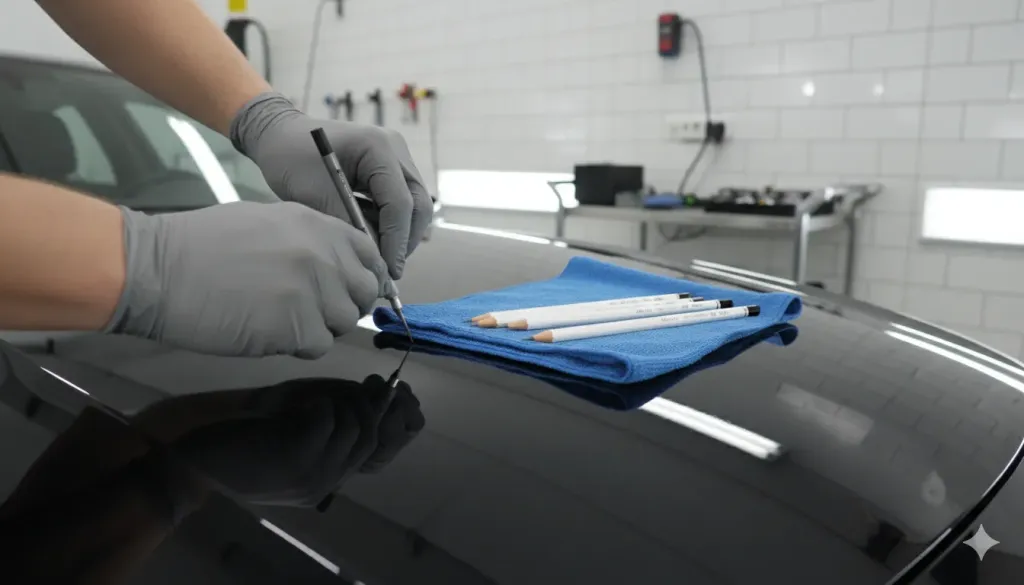
Ceramic Coating Hardness Ratings: Understanding 9H Protection
When shopping for ceramic coating in San Diego, you’ve probably seen “9H hardness” plastered everywhere. But what does this number actually mean for your car’s protection? The ceramic coating industry uses hardness ratings as a primary selling point, yet most car owners don’t understand what they’re buying.
The truth about hardness ratings might surprise you. While 9H sounds impressive, it doesn’t tell the complete protection story. Understanding what these numbers really mean helps you choose the right ceramic coating for your Tesla or other vehicle in San Diego’s unique climate challenges.
TL;DR: Ceramic Coating Hardness Essentials
- 9H measures pencil hardness, not actual scratch resistance
- Higher hardness doesn’t automatically mean better protection
- Flexibility, thickness, and chemistry matter more than hardness alone
- Professional application affects performance more than hardness rating
- San Diego’s climate requires balanced protection, not just hardness
What Does 9H Hardness Actually Mean?
Ceramic coating hardness ratings use the pencil hardness scale, originally developed for measuring coating hardness in industrial applications. This scale ranges from 6B (softest) to 9H (hardest), with 9H representing the hardest pencil that won’t scratch the coating surface.
The test involves dragging pencils of increasing hardness across the coating until one creates a visible scratch. When a 9H pencil doesn’t scratch the coating, it receives a 9H rating. This simple test gives manufacturers a standardized way to compare coating hardness.
According to the American Society for Testing and Materials (ASTM), the pencil hardness test (ASTM D3363) provides a quick, inexpensive method for evaluating coating hardness, but it has limitations for predicting real-world performance.
However, this rating system creates confusion in the automotive world. Many car owners assume 9H ceramic coating offers maximum scratch protection, but pencil hardness doesn’t directly correlate to real-world durability.
Industry Marketing vs. Scientific Reality
The ceramic coating industry heavily markets hardness ratings, but this focus can mislead consumers. A 9H rating doesn’t mean your coating is harder than your car’s clear coat or that it prevents all scratches.
Most automotive clear coats measure between 2H to 4H on the pencil hardness scale. Adding a 9H ceramic coating does create a harder surface, but this hardness comes with trade-offs that marketing materials rarely mention.
Hardness and brittleness often go hand-in-hand. The hardest coatings can be more prone to cracking or chipping under stress, especially during San Diego’s temperature fluctuations between coastal areas like La Jolla and inland regions like Escondido.
Professional installers understand that hardness ratings represent just one performance characteristic. The best ceramic coatings balance hardness with flexibility, adhesion, and thickness to provide comprehensive protection.
Beyond Hardness: What Really Matters for Protection
Several factors contribute more to ceramic coating performance than hardness ratings alone. Understanding these elements helps you evaluate coating options more effectively.
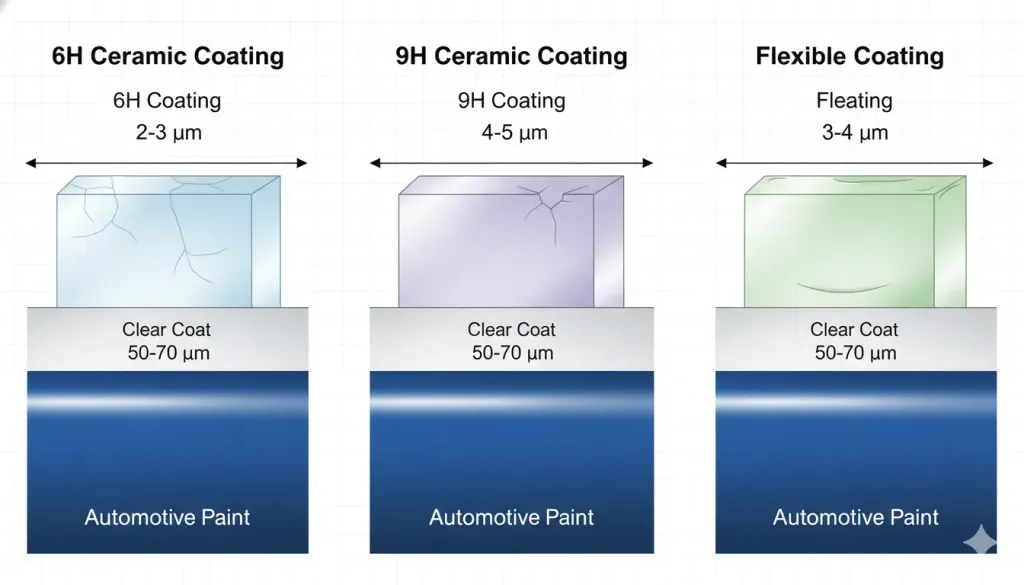
Coating Thickness A thicker coating provides better protection than a thin, hard coating. Professional-grade coatings often apply in multiple layers, building thickness that absorbs impact energy before reaching your paint.
Dennis Auto Details applies multiple coating layers during our professional ceramic coating application process, creating thickness that protects against San Diego’s environmental hazards more effectively than hardness alone.
Chemical Resistance San Diego’s coastal air contains salt spray, while inland areas deal with industrial pollutants. Chemical resistance protects against these contaminants, regardless of hardness rating. Our coastal car protection services address these specific challenges.
Quality ceramic coatings resist acid rain, bird droppings, and salt corrosion through chemical formulation, not just surface hardness.
Flexibility and Adhesion Coatings must flex with paint expansion and contraction during temperature changes. San Diego’s climate ranges from cool coastal mornings to hot inland afternoons, requiring coatings that adapt without cracking.
Poor adhesion leads to coating failure, no matter how hard the surface measures. Professional paint correction services and proper surface preparation ensure optimal bonding between coating and paint.
Real-World Performance vs. Laboratory Testing
Laboratory pencil tests don’t replicate real-world conditions your car faces. Road debris, automatic car washes, and daily wear create different challenges than controlled pencil scratches.
Sand and debris on San Diego roads vary in hardness and shape. Sharp quartz particles can scratch even 9H coatings, while round sand grains might not leave marks on softer coatings.
Temperature affects coating performance significantly. A coating that tests at 9H hardness at room temperature might perform differently under San Diego’s summer heat or during cool coastal mornings.
Research from the International Journal of Adhesion and Adhesives shows that coating performance depends heavily on substrate preparation, environmental conditions, and application technique – factors that laboratory hardness tests don’t measure.
Professional ceramic coating installers consider these real-world factors when selecting products. Experience with local conditions matters more than laboratory test results.
How Professionals Evaluate Coating Options
Experienced installers don’t rely solely on hardness ratings when choosing ceramic coatings. They consider multiple performance factors and client-specific needs.
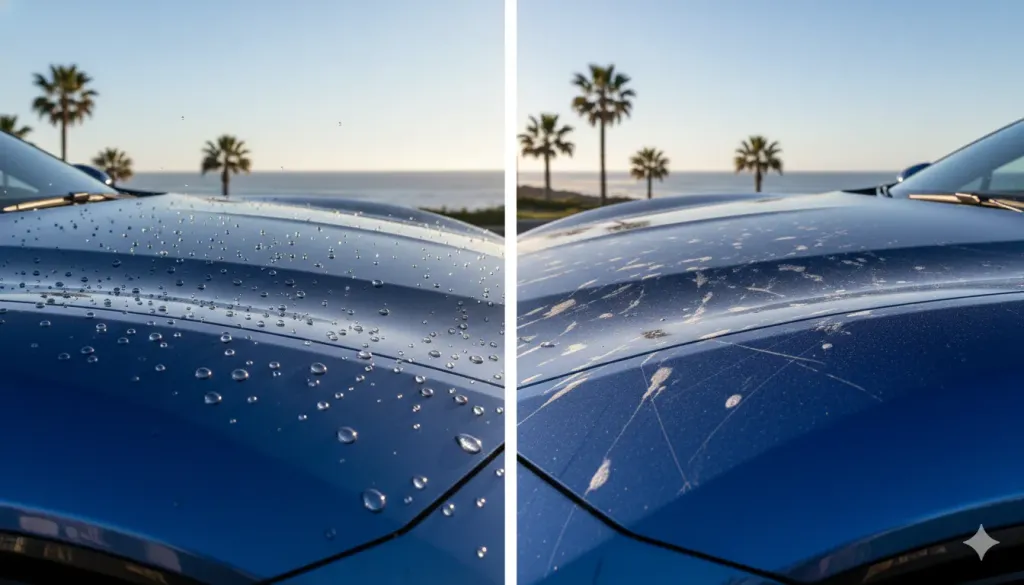
Environmental Matching San Diego’s diverse microclimates require different protection strategies. Coastal customers in Del Mar need salt resistance, while inland clients in Poway prioritize UV protection and dust resistance.
Vehicle Usage Patterns Daily drivers need different protection than weekend show cars. Hardness might matter less for city driving than chemical resistance and easy maintenance. Our luxury car detailing services address specific needs of high-end vehicles.
Long-term Durability The best coatings maintain performance over years, not just initial hardness measurements. Professional installers track how coatings age under local conditions. Our ceramic coating maintenance program helps extend coating life regardless of initial hardness.
Dennis Auto Details selects coatings based on proven performance in San Diego’s climate, not just impressive hardness numbers. Our experience with hundreds of local vehicles guides coating selection.
Dennis Auto Details’ Balanced Protection Approach
We’ve applied ceramic coatings to over 500 vehicles across San Diego County. This experience taught us that balanced protection outperforms maximum hardness every time.
Our 2-year, 5-year, and 9-year ceramic coating packages use different formulations optimized for protection duration rather than peak hardness ratings. Each coating balances hardness, flexibility, and thickness for comprehensive protection.
Customer feedback consistently shows that properly applied coatings with moderate hardness ratings outperform harder coatings that weren’t matched to local conditions or usage patterns.
"Dennis helped me understand that my Tesla needed UV protection more than maximum hardness. The 5-year coating he applied still looks perfect after two years of coastal driving." - Michael L., La Jolla Tesla Owner
We also offer specialized services like BMW ceramic coating and Porsche protection that consider each manufacturer’s specific paint characteristics.
Choosing the Right Hardness for Your Needs
Consider these factors when evaluating ceramic coating hardness options for your San Diego vehicle:
Daily Driving Conditions City driving with frequent parking under trees benefits from chemical resistance more than maximum hardness. Highway driving might prioritize impact resistance. Our mobile car detailing services serve all driving patterns across the county.
Climate Exposure Coastal vehicles in Carlsbad and Encinitas need salt resistance and UV protection. Inland vehicles in Rancho Bernardo and Poway require dust resistance and thermal stability.
Maintenance Preferences Harder coatings can be more difficult to polish or correct if damaged. Consider your willingness to perform regular maintenance or invest in our professional maintenance services.
Professional vs. DIY Application Professional installers can optimize coating performance regardless of hardness rating. DIY products often rely on hardness ratings because proper application is more challenging. Our mobile ceramic coating service brings professional application to your location.
Making an Informed Ceramic Coating Decision
Don’t choose ceramic coating based solely on hardness ratings. Consider the complete protection package and how it matches your specific needs.

Research the installer’s experience with local conditions. San Diego’s unique climate requires understanding that comes from years of local application experience across areas like Scripps Ranch and 4S Ranch.
Ask about coating thickness, chemical resistance, and warranty terms. These factors often indicate coating quality better than hardness ratings alone. The Society of Automotive Engineers (SAE) provides technical standards for automotive coatings that go beyond simple hardness measurements.
Dennis Auto Details provides transparent information about all coating characteristics, not just marketing-friendly hardness numbers. We help you choose coating that provides the best long-term protection for your specific situation, whether you need RV ceramic coating or motorcycle protection.
Key Takeaways
- 9H hardness measures pencil resistance, not complete protection capability
- Real-world performance depends on thickness, chemistry, and application quality
- San Diego’s climate requires balanced protection, not maximum hardness
- Professional experience matters more than laboratory test results
- Choose coating based on your specific needs, not just hardness ratings
- Proper application affects performance more than hardness rating
- Consider chemical resistance and flexibility alongside hardness measurements
Understanding ceramic coating hardness helps you make informed protection decisions. Focus on comprehensive protection rather than impressive numbers, and work with experienced professionals who understand San Diego’s unique requirements.
Ready to learn which ceramic coating hardness is right for your vehicle? Contact Dennis Auto Details at 858-295-7259 for expert consultation, or book your ceramic coating consultation online. We’ll help you choose coating that provides optimal protection for your San Diego driving conditions.


Something went wrong. Please refresh the page and/or try again.