

Does Ceramic Coating Increase Resale Value in San Diego’s Used Car Market?
TL;DR
Ceramic coating rarely shows up as its own line item on a used car listing, but the paint condition it protects absolutely does. Buyers and dealers judge a used car by what they see and feel: shine, depth, scratch-free panels, and photos that hold up in bright San Diego light. A car that has stayed protected for years typically presents better and sells faster than an identical, unprotected car at the same mileage. But timing matters. Coating your car early in ownership pays off. Coating it the week before you list it usually doesn’t, and this guide explains exactly why.
The Question Every Seller Actually Asks
“Will I get my money back on ceramic coating when I sell?”
That’s the real question behind the keyword, and it deserves a straight answer instead of a sales pitch. So here it is: ceramic coating itself is not a listing feature that buyers search for or pay a premium on, the way leather seats or a sunroof might be. What ceramic coating does is protect the thing buyers actually judge a used car on: how the paint looks and feels. If you understand that distinction, the rest of the resale value question gets a lot easier to answer honestly.
What Buyers and Dealers Actually Notice
Walk through a private-party sale or a dealer trade-in evaluation, and nobody asks, “is this ceramic coated?” What they do is:
- Run a hand along a panel to feel for texture, swirl marks, or roughness.
- Look at the paint under direct light for scratches, hazing, or dullness.
- Check for water spots, oxidation, or fading, especially on the hood, roof, and trunk.
- Compare listing photos against the vehicle in person, and notice quickly if the photos flattered the car.
None of that checklist includes “coating brand” or “coating year.” It’s entirely about visible, touchable paint condition. That’s exactly what a properly maintained ceramic coating protects. The coating is invisible in the final result. The paint condition it preserved is not.
Why This Matters More in San Diego’s Market
San Diego runs one of the more competitive used car markets in Southern California, with buyers who have plenty of listings to compare before they call or message a seller. Two structural facts about the region make paint condition an even bigger factor here than in a lot of other markets.
First, San Diego gets strong, near-constant sunlight for most of the year, and listing photos taken outdoors in that light are unforgiving. Swirl marks, dullness, and light scratches that might blend into a cloudier backdrop show up clearly in a bright driveway photo. A car with preserved gloss and depth photographs noticeably better, and better photos generate more inquiries before a buyer ever sees the car in person.

Second, coastal and inland conditions across the county, from salt air near the water to UV and dust further inland, both work against unprotected paint over time. A car that’s spent three years unprotected in these conditions typically shows more fading, more water spotting, and more surface wear than a coated equivalent at the same mileage and age.
The Honest Cost-Versus-Value Math
Here’s where this guide stays honest instead of oversold. Professional ceramic coating in the San Diego market generally runs from several hundred dollars for an entry package up to a few thousand for a premium multi-year system, depending on vehicle size and coating tier. That’s a real cost, and it doesn’t come back to you as a separate line item when you sell.
What does come back is the difference in perceived condition. Independent research on used car pricing consistently shows exterior condition as one of the biggest swing factors in resale value, with a visibly worn exterior able to reduce a car’s price well below a pristine equivalent at the same mileage, before mechanical issues even enter the conversation. A protected, well-maintained exterior is one of the more direct ways to land on the right side of that gap instead of the wrong side of it.
The honest framing: coating is not an investment that shows up itemized in your sale price. It’s an investment that keeps your car in the pristine category instead of the worn category, and that category is what actually moves price.
Coated vs. Uncoated: A Buyer’s-Eye Comparison
Picture two identical vehicles, same year, same mileage, same trim, listed a few miles apart in San Diego.
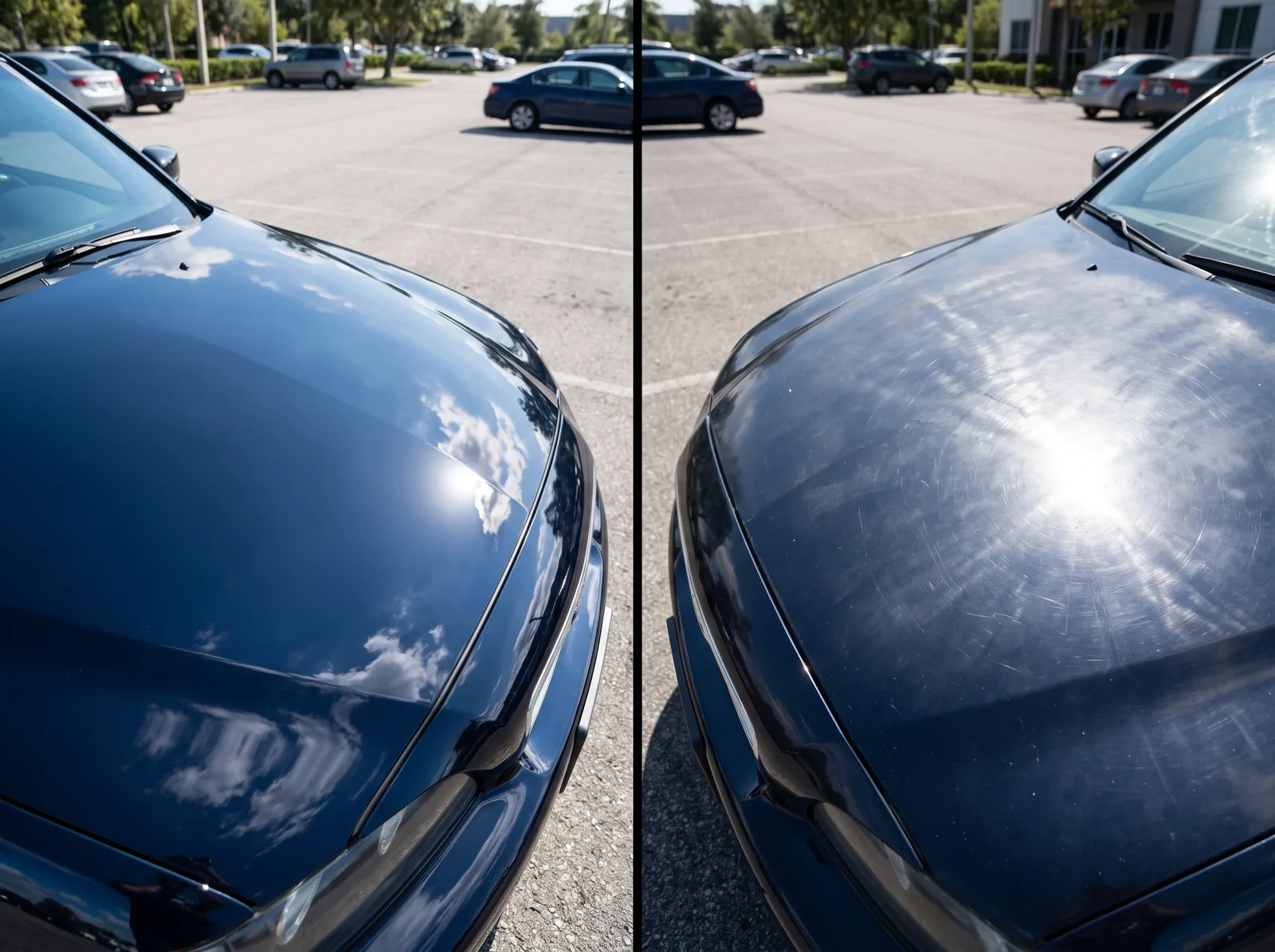
Car A has been ceramic coated since year one, washed regularly, and shows minimal swirling or fading. Paint has depth and gloss under direct light. Listing photos look clean without heavy editing.
Car B has no coating history, shows light oxidation on the hood and roof, some swirl marks visible under sunlight, and slightly faded trim. Listing photos need better angles or lighting to look presentable.
A buyer comparing these two side by side will assume Car A was better cared for overall, mechanically included, even if that’s not strictly true. That assumption alone often shortens Car A’s time on the market and strengthens the seller’s negotiating position. Car B either sells for less, sits longer, or needs a pre-sale detail to close that gap right before listing, which is a more expensive, more rushed version of the same paint protection Car A had for years.
The “Sell in 6 Months” vs. “Sell in 3 Years” Honesty Box
This is the part most articles on this topic skip, and it’s the part that actually determines whether coating is worth it for you.
If you’re planning to sell in the next 6 months: ceramic coating is unlikely to pay for itself. Coating protects paint going forward, not retroactively. It won’t undo three years of existing wear, and a rushed application right before a sale mostly benefits the next owner, not your sale price. A standard pre-sale detail and, if needed, paint correction is usually the better-timed investment here.
If you’re planning to keep the car another year or more before selling: this is where coating earns its cost. Every month of protected paint is a month of slower wear, less oxidation, and better-preserved gloss, all of which compound into a noticeably better-presenting car when you eventually do list it.
The takeaway: coating early in ownership is a resale-value play. Coating right before a sale is mostly a cosmetic one.

What a Real Customer Experienced
Donald R. Cottle left this review after getting a vehicle ready to sell:
“Dennis did a spectacular job on one of our cars getting it ready to sell. It looks like a brand new car. He deserves the many five star reviews he has earned already.”
This review reflects general pre-sale detailing rather than a ceramic coating job specifically. It’s included here because it’s the most directly relevant verified review we have on selling a vehicle after service from Dennis Auto Details.
Key Takeaways
- Buyers and dealers don’t pay extra for “has ceramic coating” as a feature. They pay extra for paint that looks new, and coating is one of the most reliable ways to keep it that way
- Exterior condition is a well-documented factor in resale value. A visibly worn exterior can knock a meaningful percentage off a car’s price compared to a pristine equivalent, regardless of mileage or mechanical health
- San Diego’s bright, near-constant sunlight means listing photos show paint flaws clearly, which makes well-preserved paint stand out even more in local marketplace listings
- Coating protects paint from the moment it’s applied forward. It does nothing for damage that already happened, so a coating applied right before a sale mostly protects the next owner, not your sale price
- The real ROI case is coating a car you plan to keep for a year or more, not a last-minute pre-sale purchase
Frequently Asked Questions
Should I get ceramic coating right before selling my car? Usually not for the sale itself. Coating protects paint going forward, and it can’t undo existing wear. A pre-sale detail, and paint correction if needed, is typically the better-timed move for a sale happening soon. Coating pays off more when applied early in ownership, well before you plan to sell.
Does ceramic coating show up as a Carfax or listing feature? No. Ceramic coating isn’t tracked on vehicle history reports. What matters to a buyer is the visible condition it helped preserve, not a documented coating record.
How should I advertise ceramic coating when selling my car? Mention it briefly as part of your maintenance history rather than as a headline feature, and let the photos and in-person condition do the talking. “Ceramic coated and garage-kept since new” reads as credible maintenance context, not a sales gimmick.
Does a coated car really sell faster than an uncoated one? There’s no guaranteed number here, but a car that presents better in photos and in person typically generates more buyer interest and moves through the sale process more smoothly than a comparable car showing visible wear.
Is paint correction better than ceramic coating if I’m selling soon? For a near-term sale, yes, correction usually delivers more visible improvement for the money, since it addresses existing scratches and oxidation directly rather than protecting against future wear.
Planning to Keep Your Car a While? Start Protecting It Now
If you’re not selling this year, this is exactly the right time to have a conversation about ceramic coating. The earlier your paint gets protected, the more of San Diego’s sun, salt air, and daily wear it never has to absorb, and the better your car presents whenever you do decide to sell.
If you’re selling soon instead, ask about paint correction or a full pre-sale detail to get the most visible improvement before you list.
📅 Book an assessment now ✉️ Contact us with questions 📞 Call or text 858-295-7259 to talk through timing for your specific situation.



Something went wrong. Please refresh the page and/or try again.