
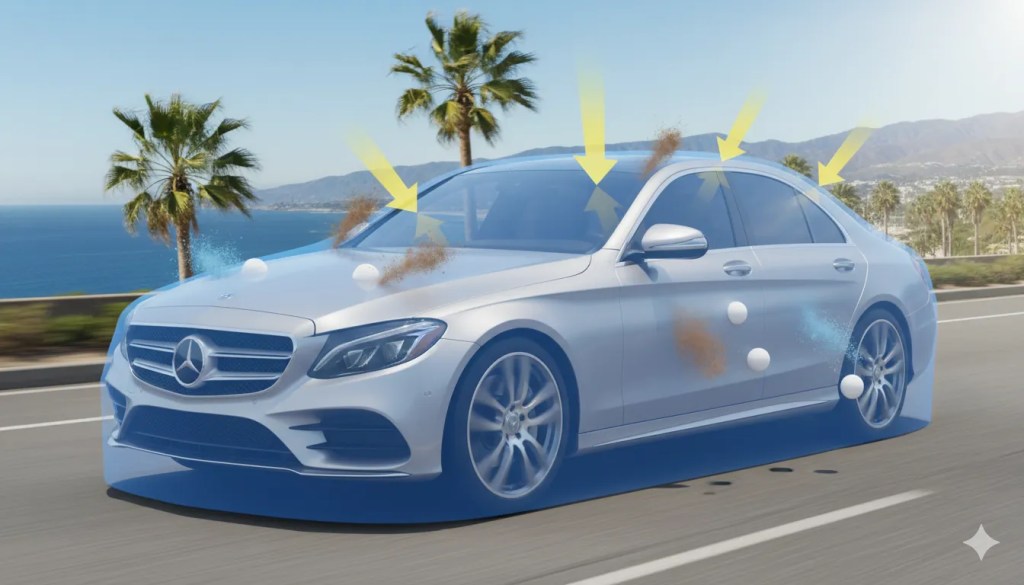
How Ceramic Coating Works: Chemical Bonding Explained Simply
Have you ever wondered why ceramic coating lasts years while car wax barely survives a few months? The secret lies in the science behind how ceramic coating actually bonds to your vehicle’s paint at the molecular level. Unlike traditional protective products that simply sit on top of your paint, ceramic coating creates a permanent chemical bond that transforms your car’s surface at the atomic level.
This molecular bonding process is what makes ceramic coating San Diego’s most effective long-term paint protection solution, especially in our challenging climate with 266+ sunny days per year, coastal salt spray, and desert dust.
TL;DR
- Ceramic coating creates permanent molecular bonds with your car’s paint through chemical reactions
- Silicon dioxide (SiO2) molecules form cross-linked chains that harden into a glass-like protective layer
- Chemical bonding process requires proper surface preparation and curing time to achieve maximum protection
- Professional application ensures complete molecular bonding for durability that lasts 2-9 years
- The hardened coating creates hydrophobic properties and chemical resistance that traditional wax cannot match
What Is Ceramic Coating Made Of?
Ceramic coating starts as a liquid polymer containing silicon dioxide (SiO2) as its primary active ingredient. This same compound forms natural quartz crystal and glass, which explains ceramic coating’s incredible hardness and durability once cured.
According to the International Journal of Molecular Sciences, silicon dioxide nanoparticles create exceptionally strong intermolecular bonds when properly cured, making them ideal for protective applications.
The liquid contains:
- Silicon dioxide nanoparticles – The protective foundation
- Carrier solvents – Allow smooth application
- Bonding agents – Enable chemical adhesion to paint
- Hardening catalysts – Trigger the curing process
When you see ceramic coating marketed as “9H hardness,” this refers to the coating’s resistance to scratching on the pencil hardness scale – nearly as hard as glass itself. This hardness rating, as explained by the American Society for Testing and Materials (ASTM), measures surface resistance to deformation.
The Chemical Bonding Process: Step by Step

1. Surface Preparation Creates Bonding Sites
Before ceramic coating can form molecular bonds, your vehicle’s paint must be properly prepared. Paint correction services remove contaminants, oxidation, and microscopic scratches that would prevent proper bonding. Our 1-step paint correction service or 2-step paint correction service ensures optimal surface preparation.
Clean paint provides exposed bonding sites where SiO2 molecules can attach directly to the clear coat’s polymer chains. This is why professional preparation matters – contaminated surfaces create weak bonds that fail quickly. Research published in the Journal of Applied Polymer Science confirms that surface contamination significantly reduces adhesion strength in polymer coatings.
2. Molecular Attachment and Cross-Linking
When ceramic coating is applied to prepared paint, the SiO2 molecules immediately begin seeking bonding sites on the clear coat surface. The coating’s carrier solvents evaporate, leaving behind concentrated SiO2 particles that form covalent bonds with the paint’s molecular structure.
As the coating cures, these individual SiO2 molecules connect to each other through a process called cross-linking. This creates long chains of interconnected molecules that form a rigid, glass-like matrix over your paint.
3. Chemical Curing and Hardening
The curing process transforms liquid ceramic coating into its final hardened state. Heat and moisture in the air trigger chemical reactions that complete the cross-linking process. This is why ceramic coating requires specific temperature and humidity conditions for optimal results.
Professional applicators understand these requirements and time applications accordingly. In San Diego’s variable climate, this expertise ensures complete curing regardless of coastal moisture or inland dryness.
Why Chemical Bonding Makes Ceramic Coating Superior
Permanent vs. Temporary Protection
Traditional car wax creates a sacrificial layer that washes away over time. The wax molecules have no chemical bond with your paint – they simply sit on the surface until removed by washing, weather, or wear.
Ceramic coating’s chemical bonds are permanent. The SiO2 molecules become part of your paint’s surface structure. This is why ceramic coating doesn’t wash off or wear away under normal conditions.
Molecular-Level Smoothness
The cross-linked SiO2 structure creates an incredibly smooth surface at the molecular level. This smoothness is what produces ceramic coating’s signature hydrophobic properties – water molecules cannot grip the surface and simply roll off.
This same smoothness makes your vehicle easier to wash. Dirt and contaminants cannot penetrate or strongly adhere to the chemically bonded surface.
Chemical Resistance
Ceramic coating’s cured structure resists chemical attack from:
- Acid rain and environmental fallout
- Bird droppings and tree sap
- Salt spray from coastal environments
- Industrial pollutants and smog
The stable SiO2 bonds don’t react with these contaminants, preventing paint damage that occurs when acidic substances etch unprotected clear coat.
Professional Application: Why Chemistry Matters
Temperature and Humidity Control
Ceramic coating chemistry requires specific environmental conditions for proper bonding. Professional applications monitor:
- Temperature range: 65-75°F optimal for most coatings
- Humidity levels: 40-60% for complete cross-linking
- Airflow: Controlled circulation prevents contamination during curing
San Diego’s climate variations require professional expertise to achieve optimal bonding conditions year-round. Whether you drive a Tesla, BMW, Mercedes-Benz, or Porsche, proper environmental control ensures optimal ceramic coating performance.
Application Timing and Technique
The window for proper application is limited once ceramic coating begins curing. Professional applicators work in small sections to ensure:
- Complete surface saturation before initial curing begins
- Even layer thickness for uniform molecular bonding
- Proper leveling before the coating becomes too viscous to work
Amateur applications often fail because the coating begins hardening before achieving complete coverage or proper thickness.
Multi-Layer Systems for Maximum Protection
Professional ceramic coating packages often use multiple coats to build protection layers:
- Base coat: Creates initial chemical bonding with paint
- Build coat: Adds thickness and uniform coverage
- Top coat: Provides final hardness and hydrophobic properties
Each layer must cure properly before the next application, requiring professional timing and technique.
How Long Does Chemical Bonding Take?
The bonding process occurs in stages:
Initial Bond Formation (1-4 hours)
The coating attaches to paint and becomes touch-safe. Basic molecular bonds form, but cross-linking continues.
Primary Curing (24-48 hours)
Cross-linking accelerates, creating the coating’s primary structure. The coating reaches about 80% of its final hardness.
Complete Curing (7-14 days)
Final cross-linking creates maximum hardness and chemical resistance. The coating achieves full durability and hydrophobic properties.
This extended curing time is why professional applicators provide specific care instructions following ceramic coating application.
San Diego Climate and Chemical Bonding
UV Acceleration Benefits
San Diego’s intense sunlight actually helps ceramic coating cure faster and more completely. UV radiation accelerates the chemical reactions that complete cross-linking, often reducing full cure time by 20-30%.
However, professional application timing remains critical to prevent premature curing during application.
Coastal Moisture Considerations
Marine layer humidity provides moisture necessary for complete chemical curing. Areas like La Jolla and Del Mar benefit from consistent humidity that supports optimal bonding. Coastal communities including Encinitas, Solana Beach, and Carlsbad provide ideal curing conditions.
Inland areas like Escondido, Poway, Rancho Bernardo, and San Marcos require different application strategies to account for lower humidity levels.
Professional vs. Consumer Product Chemistry
Concentration Differences
Professional ceramic coatings contain 20-30% higher SiO2 concentrations than consumer products. This higher concentration creates:
- More bonding sites per square inch
- Thicker protective layers after curing
- Superior durability and chemical resistance
Advanced Formulations
Professional products include proprietary additives that:
- Extend working time for proper application
- Improve surface leveling for uniform thickness
- Enhance bonding strength with different paint types
- Provide UV stabilization for longevity
Quality Control Standards
Professional ceramic coatings undergo rigorous testing for:
- Adhesion strength to various substrates
- Chemical resistance to common contaminants
- Thermal cycling durability
- UV stability over time
Consumer products rarely receive this level of validation, leading to inconsistent performance.
Signs of Proper Chemical Bonding

Visual Indicators
Properly bonded ceramic coating exhibits:
- Mirror-like gloss: Complete surface smoothness
- Deep color saturation: Enhanced paint clarity
- Uniform appearance: No streaks, high spots, or dullness
Performance Characteristics
Well-bonded coating demonstrates:
- Immediate water beading: Tight, round droplets
- Self-cleaning properties: Dirt rinses away easily
- Chemical resistance: No etching from mild acids
Longevity Markers
Successful chemical bonding provides:
- Consistent performance throughout warranty period
- Gradual rather than sudden protection loss
- Maintained hydrophobic properties over time
Maintenance and Chemical Bond Preservation
Proper Washing Techniques
Protecting chemical bonds requires:
- pH-neutral soaps: Prevent chemical degradation
- Two-bucket method: Minimize abrasive contact
- Microfiber tools: Reduce surface scratching
For vehicles requiring specialized care, we also offer interior steam cleaning, seat shampooing services, and ozone treatment to maintain your vehicle’s complete protection system.
Professional Maintenance Programs
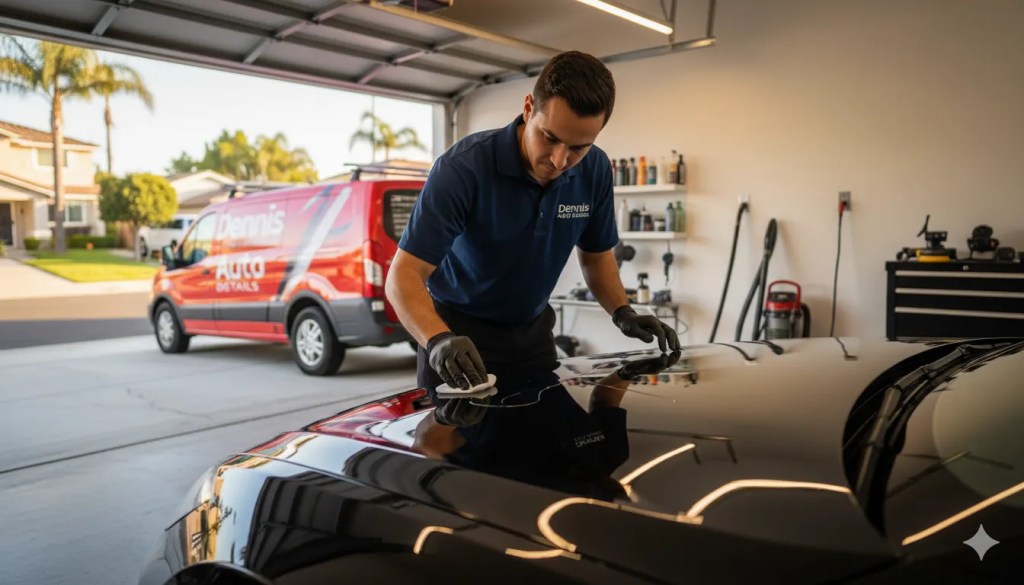
Dennis Auto Details’ ceramic coating maintenance program preserves chemical bonding through:
- Regular decontamination to prevent buildup
- Professional-grade maintenance products
- Inspection for bonding degradation
- Touch-up applications when needed
Proper maintenance can extend ceramic coating life by 20-30% by preserving the original chemical bonds.
Future of Ceramic Coating Chemistry
Graphene-Enhanced Formulations
Next-generation coatings add graphene to traditional SiO2 chemistry, creating:
- Enhanced thermal conductivity
- Improved electrical conductivity for static reduction
- Superior flexibility for thermal expansion
Self-Healing Technologies
Advanced chemical formulations include:
- Temperature-activated healing agents
- UV-triggered restoration compounds
- Micro-encapsulated repair materials
These technologies maintain chemical bonding integrity even after minor surface damage.
Key Takeaways
- Ceramic coating works through permanent chemical bonding at the molecular level, not surface adhesion like wax
- Silicon dioxide molecules form cross-linked chains that create a glass-like protective layer over your paint
- Professional application ensures proper surface preparation, environmental conditions, and curing time for maximum bonding strength
- The chemical bonding process takes 7-14 days to complete, during which the coating reaches full hardness and chemical resistance
- San Diego’s climate provides ideal UV and humidity conditions for ceramic coating curing when professionally managed
- Chemical bonding quality directly impacts coating longevity, performance, and protection capabilities
- Professional-grade products contain higher SiO2 concentrations and advanced formulations not available in consumer products
Understanding ceramic coating chemistry helps you appreciate why professional application matters for achieving the durable protection your vehicle deserves. The molecular bonding process cannot be rushed or replicated through DIY methods – it requires expertise, proper conditions, and professional-grade materials.
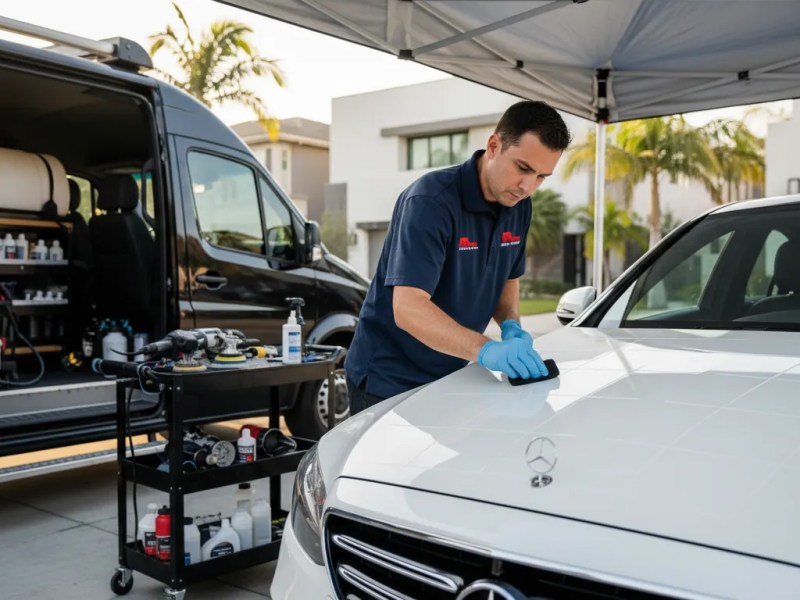
Ready to experience the science of superior paint protection? Dennis Auto Details brings professional ceramic coating application directly to your location throughout San Diego County. Our certified installers understand the chemistry behind lasting protection and ensure your coating bonds properly for maximum durability.
Whether you need our 2-year ceramic coating, 5-year ceramic coating, or 9-year ceramic coating, we also offer specialized glass ceramic coating and interior ceramic coating for complete vehicle protection.
"Dennis did an amazing job on my car's ceramic coating. The water beads off like magic and my Tesla Model Y looks brand new every day. The molecular bonding process really works - 6 months later and it still performs like day one!" - Michael Lu, Tesla Owner, Del Mar
Get Your Free Ceramic Coating Quote Today or call 858-295-7259 to speak with our ceramic coating specialists.
Dennis Auto Details provides mobile ceramic coating services throughout San Diego County, including luxury communities like Rancho Santa Fe, Carmel Valley, Coronado, 4S Ranch, Scripps Ranch, and Rancho Penasquitos. Our certified installers bring professional-grade ceramic coating application directly to your home or office for maximum convenience.



Something went wrong. Please refresh the page and/or try again.