
7 Common Engine Bay Cleaning Mistakes That Can Damage Your Car
TL;DR: Cleaning your engine bay yourself can save money, but seven common mistakes can cause expensive damage. High-pressure water on electronics, cleaning a hot engine, using harsh chemicals, and skipping proper drying are the main errors DIY cleaners make. Professional detailing eliminates these risks with proper training, specialized tools, and insurance protection for San Diego vehicle owners.
You want a clean engine bay. The grime buildup bothers you every time you pop the hood. A YouTube video makes it look easy, so you grab a pressure washer and some degreaser.
Then disaster strikes.
Your car won’t start. The check engine light glows. A repair shop quotes you $800 to fix water-damaged sensors.
This scenario happens more often than you think. Engine bay cleaning seems simple, but one wrong move can damage expensive components. The average repair bill for engine cleaning mistakes ranges from $500 to $2,000, depending on what gets damaged.
Let’s walk through the seven most common engine bay cleaning mistakes that can hurt your car—and how to avoid them.
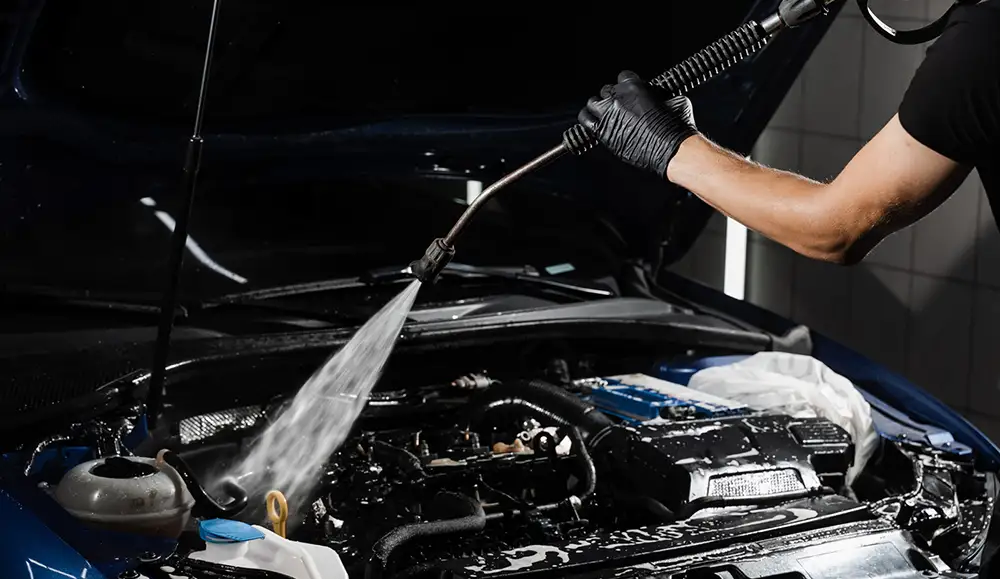
Mistake #1: Blasting Electronics with High-Pressure Water
The Problem: Pressure washers deliver water at 1,500 to 3,000 PSI. This force can push water past protective seals into sensitive electronics.

Modern engines contain dozens of electrical components:
- Wiring harnesses
- Engine control modules (ECM)
- Mass airflow sensors
- Oxygen sensors
- Alternators
- Ignition coils
These parts can handle some moisture, but not a direct blast from a pressure washer. Water penetration causes:
- Short circuits
- Corrosion on connectors
- Sensor failures
- Computer module damage
Cost of This Mistake: $300-$1,500 for sensor or module replacement.
The Right Way: Use low-pressure water from a garden hose with a gentle spray nozzle. Keep the nozzle at least 12 inches from electrical components. Better yet, use a spray bottle for controlled application around sensitive areas.
Professional detailers cover electronics with plastic bags and use specialized low-pressure equipment designed for engine bays.
“Dennis was very professional and made the experience easy. He did an amazing job on my Nissan Rogue. He is very attentive and detailed.” — Liana Benjamin, San Diego
Mistake #2: Cleaning a Hot Engine
The Problem: You just drove home and want to clean your engine while you’re thinking about it. Bad idea.
Cleaning a hot engine causes three major issues:
- Thermal Shock: Cold water hitting hot metal can crack engine components, especially aluminum parts
- Burns: Hot surfaces can cause painful burns when you’re working close
- Rapid Evaporation: Cleaning products dry too fast, leaving streaks and residue
Hot engines also make degreasers work too aggressively, potentially damaging rubber hoses and plastic components.
The Right Temperature: Wait at least 30 minutes after driving. The engine should be cool to the touch but slightly warm (around 100°F). This temperature helps degreasers work effectively without causing thermal shock.
Professional services schedule engine bay cleaning when your car is at the optimal temperature, not when it’s convenient.
Mistake #3: Skipping Component Protection
The Problem: You skip covering sensitive parts because it seems like extra work. This oversight leads to the most expensive repairs.
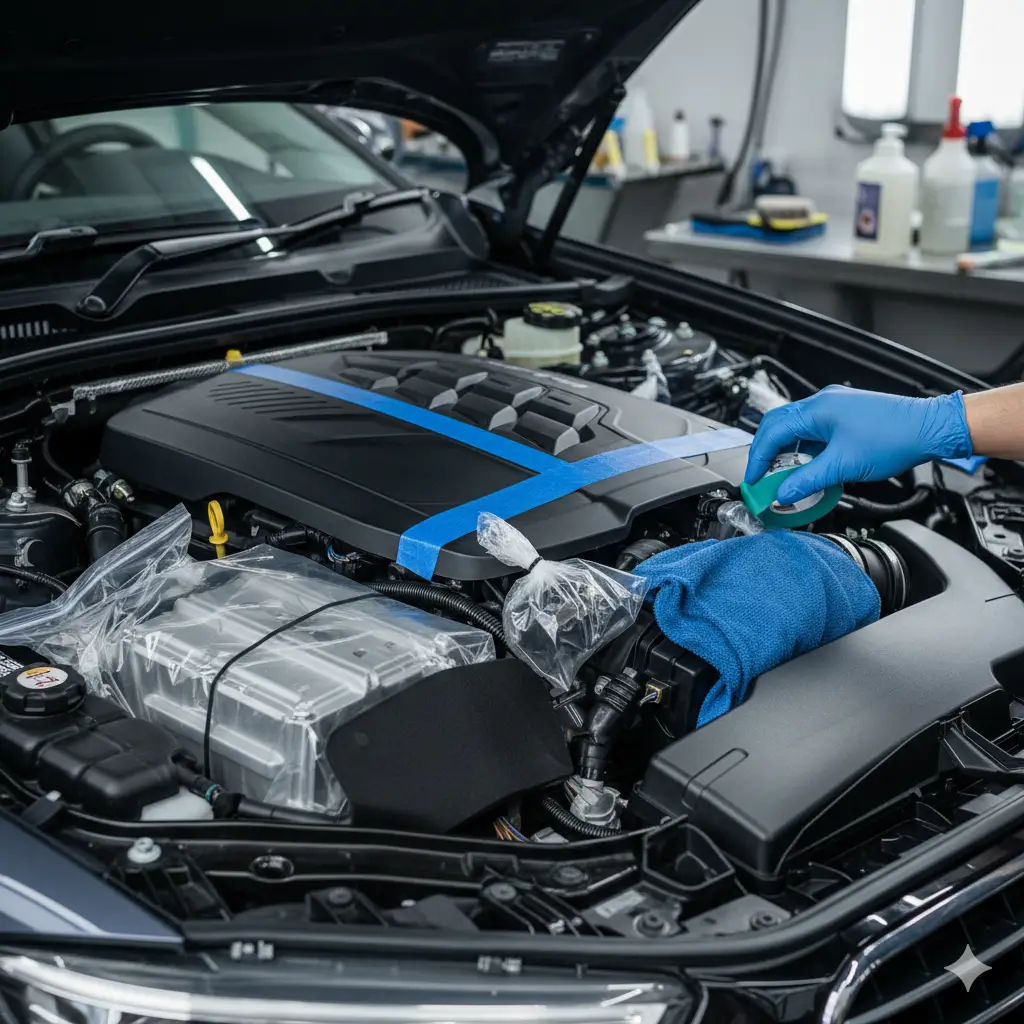
Components that need protection before cleaning:
- Battery terminals and connections
- Alternator openings
- Air intake system
- Fuse boxes
- Exposed wiring connectors
- Electronic control modules
- Coil packs
Cost of This Mistake: $200-$800 for electrical repairs.
The Right Way:
- Disconnect the battery (negative terminal first)
- Cover the alternator with a plastic bag and tape
- Seal air intake openings
- Cover exposed fuse boxes
- Wrap battery terminals if not disconnected
- Protect any visible sensors
Professional detailers use specialized waterproof covers and know exactly which components need protection for different vehicle makes and models.
San Diego’s coastal climate makes proper protection even more important. Salt air already challenges electrical components—adding moisture during cleaning amplifies corrosion risk.
Mistake #4: Using the Wrong Cleaning Products
The Problem: You grab whatever degreaser is on sale at the auto parts store. Many household and industrial degreasers are too harsh for engine bays.
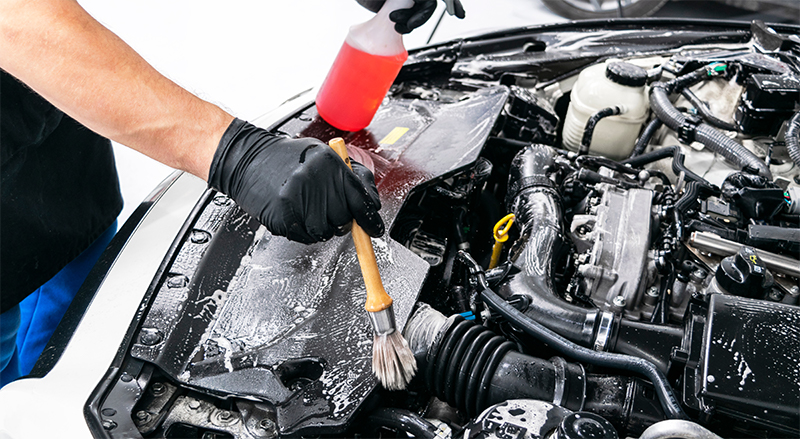
Harsh chemicals damage:
- Rubber hoses and seals (causes cracking)
- Plastic components (discoloration and brittleness)
- Painted surfaces (removes finish)
- Wiring insulation (deterioration)
Common harmful products:
- Brake cleaner (too aggressive for regular cleaning)
- Industrial degreasers (not formulated for automotive use)
- Bleach-based cleaners (causes severe corrosion)
- Dish soap (strips protective coatings)
Cost of This Mistake: $150-$600 for hose, seal, or component replacement.
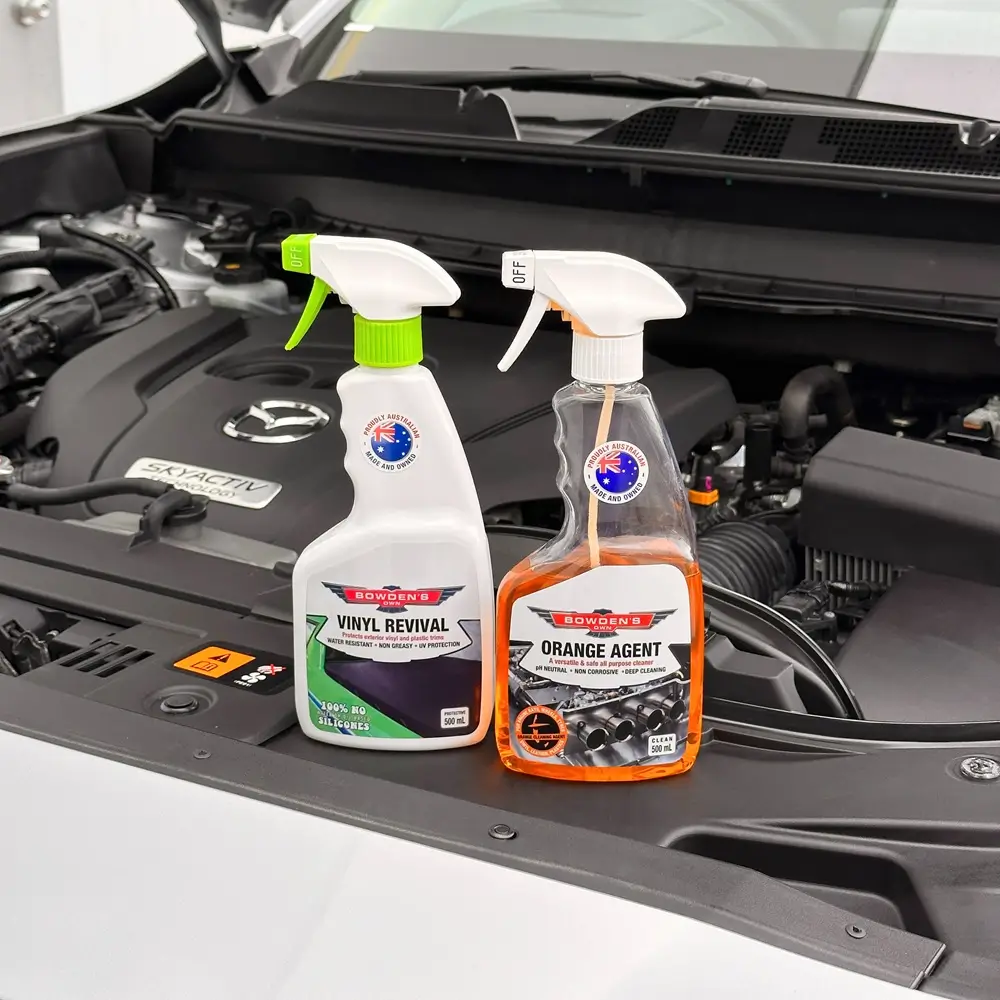
The Right Products:
- pH-balanced engine degreasers
- Automotive-specific cleaners
- Water-based formulas (safer than solvent-based)
- Products labeled “safe for rubber and plastic”
Professional detailers use commercial-grade products designed specifically for engine bays. These formulas clean effectively without damaging components. They also comply with California’s strict VOC (Volatile Organic Compound) regulations.
Want to learn more about professional products? Check our guide on engine bay cleaning products and chemicals that professionals use.
Mistake #5: Over-Saturating Electrical Connections
The Problem: You spray cleaner liberally, thinking more is better. Excess liquid seeps into connectors and wiring harnesses.

Electrical connectors use specialized grease to prevent corrosion. Over-saturation:
- Starts corrosion that worsens over time
- Washes away protective grease
- Allows water to sit in connector pins
- Creates pathways for ongoing moisture intrusion
Signs of Electrical Damage:
- Check engine light appears
- Rough idle or stalling
- Intermittent electrical issues
- Corroded connector pins (green or white buildup)
Cost of This Mistake: $250-$1,200 for wiring harness repair or replacement.
The Right Way: Apply cleaner sparingly around electrical areas. Use a spray bottle for controlled application instead of aerosol cans that spray everywhere. Wipe rather than rinse near connectors.
For heavily soiled engines, professionals use steam cleaning around electrical components. Steam provides cleaning power with minimal moisture that evaporates quickly.
Mistake #6: Inadequate Drying
The Problem: You rinse off the cleaner and close the hood. “Air drying will work fine,” you think.
Standing water in the engine bay leads to:
- Corrosion on metal parts
- Electrical gremlins from damp connections
- Mold and mildew growth
- Water spots on painted surfaces
San Diego’s mild climate might seem ideal for air drying, but moisture can still cause problems, especially in shaded areas under the hood.
The Right Way:
- Use compressed air to blow water from crevices
- Wipe accessible surfaces with microfiber towels
- Remove protective covers while engine bay is wet
- Let engine run for 10-15 minutes to generate heat
- Leave hood open for 30 minutes after cleaning
Professional detailers use high-powered air blowers to force water out of tight spaces. They also inspect for standing water in common problem areas like coil pack wells and behind the battery.
Cost of Skipping This Step: $100-$400 for corrosion-related repairs over time.
Mistake #7: Not Testing Products First
The Problem: You apply a new product to the entire engine without testing. Some surfaces react badly to certain cleaners.
Different engine components use various materials:
- Powder-coated metals
- Painted plastics
- Raw aluminum
- Chrome-plated steel
- Rubber compounds
- Vinyl covers
Each material reacts differently to chemicals. A cleaner that works on one surface might damage another.
The Right Way: Test any new product on a small, hidden area first. Wait 5-10 minutes to see if any discoloration, softening, or damage occurs. This simple step prevents widespread damage.
Professional detailers know which products work safely on different engine types. They also carry multiple cleaners to match specific materials and contamination levels.
The Real Cost of DIY Engine Bay Cleaning Mistakes
Let’s add up the potential damage:
- Sensor damage: $300-$1,500
- Electrical repairs: $200-$800
- Hose/seal replacement: $150-$600
- Wiring harness: $250-$1,200
- Corrosion repairs: $100-$400
Total potential cost: $1,000-$4,500
Compare this to professional engine bay cleaning: $150
The math speaks clearly. One mistake can cost more than a year of professional cleanings.
Why Professional Engine Bay Cleaning Makes Sense
Professional detailers eliminate these seven mistakes through:
Proper Training: They understand which components need protection and which cleaning methods work safely for different vehicles.
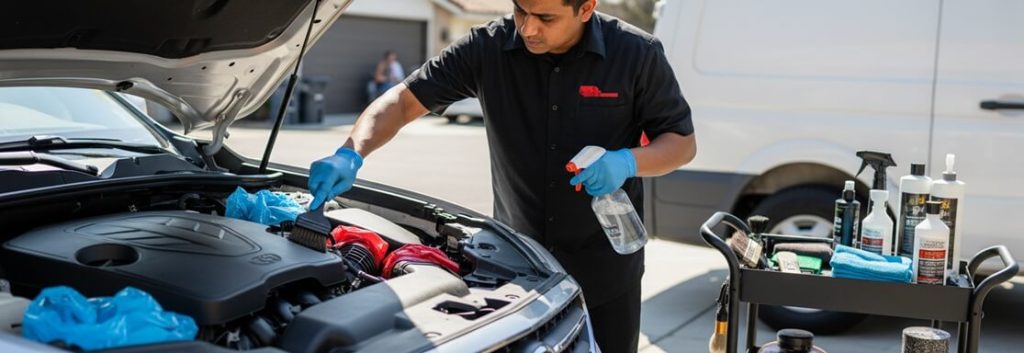
Specialized Equipment:
- Low-pressure washers designed for engine bays
- Steam cleaners for sensitive areas
- Professional-grade air blowers
- Proper protective covers
Quality Products: Commercial degreasers formulated specifically for automotive use that clean effectively without damage.
Insurance Protection: If something does go wrong (rare with proper technique), professional services carry insurance to cover repairs.
Manufacturer Knowledge: Experience with different makes and models means knowing the quirks of Mercedes engines versus Toyota engines versus Tesla motor compartments.
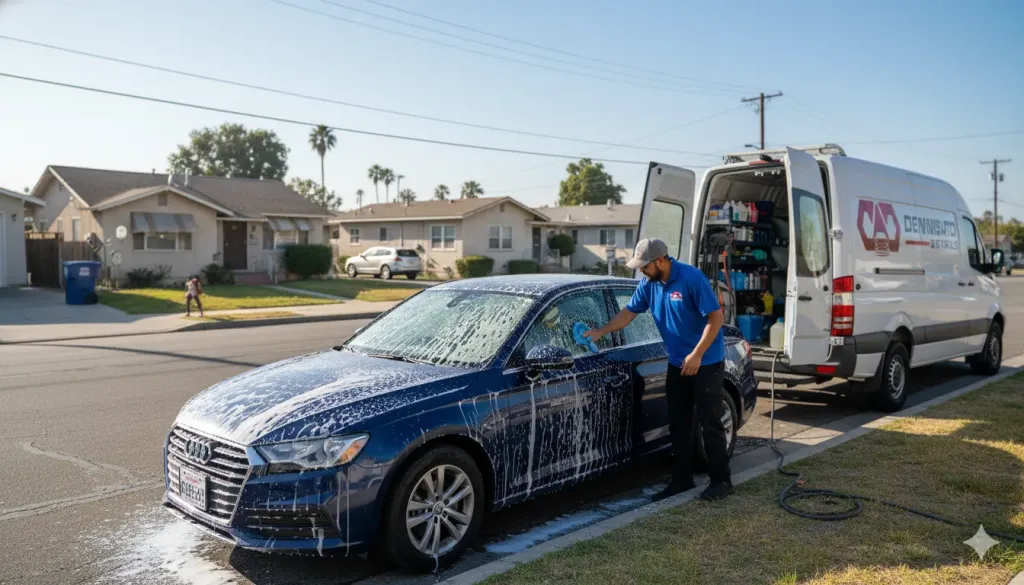
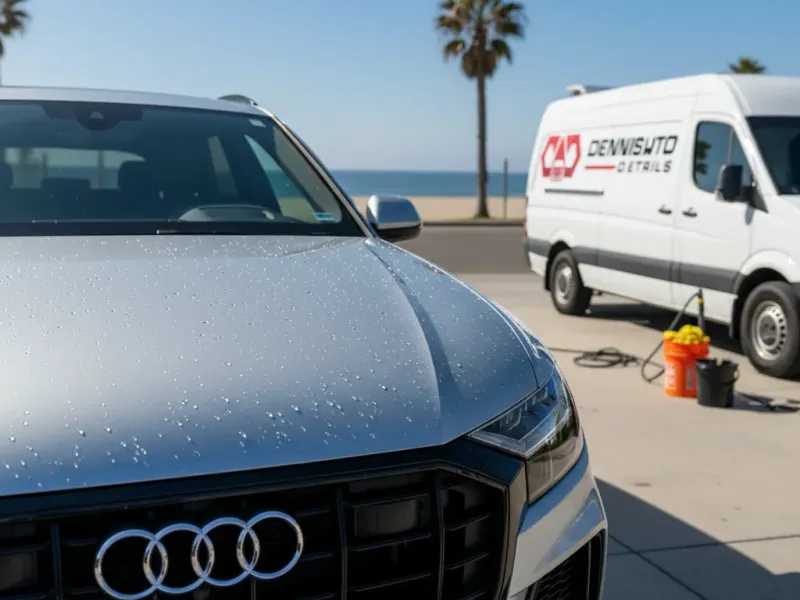
Dennis Auto Details serves San Diego with mobile engine bay detailing that comes to your location. No need to risk DIY mistakes or drive to a shop.
San Diego-Specific Considerations
San Diego’s unique climate creates special challenges:
Coastal Areas (La Jolla, Del Mar, Coronado): Salt spray accelerates corrosion. Proper drying becomes even more critical. Any moisture left behind combines with salt deposits to damage components faster.
Inland Areas (Escondido, Poway, Ramona): Dust accumulation requires more aggressive cleaning, which increases the risk of using products that are too harsh.
Year-Round Mild Weather: You can clean your engine bay any time, but this also means you might be tempted to rush the job since it’s not freezing or too hot.
Professional services account for these local factors in their cleaning approach.
When DIY Makes Sense (and When It Doesn’t)
DIY engine bay cleaning works if you:
- Have mechanical knowledge
- Own proper equipment (not just a pressure washer)
- Understand your specific vehicle’s layout
- Have time to do it correctly
- Can afford the risk if something goes wrong
Skip DIY if you:
- Have a luxury or high-performance vehicle
- Lack mechanical confidence
- Don’t have proper equipment
- Own a newer vehicle with extensive electronics
- Drive an electric vehicle (EVs require special care)
Most people in that second category choose professional service. The cost difference doesn’t justify the risk.
“I hired Dennis Auto Details to professionally clean and perform a full detail on my work and personal vehicles. I was impressed and very pleased with the quality of work.” — Sam Waldman, San Diego
How to Find Trustworthy Engine Bay Cleaning Services
Look for these qualities:
Certifications: 3M, Rupes, or Meguiar’s certified installers understand proper techniques.
Insurance: Verify they carry liability insurance for potential damage.
Reviews: Check Google Business Profile for five-star reviews indicating consistent quality.
Process Explanation: Good detailers explain their process and answer questions about component protection.
Guarantees: Professional services should guarantee their work.
Dennis Auto Details meets all these criteria with 200+ five-star reviews, certified installers, and a 100% satisfaction guarantee.

What to Expect from Professional Service
A proper engine bay cleaning takes 30-60 minutes and includes:
- Initial Assessment: Identifying problem areas and contamination levels
- Protection: Covering sensitive components properly
- Degreasing: Applying appropriate cleaner and allowing dwell time
- Agitation: Brushing to loosen stubborn deposits
- Rinsing: Low-pressure water application
- Drying: Compressed air and towel drying
- Dressing: Applying protectant to plastic and rubber
You can watch the process or go about your day while professionals handle your vehicle at your location.
Protecting Your Investment
Your vehicle represents a significant investment. For most San Diego residents, it’s the second-largest purchase after a home.
Engine bay cleaning maintains that investment by:
- Preventing corrosion
- Identifying leaks early
- Improving cooling efficiency
- Maintaining resale value
But only when done correctly.
The seven mistakes outlined above turn maintenance into damage. High-pressure water, hot engines, inadequate protection, harsh chemicals, over-saturation, poor drying, and untested products can cost thousands in repairs.
Professional engine bay cleaning eliminates these risks for $150—less than most people spend on dinner for two.
Key Takeaways
✓ High-pressure water damages electronics — Use low-pressure spray or professionals with proper equipment
✓ Never clean a hot engine — Wait 30 minutes after driving to avoid thermal shock and burns
✓ Always protect sensitive components — Cover alternators, air intakes, and electrical connections before cleaning
✓ Use automotive-specific products — Harsh chemicals damage hoses, seals, and plastic parts
✓ Control moisture around connectors — Over-saturation causes electrical problems and corrosion
✓ Dry thoroughly after cleaning — Standing water leads to rust, mold, and electrical issues
✓ Test products on hidden areas first — Different materials react differently to cleaners
✓ Professional service costs $150— DIY mistakes can cost $1,000-$4,500 in repairs
✓ Certified detailers eliminate risks — Proper training, equipment, and insurance protect your investment
✓ Mobile service saves time — Professionals come to your San Diego location with everything needed
Take the Safe Route
You can spend an afternoon risking expensive damage, or you can spend an hour having professionals handle it safely.
The choice seems obvious.
Dennis Auto Details brings certified installers to your San Diego location with all necessary equipment and products. No risk of the seven common mistakes. Just a clean engine bay and peace of mind.
Book your engine bay cleaning today together with an auto detailing service: 858-798-6657
Mobile service available throughout San Diego County including La Jolla, Del Mar, Rancho Santa Fe, Carlsbad, Encinitas, Pacific Beach, Escondido, and 40+ other neighborhoods.
See our complete engine bay detailing guide for more information about the process, pricing, and benefits.
Something went wrong. Please refresh the page and/or try again.