
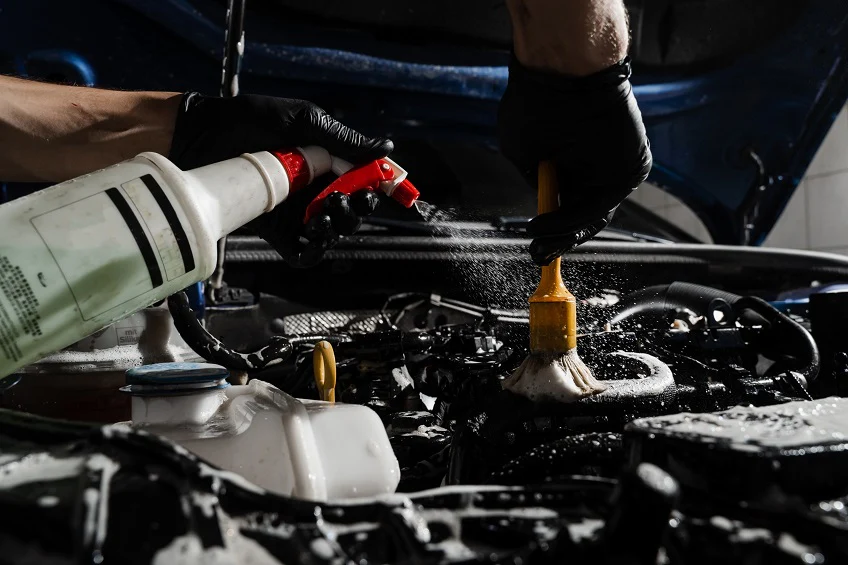
How Engine Bay Cleaning Prevents Costly Repairs: A San Diego Mechanic’s Perspective
TL;DR: Regular engine bay cleaning isn’t just about appearance—it prevents costly repairs by enabling early leak detection, reducing corrosion, improving cooling efficiency, and identifying worn components before they fail. San Diego vehicle owners save an average of $500-$2,000 in repair costs through preventive engine bay maintenance.
Most San Diego drivers spend thousands on exterior detailing but ignore the engine bay completely. This oversight costs them far more in the long run.
A dirty engine bay hides problems until they become expensive emergencies. Leaks go unnoticed. Corrosion spreads unchecked. Components fail without warning. One preventable breakdown can cost more than years of professional engine bay cleaning combined.
Dennis Auto Details has cleaned over 3,000 engine bays in San Diego. We’ve seen what happens when owners neglect this critical maintenance—and what they avoid when they don’t.
Why Engine Bay Maintenance Matters for Your Wallet
Your engine bay accumulates dirt, oil, grease, and road grime over time. San Diego’s coastal air adds salt spray that accelerates corrosion. Inland areas contribute dust that insulates heat. This buildup creates three major problems:
Hidden leaks drain your bank account. Oil, coolant, and power steering fluid leaks start small. A clean engine bay shows these leaks immediately as fresh drips on clean surfaces. A dirty engine bay masks them until you’re stranded on the I-5 with a seized engine. The difference? $50 to fix a leaking gasket versus $5,000 to replace a destroyed engine.
Corrosion destroys expensive components. Salt spray from coastal areas like La Jolla and Del Mar reaches up to 10 miles inland. This salt combines with oil and grime to create corrosive compounds. These compounds eat through wiring harnesses, battery terminals, and sensor connections. One corroded sensor can trigger check engine lights and failed emissions tests. Replacing corroded wiring harnesses costs $800-$1,500—cleaning your engine bay costs $150.
Heat buildup reduces efficiency and lifespan. Dirt and grime act as insulation. They trap heat against metal surfaces that need cooling. Your alternator, battery, and starter motor all generate heat during operation. When grime prevents proper heat dissipation, these components fail prematurely. A new alternator costs $400-$700. A battery costs $150-$300. Professional engine bay cleaning prevents both.
Early Leak Detection Saves Thousands
Leaks are the most expensive hidden problem in dirty engine bays. San Diego mechanics see this pattern repeatedly: owners ignore small leaks because they can’t see them through the grime. These leaks worsen gradually. By the time symptoms appear, the damage is severe.
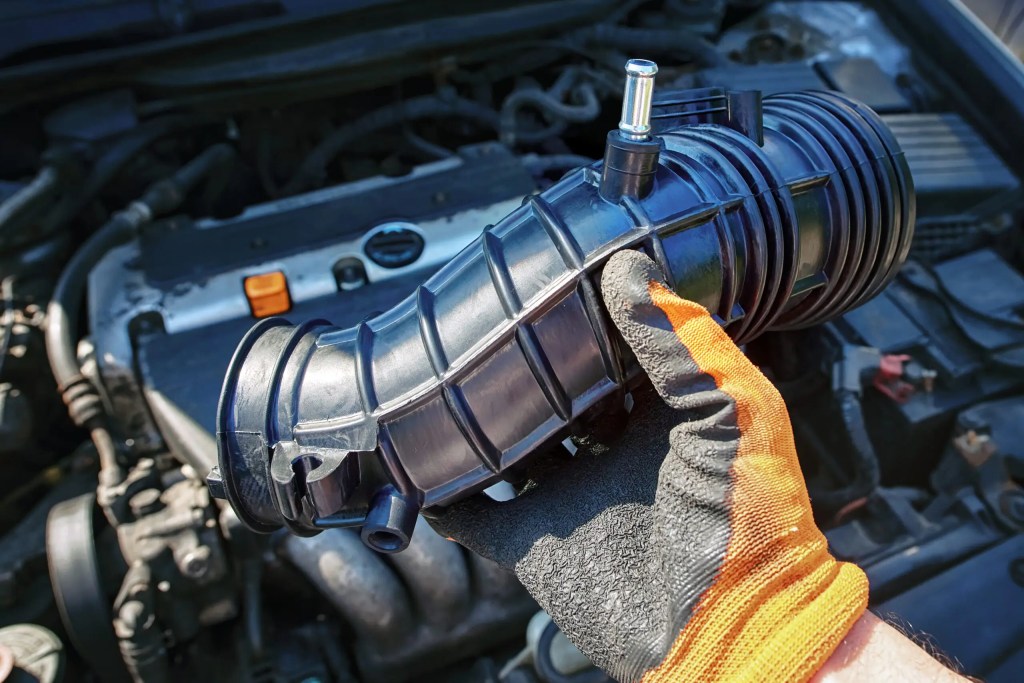
Oil leaks destroy engines. A small valve cover gasket leak drips a few drops daily. In a clean engine bay, you spot this immediately. The repair costs $150-$300. In a dirty engine bay, oil mixes with grime and spreads invisibly. You don’t notice until your oil level drops critically low. Operating an engine with insufficient oil destroys bearings and cylinder walls. Engine replacement costs $4,000-$8,000.
Coolant leaks cause overheating. A tiny radiator hose leak appears as fresh green, orange, or pink fluid on a clean engine bay. The hose replacement costs $75-$150. That same leak in a dirty engine bay goes unnoticed until your temperature gauge spikes in Pacific Beach summer traffic. An overheated engine warps cylinder heads and blows head gaskets. Head gasket replacement costs $1,500-$2,500.
Power steering leaks lead to pump failure. Power steering fluid leaks from hoses, connections, or the pump seal. A clean engine bay reveals these leaks as fresh red or amber fluid. Replacing a leaking hose costs $100-$200. A dirty engine bay hides the leak until your power steering pump runs dry and seizes. Pump replacement costs $400-$800.
Rick Dewees from Rancho Bernardo shared his experience: “I asked for the upgraded engine bay wash and was very pleased with how clean and new this 90’s truck looks. Dennis found a small coolant leak during the cleaning that I had no idea about. Fixed it for $120 before it became a major problem.”
Preventing Corrosion Protects Electronic Components
Modern vehicles contain dozens of electronic sensors and control modules in the engine bay. These components cost hundreds or thousands to replace. Corrosion is their primary enemy.
Salt spray attacks electrical connections. San Diego’s coastal climate puts salt spray in the air up to 10 miles inland. This salt settles on battery terminals, alternator connections, and ground wires. It combines with engine bay grime to form corrosive compounds. These compounds eat through metal and create poor electrical connections.
Poor connections cause multiple problems. Check engine lights illuminate because sensors can’t communicate properly. Starting problems appear when battery connections corrode. Charging issues develop when alternator terminals corrode. Each of these problems triggers diagnostic fees of $100-$150 just to identify the cause.
Sensor failures trigger expensive diagnostics. Oxygen sensors, mass airflow sensors, and throttle position sensors all have electrical connections. Corrosion on these connections causes erratic signals. Your vehicle’s computer can’t distinguish between a bad sensor and a corroded connection. You pay for diagnostic time and might replace working sensors unnecessarily.
One oxygen sensor costs $150-$300. A mass airflow sensor costs $200-$400. A shop might replace both before discovering the real problem was corroded connectors. Professional engine bay cleaning includes corrosion prevention treatment that stops this damage before it starts.
Wiring harness replacement is extremely expensive. The engine bay wiring harness connects dozens of sensors and components. Replacing it requires removing major engine components and costs $800-$1,500 in labor alone. Corrosion causes most wiring harness failures. Regular cleaning prevents this corrosion.
Improved Cooling Efficiency Extends Component Life
Everything in your engine bay generates heat. Alternators, batteries, starter motors, and ignition coils all operate in high temperatures. They’re designed to dissipate this heat into the surrounding air. Dirt and grime prevent proper heat dissipation.

Alternators fail from heat stress. Your alternator charges the battery and powers electrical systems. It generates significant heat during operation. Cooling fins on the alternator housing dissipate this heat—unless they’re caked with oil and dirt. Blocked cooling fins cause internal temperatures to spike. High temperatures destroy alternator diodes and voltage regulators. A new alternator costs $400-$700 plus installation.
Clean engine bays keep alternators running at proper temperatures. This extends alternator life from 80,000 miles to 150,000 miles or more. That’s an extra 5-7 years of service in San Diego’s typical 12,000 miles per year of driving.
Batteries die prematurely from heat. Batteries are the most heat-sensitive component in your engine bay. San Diego summer temperatures already stress batteries. Adding heat from a dirty, insulated engine bay accelerates battery failure. A battery designed for 5-6 years might only last 3-4 years in a dirty engine bay.
Battery replacement costs $150-$300. Professional engine bay cleaning costs $150. Extending your battery life by even one year provides a positive return on investment.
Starter motors fail from heat exposure. Starter motors operate near the engine block where temperatures are highest. They already handle extreme conditions. Excessive heat from poor engine bay ventilation shortens starter motor life. Starter replacement costs $300-$600. Regular cleaning maintains proper airflow and heat dissipation.
Identifying Worn Belts and Hoses Before Failure
Rubber components deteriorate over time. Belts crack. Hoses develop soft spots. These failures happen without warning—unless you inspect regularly. A clean engine bay makes inspection easy and effective.
Serpentine belt failure strands you immediately. Your serpentine belt drives the alternator, water pump, power steering pump, and air conditioning compressor. When it breaks, all these systems stop instantly. Your battery dies. Your engine overheats. Your steering becomes extremely difficult. You’re calling a tow truck within minutes.
In a clean engine bay, you easily see belt condition. Cracks, fraying, and glazing become obvious. Belt replacement costs $100-$150 as preventive maintenance. Emergency towing plus belt replacement costs $200-$300 plus the inconvenience of being stranded.
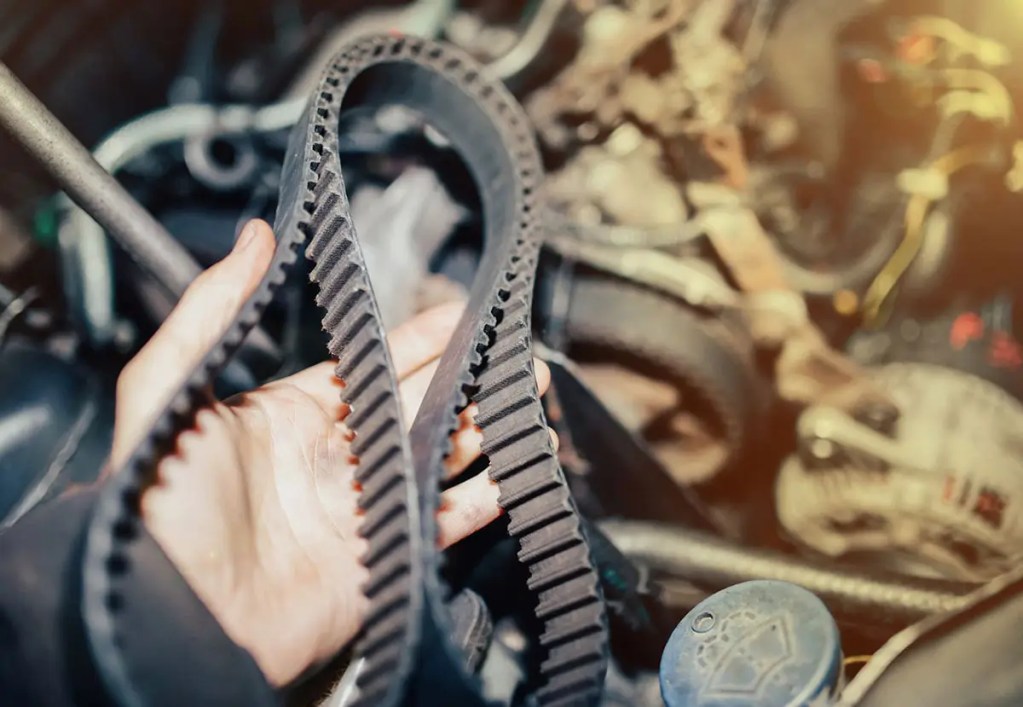
Timing belt failure destroys engines. Many vehicles use timing belts to synchronize engine components. Timing belt failure allows pistons to hit valves. This “interference” damage bends valves, damages pistons, and requires engine disassembly. Repair costs range from $2,500-$5,000.
Clean engine bays allow you to inspect timing belt condition through inspection covers. Cracks or fraying indicate replacement time. Preventive timing belt replacement costs $500-$1,000. Emergency engine repair costs five times more.
Radiator hose failure causes overheating. Radiator hoses carry coolant between your engine and radiator. They operate under pressure and high temperatures. Age causes rubber to soften and bulge. These bulges eventually burst. When a radiator hose bursts, you lose all coolant immediately. Your engine overheats in minutes. Continued driving warps cylinder heads and blows head gaskets.
A clean engine bay shows hose condition clearly. You see bulges, cracks, and soft spots during routine inspections. Hose replacement costs $75-$150. Head gasket repair costs $1,500-$2,500.
Professional Engine Bay Cleaning Process
Dennis Auto Details follows a systematic seven-step process that cleans thoroughly while protecting sensitive components. This process identifies potential problems and prevents damage.
Step 1: Assessment and preparation. We examine your engine bay before cleaning. This identifies existing leaks, loose connections, and worn components. We document these issues with photos. We also identify sensitive electrical components that need extra protection.
Step 2: Component protection. We cover or seal electrical connections, sensors, and air intake systems. This prevents water intrusion during cleaning. Professional protection differs dramatically from the DIY approach of wrapping components in plastic bags.
Step 3: Degreasing application. We apply professional-grade degreasers to dissolve oil, grease, and grime. These products work chemically rather than requiring high pressure. They penetrate deep into crevices where grime hides. We allow proper dwell time for the degreaser to work.
Step 4: Agitation and detailing. We use various brushes to agitate stubborn deposits. Different brush types serve different purposes. Soft brushes clean painted surfaces and plastic covers. Stiffer brushes remove heavy grease from metal components. Detailing brushes clean tight spaces around wiring harnesses and connectors.
Step 5: Low-pressure rinsing. We rinse with controlled water pressure that removes dirt without forcing water into electrical connections. Professional equipment provides precise pressure control. This differs from DIY methods using garden hoses or pressure washers that blast water into sensitive areas.
Step 6: Drying and inspection. We use compressed air to remove water from crevices and electrical connections. Complete drying prevents corrosion and electrical problems. We conduct a second inspection during drying to verify all contaminants are removed and identify any issues revealed by cleaning.
Step 7: Protection and dressing. We apply protectants to rubber hoses, plastic covers, and painted surfaces. These products prevent UV damage and make future cleaning easier. The engine bay looks showroom-new and stays cleaner longer.
Real Cost Savings: San Diego Case Studies

Alan Margolis from Rancho Bernardo wrote: “Pablo did amazing on my Ferrari 458 and Audi, definitely recommend Dennis Auto Details to anyone looking for a white glove detailing experience.”
During his Ferrari’s engine bay service, we discovered a small oil seep from the valve cover. Catching this early prevented a $2,000 repair.
Michael Smith from Escondido shared: “Dennis is a true professional! He did a fantastic job on my black Jaguar XK. I am so glad I had Dennis detail my Jag!”
The engine bay cleaning revealed a corroded battery cable that was causing intermittent starting issues. Replacing the cable cost $85 and solved a problem the dealership had failed to diagnose despite charging $150 for diagnostics.
Jonathan from La Mesa detailed his experience: “Dennis suggested his ceramic coating product and service. After he applied his ceramic coating the comparison was unparalleled. His product exceeded the dealers, including the over time comparison. He has even detailed a large heavy piece of equipment for our company.” We clean engine bays on his AMG and his daughter’s Mercedes-Benz every six months, preventing corrosion from La Mesa’s elevated salt exposure.
Maintenance Schedule for San Diego Vehicles
Your environment determines your cleaning frequency. San Diego presents unique challenges based on location and vehicle use.
Coastal residents need quarterly cleaning. Salt spray affects vehicles within 10 miles of the coast. La Jolla, Del Mar, Pacific Beach, Encinitas, Coronado, and Carlsbad residents face maximum salt exposure. Clean engine bays every 3-4 months to prevent corrosion. The $150 cleaning cost every quarter totals $600 annually—far less than one corroded wiring harness replacement.
Inland residents need biannual cleaning. Escondido, Poway, Rancho Bernardo, and East County locations face less salt but more dust. Dust combines with oil to create insulating grime. Clean engine bays every 6 months to maintain proper cooling and prevent buildup. The $300 annual cost prevents heat-related component failures.
High-mileage drivers need more frequent service. Vehicles driven over 15,000 miles annually accumulate dirt faster. They also experience more component wear. Inspect engine bays every oil change and clean every 3-6 months regardless of location.
Pre-sale cleaning maximizes value. Sell your vehicle? Clean the engine bay first. Buyers inspect under the hood. A clean engine bay signals proper maintenance and increases buyer confidence. This often adds $500-$1,000 to your sale price—more than ten times the $150 cleaning cost.
Key Takeaways
- Early leak detection prevents major failures. Small leaks caught early cost $100-$300 to repair. Ignored leaks cause engine damage costing $2,000-$8,000.
- Corrosion prevention saves thousands. Clean engine bays prevent electrical corrosion that causes sensor failures, wiring damage, and diagnostic fees. One prevented wiring harness replacement pays for years of cleaning.
- Improved cooling extends component life. Clean cooling fins and proper airflow add years to alternator, battery, and starter motor life. The savings from extended component life exceeds cleaning costs many times over.
- Visual inspection identifies worn parts. Clean engine bays make belt and hose inspection simple. Replacing worn components before failure prevents roadside breakdowns and emergency repairs.
- Professional cleaning protects while it cleans. DIY cleaning risks water damage to electrical components. Professional service uses proper techniques, pressures, and protection methods.
- Location-based scheduling optimizes value. Coastal residents benefit from quarterly cleaning. Inland residents need biannual service. Adjust frequency based on mileage and conditions.
Regular engine bay maintenance isn’t an expense—it’s an investment that returns significantly more than it costs.
Schedule Your Preventive Engine Bay Service
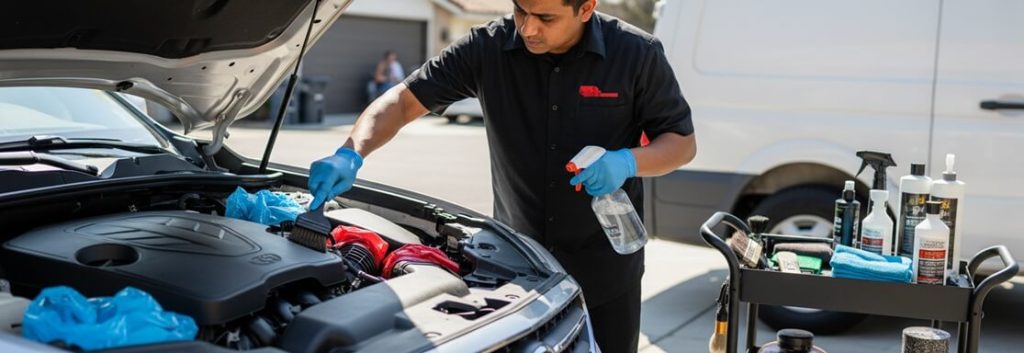
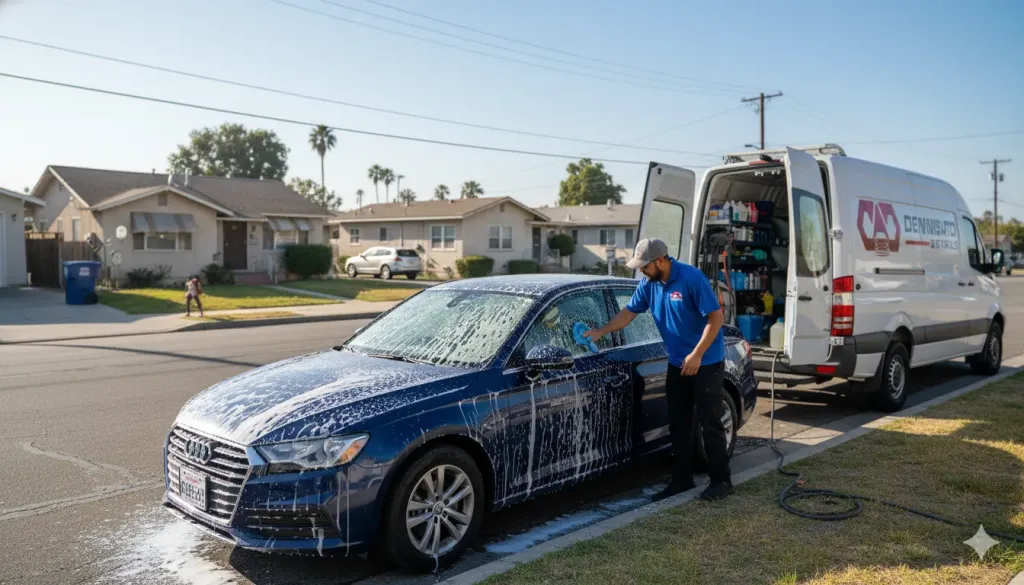
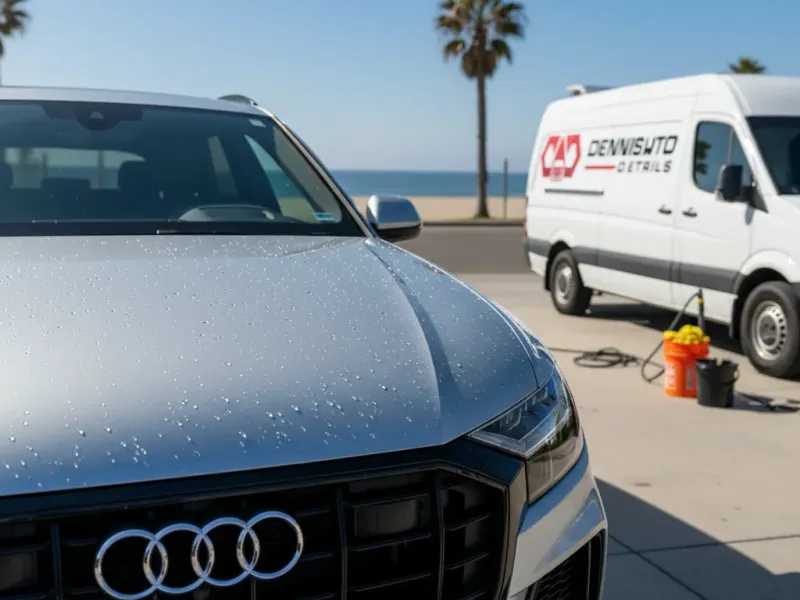
Dennis Auto Details brings professional engine bay detailing to your location anywhere in San Diego County. Our certified technicians use proper techniques and equipment to clean thoroughly while protecting sensitive components.
We serve over 40 neighborhoods including La Jolla, Del Mar, Rancho Bernardo, Carlsbad, Encinitas, Pacific Beach, Downtown San Diego, Escondido, Poway, and surrounding areas. Our mobile service saves you time—we come to your home or workplace.
Engine bay detailing costs $150 and takes 30-60 minutes. We also offer complete detailing packages that include engine bay cleaning with interior and exterior services.
Contact us at 858-798-6657 or book online to schedule your service. Prevent costly repairs with regular engine bay maintenance. Your wallet will thank you.
Something went wrong. Please refresh the page and/or try again.