
Car Trim Restoration Services: The Complete Plastic and Rubber Care Guide for San Diego Vehicles
TL;DR
- San Diego’s UV exposure fades plastic trim and cracks rubber faster than most U.S. climates, making restoration and protection a regular maintenance need.
- Faded trim has three stages: surface discoloration, oxidation, and deep UV degradation. Early treatment is always easier and cheaper.
- Professional restoration delivers longer-lasting results than DIY products because of commercial-grade compounds, IR lamps, and polymer sealants.
- Dennis Auto Details handles plastic and rubber trim restoration as part of mobile detailing services across San Diego County — no shop drop-off required.
Your car’s paint might look great, but if the plastic trim around the windows, bumpers, and door handles has turned chalky gray, the whole vehicle looks older than it is. Faded trim is one of the fastest ways a car loses visual appeal, and in San Diego’s sun, it happens faster than most people expect.
The good news is that most trim damage is reversible. This guide walks you through how to assess what you’re dealing with, what restoration actually involves, and whether professional service or a DIY approach makes more sense for your situation.
Understanding Trim Damage: What You’re Actually Looking At
Not all faded trim is the same. Before you choose a solution, it helps to know what stage the damage has reached.
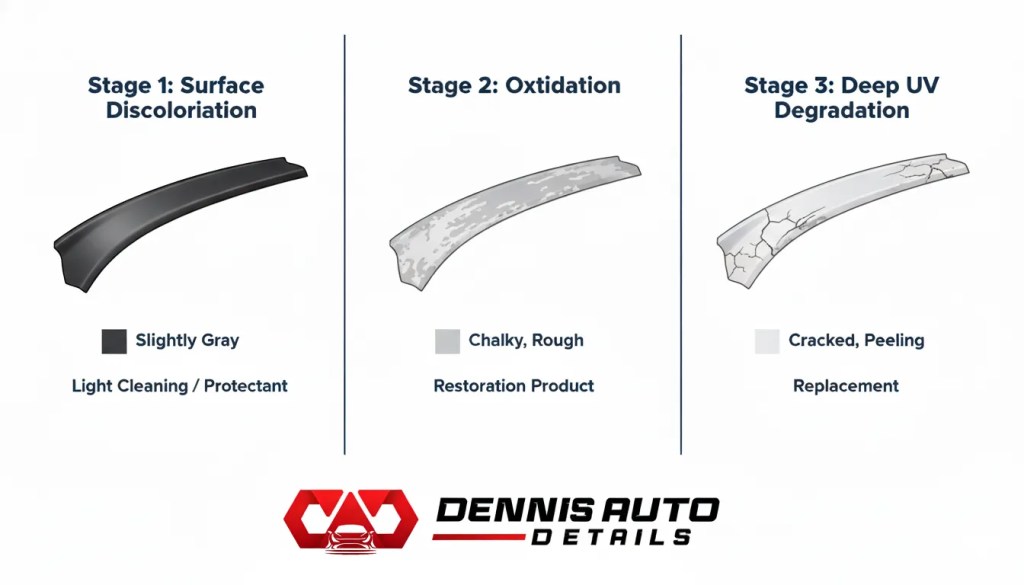
Stage 1: Surface Discoloration
The trim looks slightly lighter or grayish but still has some texture and gloss. This is the easiest stage to reverse and the most responsive to quality restoration products. Surface oils have been stripped by UV exposure, but the plastic structure itself is intact.
Stage 2: Oxidation
The trim appears chalky, dry, and rough to the touch. Color has shifted noticeably from the original deep black or dark gray. This stage requires more aggressive treatment, typically a plastic restore compound followed by a UV-blocking sealant.
Stage 3: Deep UV Degradation
The plastic has become brittle, cracked, or peeling. Surface treatment alone won’t fix this. In some cases, trim replacement is a more practical option than restoration. A professional assessment is the best starting point here.
Rubber-Specific Damage
Rubber seals around windows and doors face their own damage patterns. In San Diego’s climate, rubber dries out quickly and develops fine cracks. Left untreated, dry rubber seals start to leak, rattle, and shrink — turning a cosmetic issue into a functional one. Regular conditioning with rubber-safe protectants prevents this progression.
Why San Diego’s Climate Accelerates Trim Fading
San Diego sees 266+ sunny days each year with a UV index that regularly reaches 8 to 11. For vehicle trim that’s parked outside even a few hours per day, that’s constant photochemical stress on the polymer and rubber surfaces.
Coastal areas like La Jolla, Del Mar, and Leucadia add salt air to the equation. Salt particles accelerate the breakdown of surface coatings on plastic and dry out rubber trim faster than inland conditions.
Inland areas like Escondido, Valley Center, and Ramona see intense dry heat and Santa Ana winds that accelerate oxidation and deposit abrasive fine dust on surfaces.
The result is that a vehicle sitting in San Diego sun for two to three years without protection typically shows trim fading that would take five to six years in a cooler, less sunny climate. This makes regular exterior maintenance after professional detailing an important part of owning a vehicle here.
The Trim Restoration Process: What Professional Service Looks Like
Professional trim restoration is different from applying a store-bought product at home. Here’s what the process involves when done correctly:
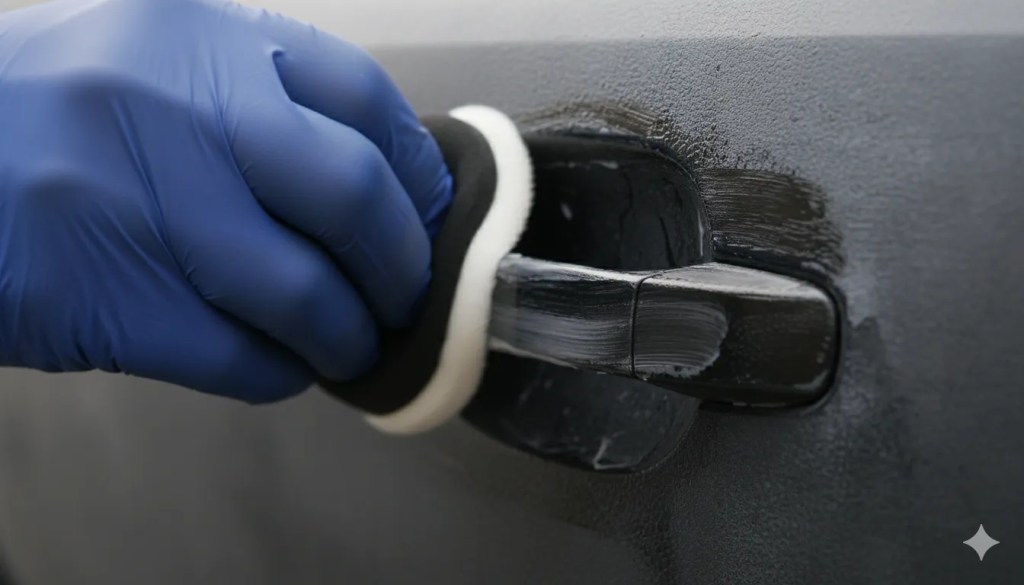
Step 1: Deep Cleaning
All trim surfaces are cleaned with an all-purpose cleaner and trim-safe degreaser to remove dirt, road grime, old protectant residue, and surface oils. This step matters. Any contamination left on the surface will prevent restoration compounds from bonding properly.
Step 2: Surface Preparation
For stage 2 oxidation, a light abrasive compound is worked into the plastic surface to lift discoloration and expose the healthier material underneath. This step requires the right product for the specific plastic type — bumper covers, door moldings, mirror housings, and window surrounds each have slightly different compositions.
Step 3: Restoration Compound Application
A professional-grade plastic restorer penetrates the surface and replenishes the oils and polymers that UV exposure has stripped away. Commercial products used by detailing professionals hold up significantly longer than consumer-grade alternatives because of their higher polymer concentration and UV inhibitor content.
Step 4: Heat Treatment (For Severe Cases)
For deeper oxidation, some professional detailers use infrared lamps or heat guns to help polymer-based restorers penetrate and bond more effectively. This is rarely needed for stage 1 or 2 damage but makes a notable difference in severe cases.
Step 5: Sealant or Coating Application
The final step protects the restored surface from future fading. Options include dressing-based sealants, ceramic-based plastic coatings, or dedicated trim protection products. A quality sealant extends the results of restoration and reduces how often re-treatment is needed.
Different Materials, Different Approaches
Not all plastic and rubber trim is the same material. The approach needs to match what you’re working with:
Unpainted Black Plastic (Textured)
This is the most common type — bumper covers, door handles, mirror housings, rocker panels. It’s the most prone to visible fading and the best candidate for restoration. The textured surface responds well to polymer-based restorers and ceramic trim coatings.
Painted Plastic Trim
Painted plastic trim is color-matched to the vehicle body and is treated more like the painted panels. Fading here typically indicates clear coat failure or paint oxidation. It may need paint correction or touch-up, not a plastic restorer.
Rubber Window Seals and Door Gaskets
Rubber components need conditioning products, not abrasive restorers. A quality rubber seal conditioner keeps the material supple, prevents cracking, and restores some of the original deep color. Annual conditioning is the easiest prevention strategy in San Diego’s climate.
Chrome and Metallic Trim
Chrome trim needs metal polish to remove oxidation and pitting, followed by a protective sealant. Metallic plastic trim (common on grilles and accents) is treated differently than true chrome and shouldn’t be polished with abrasive metal compounds.
Professional Service vs. DIY: Which Should You Choose?
Plenty of DIY products claim to restore faded trim. Some of them work reasonably well for stage 1 surface discoloration. Here’s the honest comparison:
When DIY Works
- Your trim is only slightly faded (stage 1)
- You have the time and attention for proper prep and application
- You’re maintaining recently restored trim, not tackling severe damage
When Professional Service Is the Better Choice
- Trim is visibly chalky, rough, or shows deep oxidation (stage 2–3)
- Previous DIY products left the trim looking oily, streaky, or uneven
- You want results that last 12–24 months, not 4–8 weeks
- You have multiple trim types on the vehicle that require different products
- You want the restoration combined with a full auto detailing service
The core difference is product concentration and technique. Consumer products are formulated to be safe for inexperienced users, which typically means a lower-strength formula. Professional products work faster, penetrate deeper, and are sealed with UV protectants that consumer kits rarely include.
“Manny is the man!! Left my car looking as brand new as he could! Would definitely recommend!” — Ulisses Cota, verified Google review
Preventing Trim Damage After Restoration
Restoration is worth the investment when you follow it with basic preventive maintenance. Here’s what actually works for San Diego conditions:
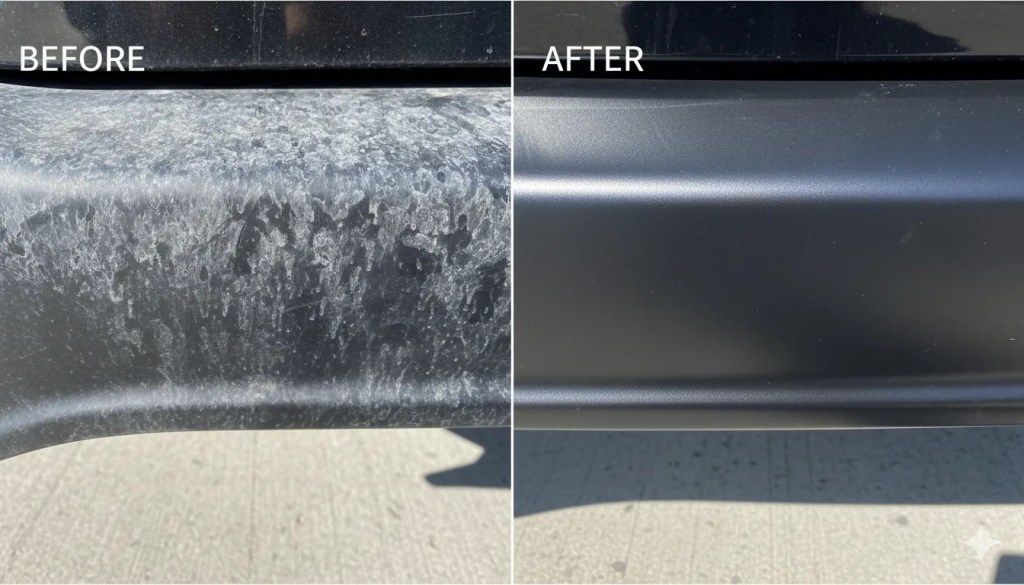
- Apply a UV-blocking trim sealant every 3–6 months. This is the single most effective thing you can do to extend results.
- Avoid automatic car washes with rotating brushes. The brushes strip protectant from trim surfaces and can scratch softer plastics.
- Park in shade or use a car cover when your vehicle will sit outside for extended periods, especially during San Diego’s summer months when UV levels peak.
- Rinse your vehicle after coastal drives in areas like Pacific Beach, Solana Beach, or Carlsbad to remove salt deposits before they dry on trim surfaces.
- Include trim conditioning as part of your regular car detailing maintenance schedule.
For long-term protection that goes beyond trim, consider pairing your restoration service with a ceramic coating on your paint panels. A coated vehicle overall requires less intensive maintenance and the combination of protected paint and restored trim keeps your vehicle looking fresh significantly longer. Learn more about how ceramic coating protects your full vehicle in our ceramic coating and car protection guide.
Mobile Trim Restoration: We Come to You Anywhere in San Diego
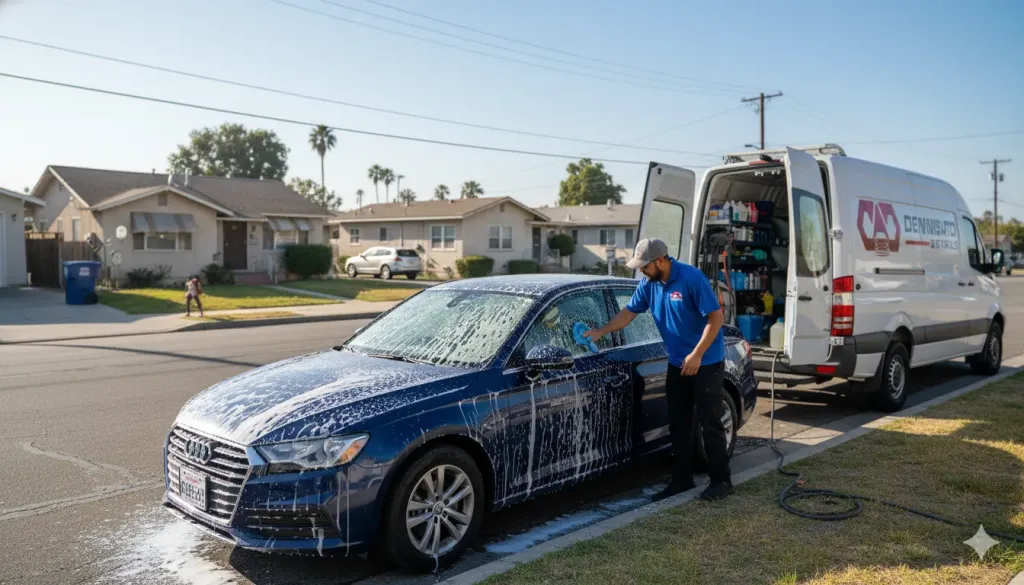
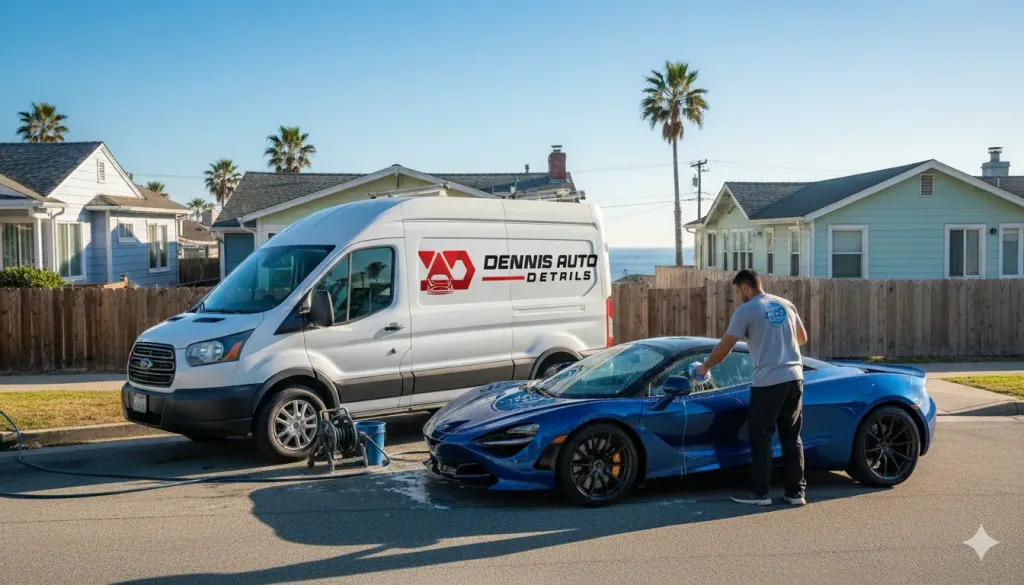
Dennis Auto Details handles trim restoration as part of its mobile detailing service across all of San Diego County. Whether you’re in Encinitas, Rancho Bernardo, San Marcos, or anywhere across the county, the team brings the products and equipment to you.
Trim restoration is most commonly paired with a full exterior detailing service for best results. During the same appointment, your vehicle gets a thorough wash, decontamination, trim restoration, and paint protection — all without a single trip to a shop.
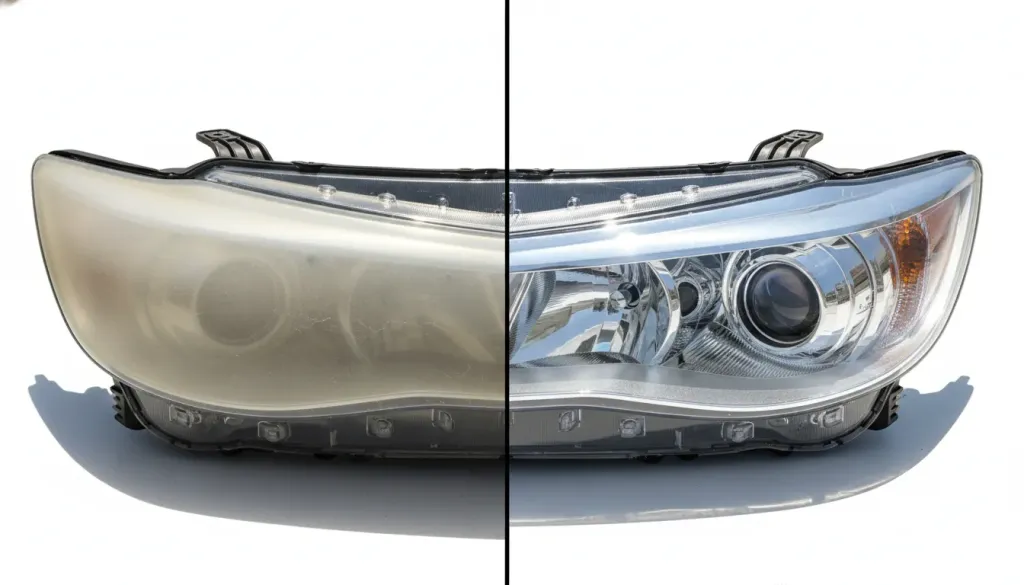
See examples of before-and-after results in our work gallery, or get answers to common questions in our FAQ page.
Key Takeaways
- Trim fading has three stages. Early treatment is faster, cheaper, and gives better results than waiting until damage is severe.
- San Diego’s UV index, salt air, and dry heat accelerate plastic and rubber degradation faster than most U.S. climates.
- Different trim materials — textured plastic, rubber seals, chrome, painted plastic — each need different products and techniques.
- Professional restoration outperforms DIY products in durability because of commercial-grade compounds and UV-blocking sealants.
- Prevention after restoration is simple: UV sealant every 3–6 months, avoid brush car washes, and rinse after coastal drives.
- Dennis Auto Details provides mobile trim restoration across San Diego County with no upfront payment required.
Frequently Asked Questions
Can faded plastic trim really be restored to look black again?
Yes, in most cases. Stage 1 and 2 fading responds well to professional restoration products. Stage 3 deep degradation with cracking or peeling may require partial or full trim replacement. A detailing professional can assess your specific trim condition and give you an honest recommendation.
How long does professional trim restoration last?
A professionally done restoration sealed with a quality UV-blocking protectant typically lasts 6 to 18 months in San Diego conditions. Vehicles parked outside full-time will need more frequent touch-ups than garaged vehicles.
Will trim restoration protect against future fading?
The restoration itself doesn’t prevent fading long-term without a protective sealant applied afterward. The sealant creates a UV barrier that slows future degradation. Reapplying the sealant every 3–6 months extends the results significantly.
Is car trim restoration included in a standard detailing service?
It depends on the package. At Dennis Auto Details, exterior detailing services include trim treatment as part of the overall exterior care. Contact the team to confirm what’s included in your specific service package.
Can rubber seals be restored, or do they need replacement?
Rubber seals in the early stages of drying and cracking respond well to conditioning products. Once rubber has become brittle, cracked through, or has lost its sealing ability, replacement is usually more practical than restoration.
Get Your Trim Looking Black and Fresh Again
Don’t let faded plastic or cracked rubber make your car look older than it is. Dennis Auto Details brings professional trim restoration directly to your location across all of San Diego County.
Book Your Mobile Detail Online | Call (858) 798-6657 | Contact Us
Find us on Google Maps: Dennis Auto Details San Diego | Dennis Auto Details Rancho Bernardo
Something went wrong. Please refresh the page and/or try again.