
Does Paint Correction Remove Scratches? Here’s the Honest Answer
TL;DR
Paint correction permanently removes surface-level scratches and swirl marks by leveling the clear coat through controlled machine polishing. It works on defects that live inside the clear coat layer. It cannot fix scratches that have cut through to the base coat, primer, or bare metal — those require touch-up paint or a respray. The fingernail test tells you which type you have in under ten seconds.
Yes, Paint Correction Removes Scratches — With One Important Limit
Here is the direct answer: paint correction permanently removes scratches and swirl marks that live within the clear coat layer. Once those defects are polished out, they do not come back. The surface is physically changed.
The limit is this: paint correction cannot fix scratches that have cut through the clear coat into the base coat (color layer), primer, or bare metal. Those need touch-up paint, wet sanding, or in severe cases, a panel respray.
That distinction matters because most San Diego drivers — dealing with swirl marks from automated car washes, oxidation from year-round UV exposure, and water spot etching from coastal condensation — have damage that is correctable. Understanding which type you have tells you whether paint correction is the right service or whether you need body shop work first.
How Car Paint Is Structured (Simply Explained)
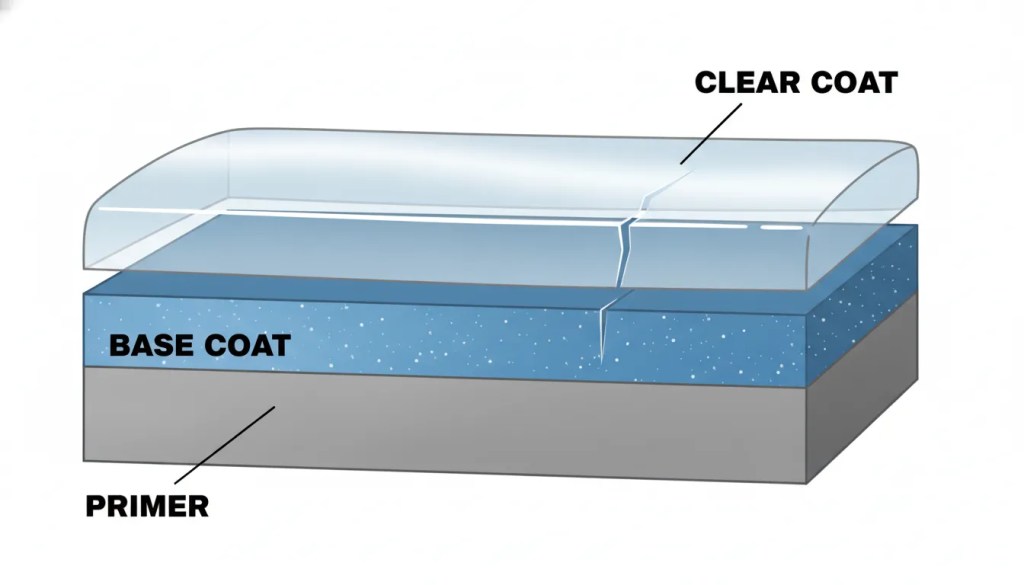
Modern automotive paint has four layers. Understanding where a scratch lives determines whether it’s correctable.
1. Primer — The base layer bonded to the metal body panel. It promotes adhesion and prevents rust.
2. Base Coat — The color layer. This is the pigmented paint that gives your car its color.
3. Clear Coat — The transparent protective layer on top. It blocks UV radiation from reaching the base coat below and provides the gloss and depth you see. This is where most everyday scratches live.
4. Wax or Sealant — A sacrificial surface-level product that sits on top of the clear coat. It washes off over time and provides minimal protection.
Paint correction works exclusively on the clear coat. The process uses abrasive compounds applied with a machine polisher to carefully remove a thin layer of the clear coat — leveling the surface below the depth of the defect. The scratch’s edge, which catches and scatters light, is eliminated. The defect is removed, not filled.
As Chemical Guys explains, clear coat is the unsung hero of modern paint systems — the transparent layer that defends against UV rays, oxidation, and minor abrasions. When that layer gets damaged, paint correction is the mechanism to restore it.
⭐ Google Review: “My car had some bad swirl marks and Dennis fixed them perfectly. You can tell he takes real pride in his work. Highly recommend for anyone looking for paint correction in San Diego!” — Verified Google Review
Types of Scratches Paint Correction Fixes
These are the defect types that professional paint correction reliably removes.
Swirl Marks
The most common paint defect in San Diego. Swirl marks are micro-scratches in the clear coat caused by improper washing technique, automated car wash brushes, and dirty drying towels. They show up as circular haze patterns under direct sunlight or artificial light. A 1-step or 2-step correction removes them permanently.
Light Clear Coat Scratches
Fine linear scratches caused by brush contact, clothing, keys scraping the surface lightly, or environmental debris. If they are contained within the clear coat, machine polishing removes them.
Buffer Trails (Hologramming)
If a previous detailer used an aggressive compound with the wrong technique, they may have left swirling haze patterns from the machine itself. This is an ironic form of paint damage caused by incorrect correction. Professional correction removes it.
Oxidation
San Diego’s UV index regularly hits 8–11 between April and October. Sustained UV exposure breaks down the clear coat at a molecular level, causing the chalky, flat, faded appearance you see on older vehicles. A 2-step paint correction with a cutting compound removes oxidized clear coat and restores clarity.
Water Spot Etching
Hard water spots — especially common in Escondido, Rancho Bernardo, and inland San Diego communities — bond calcium and magnesium deposits to the clear coat over time. When left untreated, these etch into the surface. Paint correction removes the etched area.
Bird Dropping and Chemical Etching
Bird droppings are acidic and etch the clear coat within hours in San Diego’s heat. Chemical etching from industrial fallout creates similar damage. If the etch is contained to the clear coat, correction removes it.
Types of Scratches Paint Correction Cannot Fix
Honest service means telling you what correction will not do. These defect types require different approaches.
Deep Scratches Through the Base Coat
If a scratch has cut through the clear coat and into the color layer, you will see white edges or a lighter-colored border around the scratch. Machine polishing can clean up the surrounding area and improve gloss, but it cannot restore missing color. These require touch-up paint matched to your vehicle’s color code, followed by correction to blend the area.
Scratches to Primer or Metal
Scratches that reach primer (gray layer) or bare metal are body shop territory. These also create rust risk if untreated. No amount of polishing addresses structural damage below the clear coat.
Rust
Rust is oxidization of the metal body panel itself. Paint correction does not treat rust — it treats the transparent protective layer above the metal. Rust requires sanding, treatment, priming, and repainting.
Paint Chips
Stone chips from highway driving punch through all layers at once. Paint correction can improve the area around a chip, but the chip itself needs touch-up paint fill.
Peeling Clear Coat
Once the clear coat has delaminated and is physically separating from the base coat, polishing the remaining surface is not a solution. Peeling clear coat requires a professional respray of the affected panel.
According to Autogeek’s paint correction guide, the correction process works by assessing paint condition first — then choosing the right compound and pad combination to address what’s actually correctable. Assessment before polishing prevents over-correction.
The Fingernail Test — Know What You Have Before You Book

This self-diagnostic takes ten seconds and gives you a reliable answer about your scratch type.
How to do it:
Find a clean patch of your scratch under good natural light. Run the tip of a clean fingernail across the scratch — gently, at a low angle.
What the result tells you:
- Fingernail glides over the scratch with no catching — The scratch lives in the top of the clear coat or is surface marring. This is correctable with a 1-step or 2-step polish.
- Fingernail catches slightly — The scratch goes deeper into the clear coat. Correctable, but may need the compound stage of a 2-step correction.
- Fingernail catches clearly and the scratch feels like a groove — The scratch likely reaches the base coat. Paint correction can improve the surrounding area, but this may need touch-up paint first.
- You see color other than your car’s color in the scratch — Paint transfer from another object. Often correctable with a compound once the transferred paint is removed.
This test is used by professional detailers at Dennis Auto Details during the paint assessment phase before any correction begins. It guides the recommendation — 1-step, 2-step, or referral to touch-up before polishing.
Detailed Image’s professional guide confirms that the decision between single-stage and two-stage correction comes down to defect depth and what the paint actually needs — not a one-size-fits-all approach.
How Long Does the Correction Last?
This is the permanence question most people have. Here is the clear answer: corrected paint does not revert.
Machine polishing physically removes the damaged layer of clear coat. The surface is restructured, not temporarily filled. Once the scratch is gone, that area of the clear coat no longer has the defect.
What can happen is new damage. If your car goes back to the same automated car wash that caused the swirl marks in the first place, new swirl marks can form on the corrected surface. The correction itself doesn’t protect against future damage — that’s the job of a protective coating applied after correction.
This is exactly why the combination of correction plus ceramic coating is the recommended approach. The correction restores the surface. The coating protects the restored surface from future damage for 2–9 years depending on the package.
A vehicle whose clear coat has already been corrected is the ideal candidate for ceramic coating — defect-free paint bonds the coating more effectively and the results look dramatically better than coating applied over damaged paint.
Key Takeaways
- Paint correction permanently removes clear coat scratches — defects don’t come back after correction
- Swirl marks, light scratches, buffer trails, oxidation, and water spot etching are all correctable
- Deep scratches through to the base coat or primer require touch-up paint — not polishing
- The fingernail test lets you self-diagnose before booking any service
- Corrected paint can still get new scratches — ceramic coating prevents that from happening
- Dennis Auto Details performs fully mobile paint correction across San Diego County
Ready to Find Out What Your Paint Needs?
Dennis Auto Details offers fully mobile paint correction across San Diego County — Carmel Valley, La Jolla, Del Mar, Carlsbad, Chula Vista, Escondido, and 40+ other neighborhoods. No shop visit. No waiting room. The technician comes to you with a full professional setup.
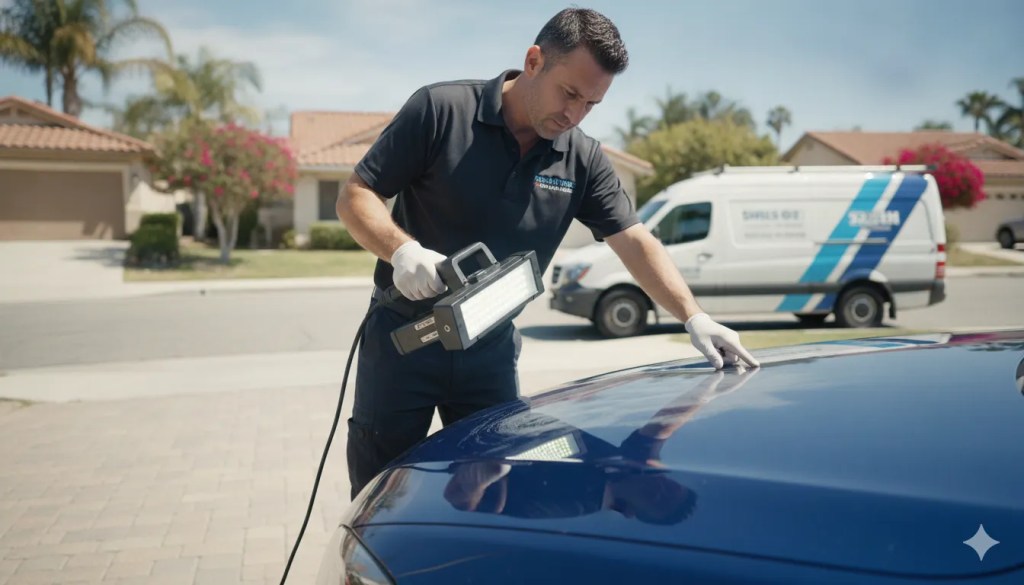
Every appointment starts with a paint assessment — inspection under correction lighting, paint thickness measurement, and a recommendation based on what your paint actually needs.
Call or text: 858-298-7259
Book your paint correction: dennisautodetails.fieldd.co
Contact form: dennisautodetails.com/contact-us
Frequently Asked Questions
Does paint correction permanently remove swirl marks?
Yes. Paint correction physically removes swirl marks by leveling the clear coat surface. They do not come back — but new swirl marks can form if the car is washed improperly again. Ceramic coating applied after correction prevents new damage.
Can paint correction remove deep scratches?
Paint correction removes scratches contained within the clear coat. Scratches that have cut through to the base coat, primer, or metal require touch-up paint or body shop repair before polishing can improve the surrounding area.
What scratches can paint correction fix?
Swirl marks, light clear coat scratches, buffer haze, mild oxidation, water spot etching, and bird drop etching are all correctable with paint correction. The key is that damage must be within the clear coat layer.
How do I know if my scratch is correctable?
Use the fingernail test. Run your fingernail gently across the scratch. If it glides over without catching, the scratch is likely in the clear coat and correctable. If it catches like a groove, the scratch may be too deep for polishing alone.
Does paint correction thin the clear coat permanently?
Yes — correction removes a thin layer of clear coat. A professional technician uses a paint thickness gauge before and during the process to ensure safe removal within the clear coat’s available depth. Most vehicles have 4–6 mils of clear coat; a single correction removes far less than 1 mil when done properly.
Is paint correction better than scratch filler products?
Yes. Scratch filler products (waxes, glazes, all-in-one polishes) temporarily fill defects with oils and polymers that wash away over time. Paint correction physically removes the defect. The result is permanent as long as no new damage occurs.