

Paint Correction for Dark Colored Cars in San Diego — Why It’s Harder and How to Do It Right
TL;DR: Dark-colored cars — especially black, dark navy, and dark grey — show swirl marks more visibly than any other paint color, and San Diego’s intense sunlight makes every imperfection glare. Correcting dark paint requires extra skill, finer compounds, and a multi-step process. Dennis Auto Details specializes in dark car paint correction across San Diego County, with a 2-step correction starting at $799.
You bought a black car. Or a dark navy BMW. Or that deep charcoal grey Mustang you couldn’t resist.
And now you know the truth every dark car owner figures out fast: dark paint looks extraordinary when it’s perfect — and it looks terrible when it’s not.
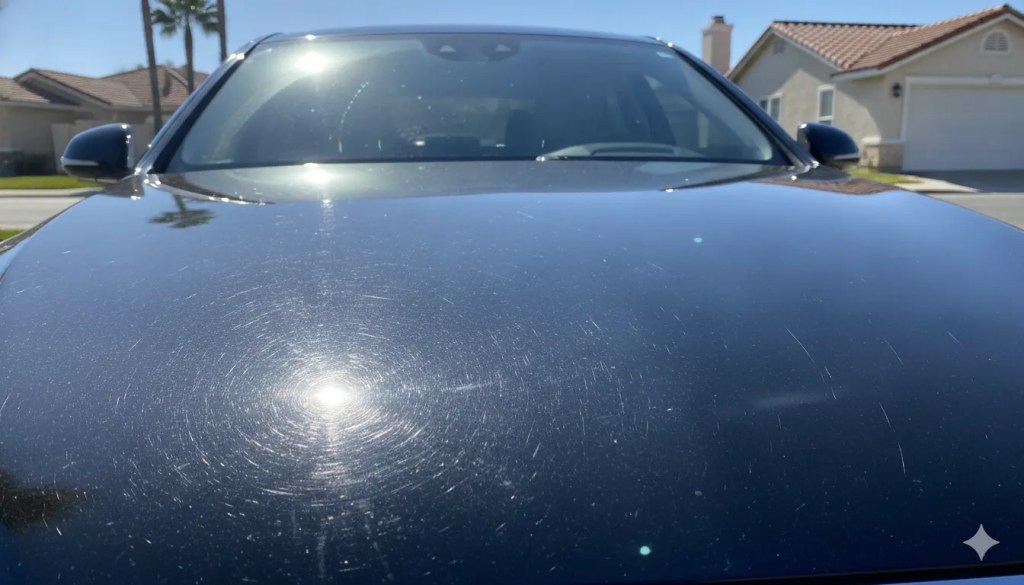
Every swirl from the wrong automatic car wash. Every fine scratch from a dry microfiber towel. Every water spot from the last time you parked under a sprinkler. In San Diego, where the sun hits from a high angle most of the year, there is nowhere for those defects to hide.
The good news: all of it is fixable. Paint correction for dark colored cars in San Diego is exactly what Dennis Auto Details specializes in.
Why Dark Cars Show Defects More Than Light Cars
This is physics, not bad luck.
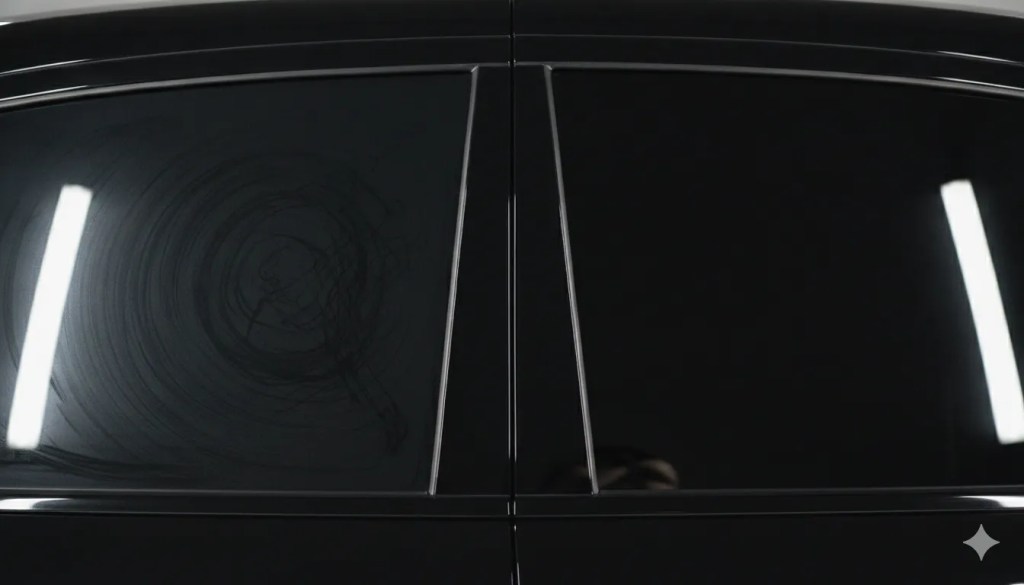
Swirl marks are microscopic scratches that run across your clear coat in overlapping patterns. They come from improper washing, dry wiping, and automatic car wash brushes. According to peer-reviewed research published in the National Library of Medicine, automotive clear coat scratches — including swirl marks — are surface-level defects confined to the clear coat layer. The optical visibility of those defects is directly tied to how the surrounding paint reflects and scatters incident light.
On white or silver paint, light bounces off the pale surface in diffused ways that mask those scratches. The contrast between the scratch and the surrounding paint is low enough that the eye does not register it easily.
On dark paint, the contrast is extreme. A swirl mark in a black clear coat reflects incoming light at a different angle than the surrounding flat surface. Under San Diego’s high-UV summer sun, those reflected rays scatter visibly — creating a web of halo-like marks across every panel.
Stoner Car Care’s guide on how swirl marks form and stay in clear coat explains this directly: each pass with a contaminated wash mitt, towel, or sponge drags abrasive particles across the surface in a circular motion, creating a scratch pattern that catches and scatters light. On dark paint, those scattered reflections are dramatically more visible.
Dark and black paint also absorbs more heat, which drives thermal cycling that weakens wax and sealant faster than on lighter vehicles — leaving the clear coat exposed sooner, particularly in San Diego’s coastal environment.
Understanding what causes these defects and how they progress is the first step to correcting them properly. The paint correction guide for San Diego covers every defect type — swirl marks, water spots, bird drop etch, buffer haze — and explains the correction approach for each.
Why Correcting Dark Paint Requires More Skill

Here is where inexperienced detailers make a critical mistake with dark cars.
Paint correction uses machine polishing — a cutting compound removes surface scratches by leveling the clear coat. On silver or white paint, if a slight haze remains from the cutting compound, it blends into the light-colored surface and most people never notice it.
On black paint, compounding haze is clearly visible. If a technician uses a compound that’s too aggressive without following it with a fine polishing step, the haze replaces the swirls — and the car still looks wrong, just differently wrong.
This is why dark car paint correction requires a structured multi-step approach:
- The cutting pass uses a compound aggressive enough to remove defects without damaging a thin clear coat
- The finishing pass uses a finer polish to eliminate any haze from the cutting step and maximize gloss depth
Skipping the finishing pass on a dark car produces a subpar result. This step is not optional.
Dark paint’s heat absorption also matters in San Diego’s summer climate. Paint surfaces can reach temperatures where compounds flash-dry before they are properly worked. Experienced technicians schedule dark car corrections for cooler parts of the day or work in controlled shade.
What Level of Paint Correction Do Dark Cars Need?
Dark cars almost always need at least a 2-step correction for complete defect removal.
Here is what each level accomplishes:
Gloss Enhancement Polish ($399–$499): A single polishing step that adds clarity and depth without significant defect removal. Appropriate only for dark cars with minimal swirling and new or near-new paint — vehicles under 12 months old that have been properly maintained.
1-Step Paint Correction ($699–$799): One machine polishing pass that removes 50–60% of paint defects. Appropriate for moderate swirling on dark paint, but will leave some deeper defects and may leave minor compounding haze if product selection is not precisely matched to the paint hardness.
2-Step Paint Correction ($799–$899): A cutting pass followed by a finishing pass that removes 75–85% of all paint defects. This is the recommended package for virtually all dark-colored vehicles with visible swirling. The cut pass removes defects; the finishing pass eliminates haze and maximizes deep gloss. For a full breakdown of pricing variables, see the paint correction cost guide for San Diego.
For heavily neglected dark paint — vehicles with years of car wash swirls, oxidation, or deeper scratches — the 2-step correction produces the most dramatic visual transformation of any car type. See our full paint correction packages here.
Dennis’s Specific Approach to Dark Car Paint Correction
Dark cars require deliberate adjustments at every stage of the process — not a generic correction protocol.
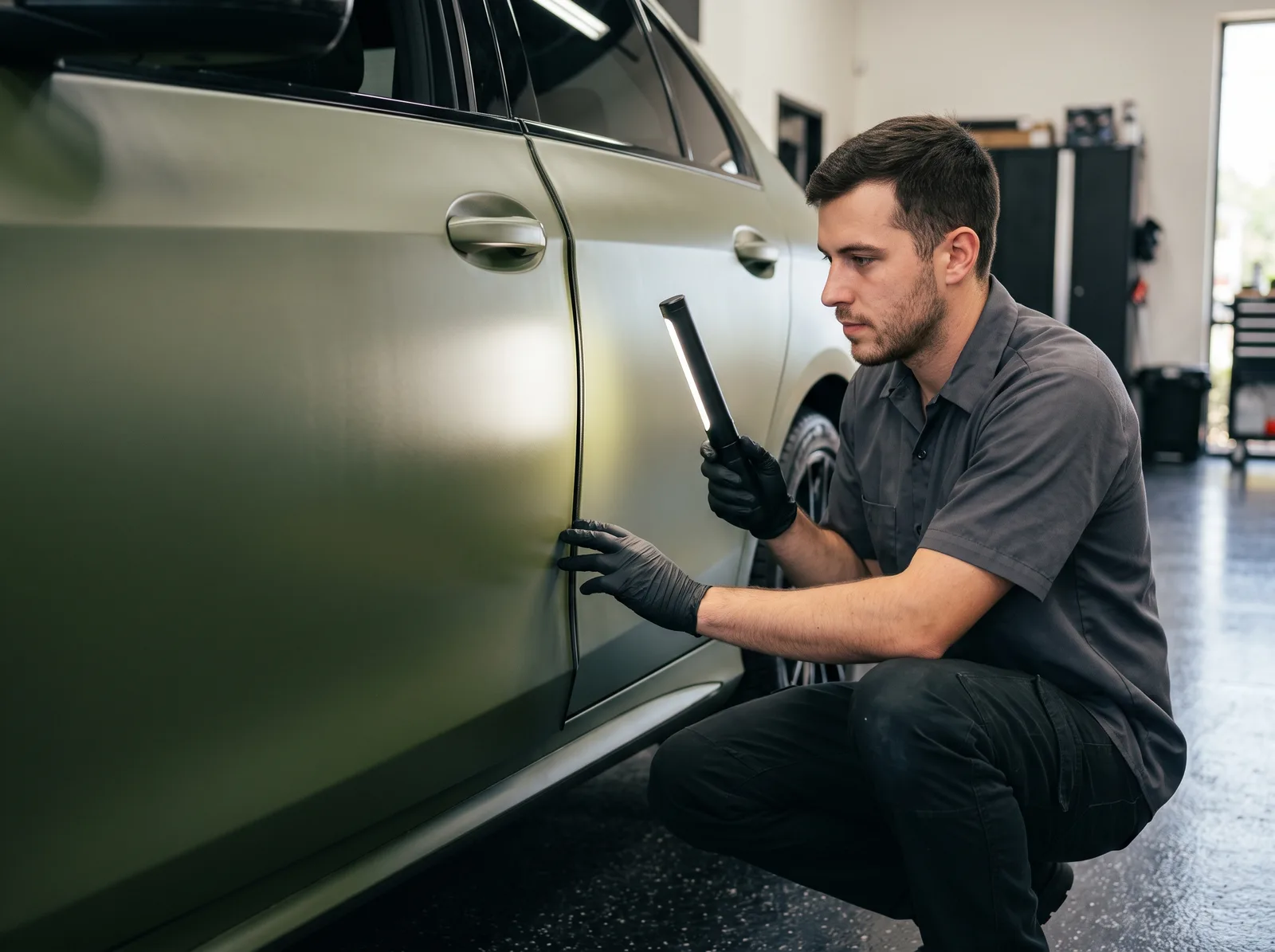
Paint Assessment: The technician uses high-output LED inspection lights at multiple angles to map swirl patterns, buffer trails, and haze. A paint thickness gauge confirms safe correction depth. European vehicles, which typically run thinner clear coats, get a conservative compound selection based on gauge readings from every panel.
Compound and Pad Selection: Dennis starts with the finest compound that will still remove the defects present. The goal is minimum aggression for complete defect removal — cutting harder than necessary on dark paint just creates more haze to address in the finishing step.
Machine Speed and Section Size: Polisher speed is dialed down for dark paint in San Diego’s warm conditions. Smaller working sections prevent compound from drying before it’s been properly worked into the surface.
Finishing Step: Every dark car receives a dedicated fine polishing pass — a soft foam finishing pad with a high-gloss refining polish. This eliminates compounding haze and maximizes the deep color saturation that makes black and dark navy paint look extraordinary. This step is never skipped.
Final Inspection: A post-correction check under raking LED light confirms all panels are clean, haze-free, and corrected to the same standard before the service is complete.
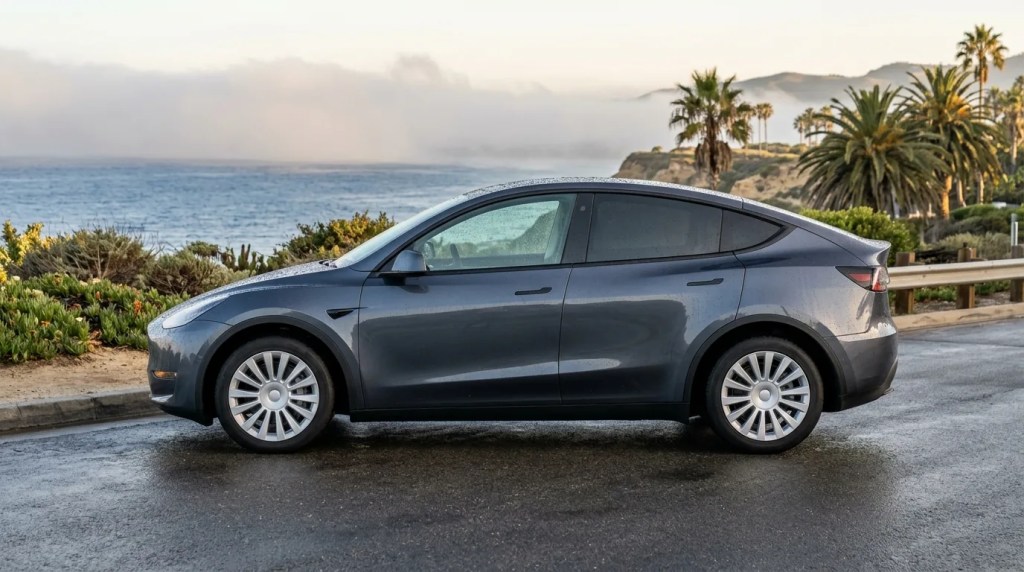
“My black Tesla Model 3 was covered in swirls — it looked like someone washed it with sandpaper. Dennis came to my house in Chula Vista and spent a full day on it. The car looks brand new. I’ve never seen black paint look that deep and clear.” — Google Review, 5 stars ⭐⭐⭐⭐⭐
Post-Correction Protection — Why Dark Cars Need Ceramic Coating
Paint correction removes existing defects. It cannot prevent new swirls from forming afterward — and on dark paint, the next round of swirls will be just as visible as the ones you just removed.
Ceramic coating after paint correction is the most logical next step for dark-colored vehicles. A 9H ceramic coating bonds chemically to the clear coat and creates a hardened, hydrophobic layer above the paint. Because the ceramic surface resists micro-abrasion from dust, grit, and improper washing, swirls form far less readily. Water beads and rolls off, taking contaminants with it.
The EPA’s UV Index Scale classifies UV levels of 8 and above as Very High to Extreme — levels San Diego reaches from May through September. On dark paint, these UV levels don’t just make swirls more visible; they accelerate clear coat oxidation, reducing paint depth and color saturation over time. Ceramic coating blocks UV at the surface level, preserving the finish that makes dark paint look exceptional.
Dennis offers 2-year, 5-year, and 9-year ceramic coating packages in San Diego that can be applied at the same appointment as paint correction — the most efficient combination available. Before committing to coating, read the honest ceramic coating disadvantages guide to understand what it does and doesn’t protect against.
A full detail every 3–4 months with quality wax provides an alternative for those not yet ready for ceramic.
Where Dennis Performs Dark Car Paint Correction in San Diego
Dennis Auto Details is fully mobile — the technician comes to your driveway, your office parking spot, or wherever your vehicle is located across San Diego County.
Dark car paint correction has been performed in La Jolla, Carmel Valley, Chula Vista, Escondido, Santee, Oceanside, Del Mar, Pacific Beach, Encinitas, La Mesa, El Cajon, Rancho Bernardo, and dozens of other neighborhoods. View the full service area here.
No shop drop-off. No waiting for a callback. You book online, the technician arrives at your location on the scheduled day, and the car is corrected right in your driveway.
For luxury dark-colored vehicles — Porsche, BMW, Mercedes, Ferrari, Lamborghini — Dennis has specific experience with the thinner European clear coats that require careful compound selection and lower machine speeds. Those cars are treated accordingly from the first inspection.
Find Dennis Auto Details on Google Maps
Key Takeaways:
- Dark paint scatters light from swirl marks in all directions, making defects dramatically more visible under San Diego’s UV-heavy sun
- Correcting dark paint requires more precision — compounding too aggressively leaves haze that shows up just as badly as the original swirls
- Most dark vehicles need a 2-step correction (cut pass + fine polish pass) for clean, haze-free results
- Dennis uses finer compounds, machine speeds matched to paint hardness, and high-output LED inspection lighting for every dark car job
- Ceramic coating after correction is especially valuable on dark paint — it prevents future swirl accumulation on the surface most prone to it
Frequently Asked Questions
Can all swirls be removed from a black car? Most swirl marks — which are clear coat-level scratches — can be removed with paint correction. Scratches that penetrate through the clear coat to the base coat or primer cannot be removed by polishing and require touch-up or respray. The technician will identify any paint-through scratches during the assessment. You can learn more about what correction can and cannot fix in the ceramic coating and scratch removal guide.
How long does paint correction take on a dark car? A 2-step correction on a standard sedan takes 6–8 hours. Larger vehicles, SUVs, or vehicles with severe defects may require a full day. The finishing step on dark cars adds time that is genuinely necessary for the best result.
How do I avoid new swirls after correction? Use the two-bucket wash method, a high-quality grit guard, and a clean, plush microfiber wash mitt. Never use an automatic car wash with brushes. Dry with a clean, soft microfiber towel using light blotting pressure rather than wiping. Ceramic coating makes proper washing easier and the surface more forgiving.
Do you work on motorcycles in dark colors? Yes. Motorcycle detailing and paint enhancement services are available across San Diego County. RV detailing for darker-colored RVs is also available.
Will ceramic coating prevent swirls from forming on my black car? Ceramic coating significantly reduces swirl formation by hardening the surface and making it more resistant to micro-abrasion. It does not make the surface scratch-proof. Proper wash technique still matters. For the full picture, read the guide on ceramic coating mistakes to avoid in San Diego.
Book a Paint Correction Consultation for Your Dark Car Today
If your black, dark navy, dark grey, or dark blue car is covered in swirls, haze, or fine scratches, the right paint correction process can completely restore it.
Dennis Auto Details specializes in dark car paint correction across San Diego County — certified technicians, proper inspection lighting, and the finishing step that most generic detailers skip.
Book your appointment online →
Or call 858-295-7259 to discuss your vehicle’s paint condition and get a quote.
Leave a review or find our Google listing →



Something went wrong. Please refresh the page and/or try again.