
Steam Cleaning Car Seats vs. Shampooing: Which Method Actually Works Better?
TL;DR: Steam cleaning car seats sanitizes deeply, dries faster, and works without chemicals — making it ideal for light soil, odors, and allergens. Shampooing uses chemical agitation and hot water extraction, delivering stronger results on heavy stains and ground-in dirt. The best outcome usually comes from a professional who knows which method — or which combination — your specific fabric needs.
If you’ve ever tried to clean your car seats at home and walked away disappointed, you’re not alone. The internet is full of conflicting advice. Some say steam is the gold standard. Others swear by a good shampoo and extraction setup. And most people end up doing neither correctly.
This article settles the debate. We’ll break down how each method works, which fabrics they suit, and when you’ve crossed the line into “just call a professional” territory — so you stop wasting time and money on the wrong approach.
What Is Steam Cleaning for Car Seats?
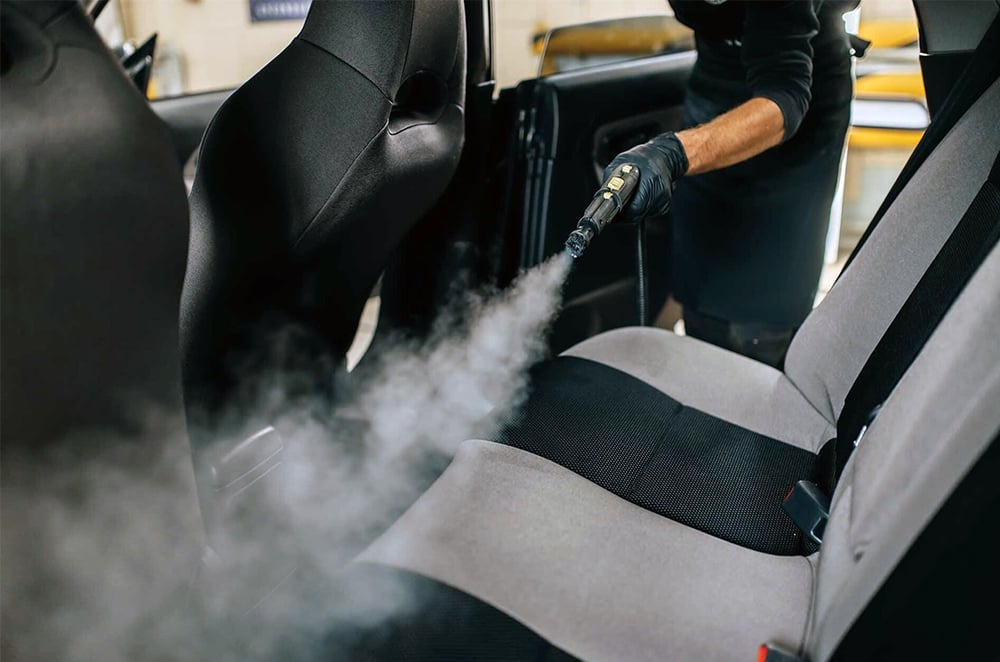
Steam cleaning uses pressurized water vapor heated to between 200°F and 250°F to penetrate fabric fibers, break down contaminants, and kill bacteria — all without chemical solutions.
A professional steamer forces this vapor deep into upholstery. The heat loosens embedded dirt and neutralizes odor-causing bacteria at the source. The moisture evaporates quickly, which means your seats dry in roughly 1 to 3 hours instead of the 6 to 12 hours typical of wet methods.
What steam cleaning does well:
- Kills 99.9% of bacteria, dust mites, and allergens through heat alone
- Eliminates odors by destroying bacteria rather than masking smells
- Leaves no chemical residue — safe for kids, pets, and people with sensitivities
- Dries significantly faster than shampoo extraction
- Preserves delicate fabrics like microfiber, suede, and premium upholstery
Where steam cleaning falls short:
Heavy stains — especially oil-based, protein-based, or deeply set ones — often need a chemical pre-treatment before steam can fully lift them. And consumer-grade steam cleaners simply don’t generate enough temperature or pressure to match professional results. If your seats haven’t been cleaned in a year or more, steam alone likely won’t be enough.
F
What Is Shampooing for Car Seats?
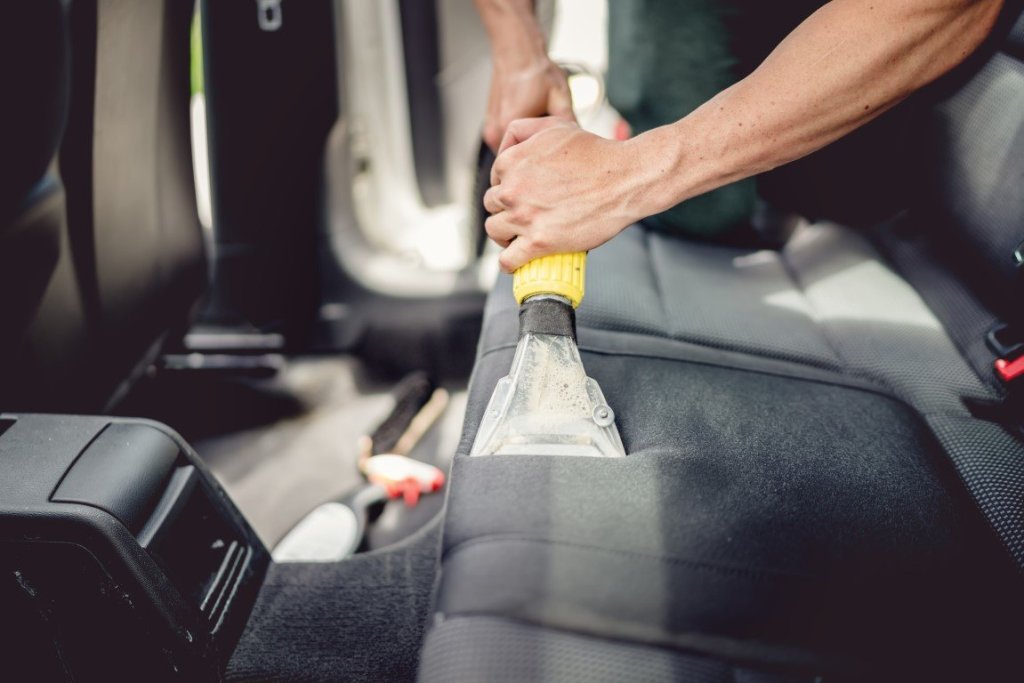
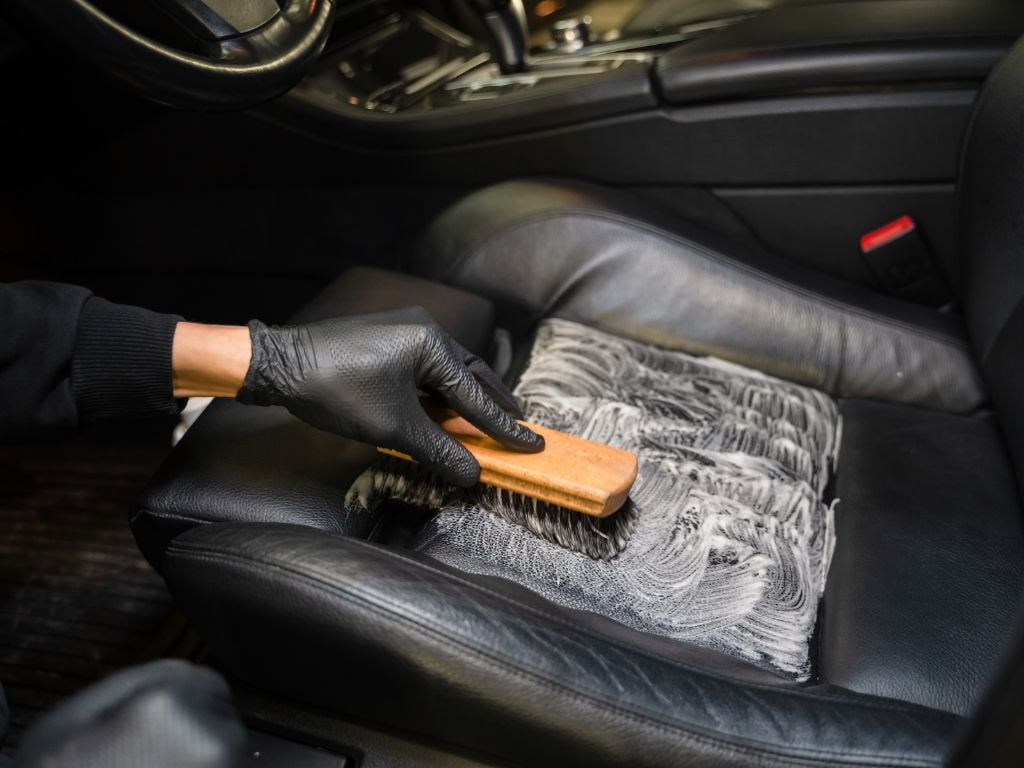
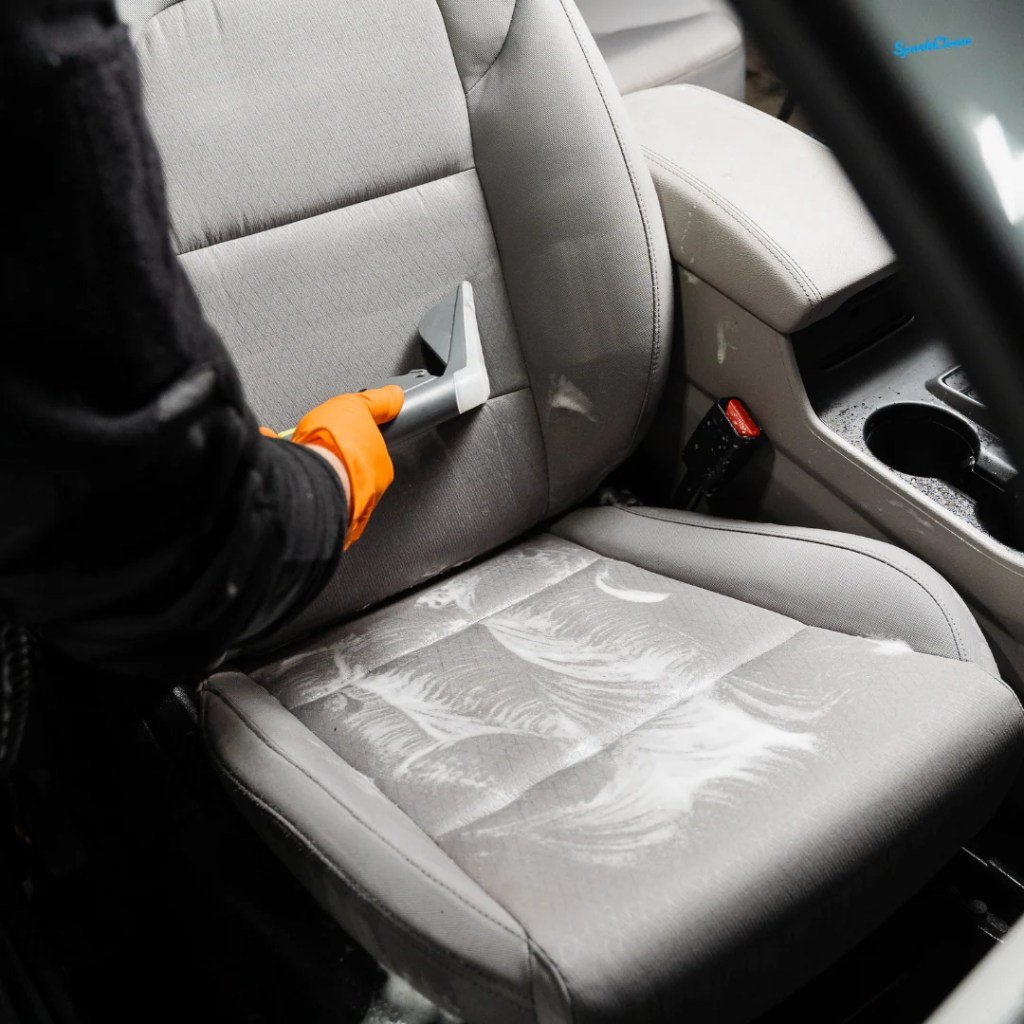
Shampooing — more accurately called hot water extraction or deep foam cleaning — uses specialized cleaning solutions containing surfactants that chemically break down contaminants. Technicians apply the solution, agitate the fabric fibers with a brush or machine, then extract everything with a commercial wet vacuum.
This is the method that handles the tough stuff: coffee spills, food stains, pet accidents, muddy shoes, and years of accumulated grime.
What shampooing does well:
- Breaks down protein stains (blood, food, vomit) and oil-based stains effectively
- Penetrates deep into thick fabric fibers through agitation
- Handles heavily soiled seats where steam alone won’t cut it
- Uses targeted formulations for specific stain types
Where shampooing falls short:
Drying time is the biggest trade-off. Depending on humidity and airflow, seats can take 6 to 12 hours to fully dry. In San Diego’s coastal areas, where salt air keeps humidity elevated, that window can stretch further. Residual shampoo left in the fabric can also attract new dirt faster if not properly extracted. And repeated shampooing without conditioning can degrade fabric fibers over time.
Steam Cleaning vs. Shampooing: Head-to-Head Comparison
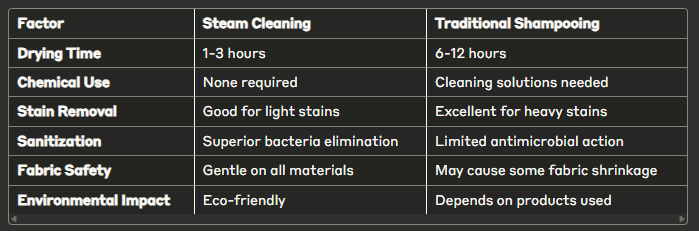
| Factor | Steam Cleaning | Shampooing |
|---|---|---|
| Stain Removal (Heavy) | Moderate | Excellent |
| Stain Removal (Light/Fresh) | Excellent | Good |
| Bacteria & Allergen Removal | Excellent (heat kills pathogens) | Good (chemical action) |
| Drying Time | 1–3 hours | 6–12 hours |
| Chemical Use | None | Yes (surfactants) |
| Odor Elimination | Excellent (kills source) | Good (masks + cleans) |
| Safe for Delicate Fabric | Yes | Use with caution |
| Cost | Moderate | Moderate–Higher |
| Best For | Maintenance, allergens, odors | Deep soil, set-in stains |
Best Method by Fabric Type
Not all car seats are made the same. Using the wrong method on the wrong fabric causes damage — fading, shrinking, cracking, or water spots that won’t come out.
Cloth/Fabric Seats
Both methods work on fabric seats, but the choice depends on soil level. Light maintenance and odor removal respond well to steam. Deep stains from food, pets, or spills need shampooing with hot water extraction. For the best results on fabric, a combination approach — shampoo the heavy areas, steam the rest — delivers consistent coverage.
Leather Seats
Neither steam nor shampoo is appropriate for leather without specialized products. High-heat steam can dry out and crack leather over time. Chemical shampoos can strip the protective coating. Leather requires pH-balanced leather cleaners followed by a quality conditioner. If you have leather seats, check out our dedicated guide on leather car seat cleaning and conditioning.
Vinyl Seats
Vinyl is durable and non-porous, so it doesn’t absorb stains the way fabric does. A light steam clean works well for regular maintenance. Avoid aggressive shampooing with hot water extraction, which can weaken the material’s seams over time.
Suede and Alcantara Seats
These are the most delicate. Steam at controlled temperatures is safer than shampooing, which can leave water marks or collapse the nap of the material. Always test a small hidden area first. Professionally done is always the safer call here.
The Car Seat Stain Removal Decision Tree
Before you reach for any product or tool, ask yourself these questions:
1. How old is the stain? Fresh stains (under 24 hours) respond to almost any cleaning method. Set-in stains that have had time to bond with fabric fibers need chemical breakdown first — that’s shampooing territory.
2. What caused it?
- Pet accidents, food, coffee, juice → Shampooing
- Dust, surface grime, light odors → Steam
- Vomit, blood, sweat → Shampooing with enzyme pre-treatment
- Musty smell after long storage → Steam + ozone treatment
3. What fabric are the seats? Refer to the fabric type section above. When in doubt, don’t experiment on your seats.
4. When did you last clean them professionally? If the answer is “never” or “more than a year ago,” you’re past DIY territory. Accumulated layers of contamination need professional extraction to remove properly.
When DIY Becomes Ineffective (And What to Do Instead)
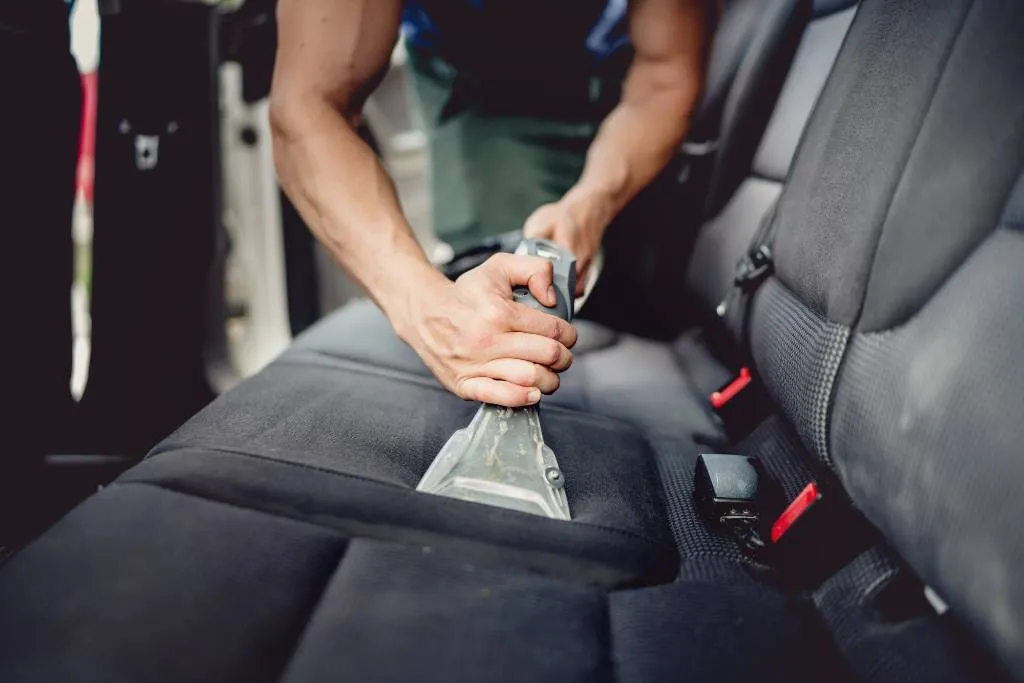
Here’s the honest truth about home cleaning methods: consumer steam cleaners typically max out around 100°F to 140°F. Professional units operate at 200°F to 250°F. That temperature difference is the gap between “refreshing” and “sanitizing.”
The same is true for extraction. A rental wet vac pulls maybe 30–40% of moisture out. A commercial extractor removes 90%+. The moisture left behind by underpowered equipment is exactly what leads to mildew, musty smells, and damaged upholstery.
If you notice any of these signs, it’s time to call in a professional:
- Stains that keep coming back after cleaning (wicking from deep in the foam)
- A persistent smell that no product touches
- Visible mold or dark discoloration in seams
- Seats that feel stiff or crunchy after cleaning
- Pet hair that’s embedded in the fabric weave
“Pablo did an awesome job with the interior of my 2016 Ford Edge! There were stains on the headliner from 3 years ago and faint smell of vomit from a wild night out almost 2 years ago. The leather and interior is shining and fresh smelling! Awesome job!” — Genevieve V., Google Review ⭐⭐⭐⭐⭐
How Dennis Auto Details Approaches Car Seat Cleaning
Dennis Auto Details doesn’t lock into a single method for every vehicle. Before any cleaning begins, the team assesses upholstery type, stain age and composition, odor source, and fabric reaction.
For lightly soiled seats or vehicles where bacteria and allergens are the concern, steam cleaning is the first tool — it sanitizes without chemicals and leaves seats dry within a couple of hours, which matters when you need your car back the same day.
For seats with heavy staining, ground-in pet hair, or contamination that’s had time to set, the approach shifts to professional seat shampooing with hot water extraction. This is what removes the stubborn stuff.
Most vehicles benefit from a combination: shampoo the worst areas first, steam clean everything else for uniform sanitization. The interior steam cleaning service and seat shampooing are both available as standalone services or as part of a complete interior car detailing service.
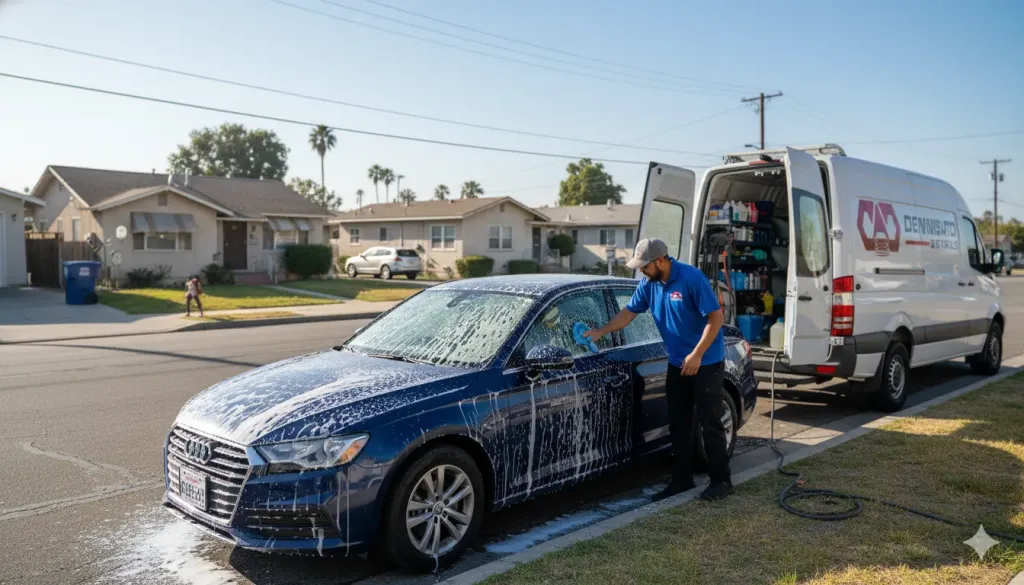
Because Dennis Auto Details is a mobile service, the entire process happens at your home, office, or wherever your car is parked across San Diego County. No drop-off. No waiting room. The team comes to you — whether you’re in La Jolla, Carlsbad, Rancho Bernardo, or Del Mar.
San Diego’s climate adds a layer to consider. The 266+ sunny days and high UV exposure break down fabric protection faster than in cooler climates. Coastal humidity in areas like Pacific Beach and Encinitas slows drying times, which is one reason professional extraction equipment matters — leaving too much moisture in fabric seats in a humid environment is a direct path to mildew.
Car Seat Cleaning: How to Maintain Results Between Services
Getting a professional clean is only part of the equation. What you do between services determines how long those results last.
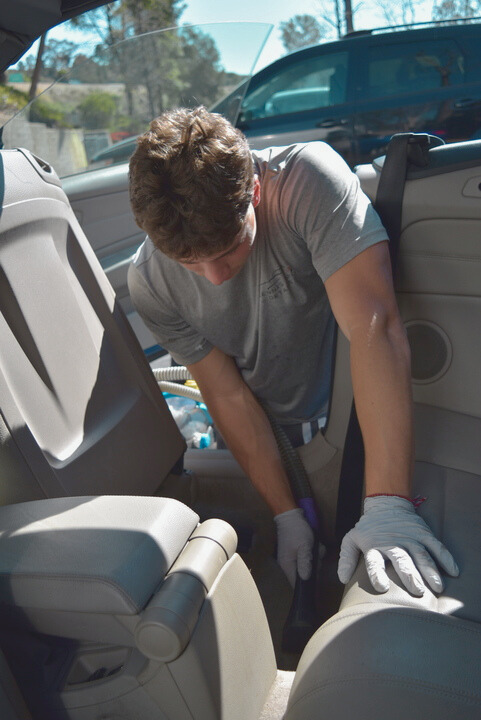
- Vacuum seats weekly to prevent dirt from becoming embedded in the fibers
- Address spills immediately — blot, don’t rub, and avoid spreading the stain
- Use a fabric protectant after a professional clean to repel future stains
- Keep windows cracked in San Diego heat to prevent interior moisture buildup that accelerates odor
- Book a professional interior detail every 3–4 months for regular use vehicles, or more frequently if you have kids or pets
For vehicles with persistent odor issues, consider adding an ozone treatment to your interior service — it eliminates odors at the molecular level, including smoke, pet, and mildew smells that no amount of shampooing alone will fully resolve.
Related reading: Car interior stain removal service | Pet hair removal and car cleaning | Car seat stain removal techniques
Key Takeaways
- Steam cleaning excels for sanitization, allergen removal, odor elimination, and fast drying — best for light to moderate soil and delicate fabrics
- Shampooing (hot water extraction) wins for heavy stains, set-in contamination, and ground-in dirt — best when steam alone isn’t enough
- Leather seats need neither method — they require pH-balanced leather cleaners and conditioning
- Suede and Alcantara need low-temperature steam only, handled carefully
- Combination approaches deliver the best results on most vehicles
- Consumer equipment falls short of professional standards in both temperature and extraction power
- San Diego’s climate — coastal humidity, UV exposure, and salt air — makes regular professional interior care more important than in less extreme environments
- Recurring stains, persistent odors, or visible mold are clear signs to stop DIYing and call a professional
FAQ: Steam Cleaning vs. Shampooing Car Seats
How long does it take for car seats to dry after steam cleaning? Professionally steam-cleaned seats typically dry in 1 to 3 hours. Consumer-grade steamers may take longer because they leave more residual moisture. Shampooing with hot water extraction takes 6 to 12 hours to fully dry.
How often should I have my car seats professionally cleaned? For regular daily drivers, every 3 to 4 months is a good baseline. If you have kids, pets, or frequently eat in your car, every 6 to 8 weeks will keep the interior fresh and prevent stain buildup.
Is steam cleaning safe for all car seat fabrics? Steam works well on cloth, most synthetic fabrics, and vinyl. It requires very careful application on suede and Alcantara, and should not be used directly on leather without specialized techniques. Always have a professional assess the fabric first.
Can steam cleaning remove old stains? Steam can lift many older stains, especially odor-causing ones. However, stains that have fully bonded to fabric — like dried blood, old coffee, or set-in oil — usually respond better to chemical pre-treatment followed by extraction.
How much does professional car seat cleaning cost? Costs vary based on the number of seats, soil level, and method used. Dennis Auto Details offers standalone seat shampooing and interior steam cleaning services. Contact us for an accurate quote based on your vehicle.
What’s better for pet odor — steam or shampoo? Steam cleaning is more effective at eliminating pet odors because the heat destroys the bacteria causing the smell at its source. For vehicles with heavy pet hair embedded in seats, a shampoo extraction session first, followed by steam, gives the best combined result.
Do I need to do anything to prepare my car before a cleaning service? Remove any personal items, trash, and floor mats before the technician arrives. This speeds up the service and ensures nothing gets missed.
Book Professional Car Seat Cleaning in San Diego
Your car seats take daily abuse — spills, kids, pets, food, and San Diego’s heat all add up. Whether your seats need a deep clean after a rough few months or a maintenance refresh to stay in top shape, Dennis Auto Details brings professional-grade steam cleaning and shampooing directly to your location.
No upfront payment required. Serving all of San Diego County — La Jolla, Encinitas, Carlsbad, Pacific Beach, Rancho Bernardo, Oceanside, Del Mar, and more.
📞 Call: (858) 798-6657 📅 Book Online 📍 Find us on Google Maps | Rancho Bernardo Location
Something went wrong. Please refresh the page and/or try again.