
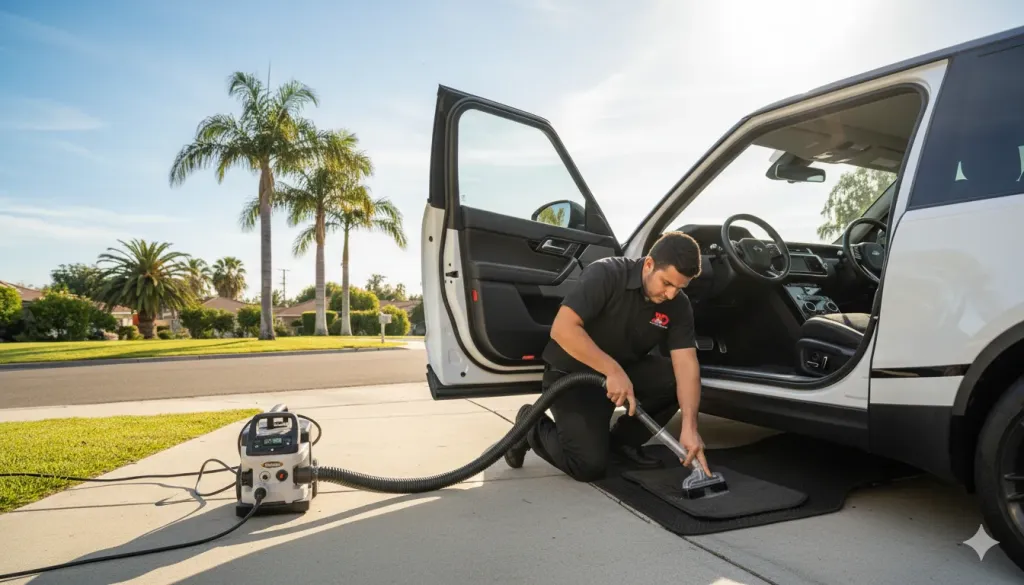
Car Carpet Cleaning and Drying: Professional Techniques That Actually Work
TL;DR: Professional car carpet cleaning uses hot water extraction, stain-specific chemical pre-treatment, and high-velocity drying to remove embedded dirt, pet odors, and set stains that vacuuming and store-bought products can’t touch. Dennis Auto Details brings this service directly to your home or workplace across all of San Diego County, with no upfront payment required.
You’ve vacuumed. You’ve scrubbed. You’ve tried the spray from the auto parts store. The stain is still there, and now there’s a faint musty smell that shows up whenever the car sits in the sun.
That’s not a cleaning problem. That’s an equipment problem.
Professional car carpet cleaning produces results that consumer products physically cannot replicate, and the reason is straightforward: the equipment professionals use operates at pressure, temperature, and suction levels that rental machines and spray bottles can’t come close to matching. This guide explains exactly how the process works, what makes different stains respond to different treatments, and why drying is the step that most DIY attempts get wrong.
Why Car Carpets Are Hard to Clean
Car carpets are thicker and denser than they look. The fibers you see are the top layer. Below them is a backing material, and below that, padding that sits directly on the vehicle floor. When a spill occurs, liquid soaks through all three layers and reaches the metal floor pan. Vacuuming removes surface debris from the top fibers. Nothing about vacuuming reaches the backing or the padding.
Sand is particularly damaging in San Diego. Fine silica particles from beach trips and coastal wind settle deep into carpet fibers and act as a continuous abrasive. Every time someone steps in, the sand grinds against the carpet fibers. Over months, this physically degrades the carpet material. The same goes for pets traveling in vehicles. Pet dander, oils from fur, and any accidents all penetrate into the carpet backing, where they generate odors that surface cleaning products can’t eliminate because they never reach the source. For vehicles with regular pet passengers, see the complete guide to pet hair removal and car cleaning.
For San Diego drivers making regular beach trips, the combination of sand, salt air, and coastal humidity makes professional carpet cleaning a practical maintenance need. See the full discussion in the guide to detailing your car after a beach trip.
Hot Water Extraction: The Professional Standard
Hot water extraction is the method professional detailers and carpet cleaning technicians rely on for a simple reason: it cleans at depth, not just at the surface.
The process works by injecting a mixture of heated water and cleaning solution into the carpet fibers under pressure. Simultaneously, the machine creates powerful suction that pulls the dirty water, dissolved contaminants, cleaning solution, and dislodged debris back up and into a recovery tank. As Detail King’s professional guide to carpet extractors explains, the combination of hot pressurized water and powerful vacuum suction removes contamination from deep within the fibers — not just the surface layer that a scrub brush or spray can reach.
Commercial extraction equipment used by trained technicians operates at significantly higher temperatures and suction levels than consumer-grade rental machines. That difference in equipment performance directly affects how clean the carpets get and how quickly they dry. Professional machines heat water to temperatures that break down organic stains and kill bacteria on contact, while generating suction strong enough to pull moisture from the carpet backing itself.
Steam Cleaning vs. Extraction vs. Shampooing
These three methods are often confused. Each has a distinct mechanism and produces different results.
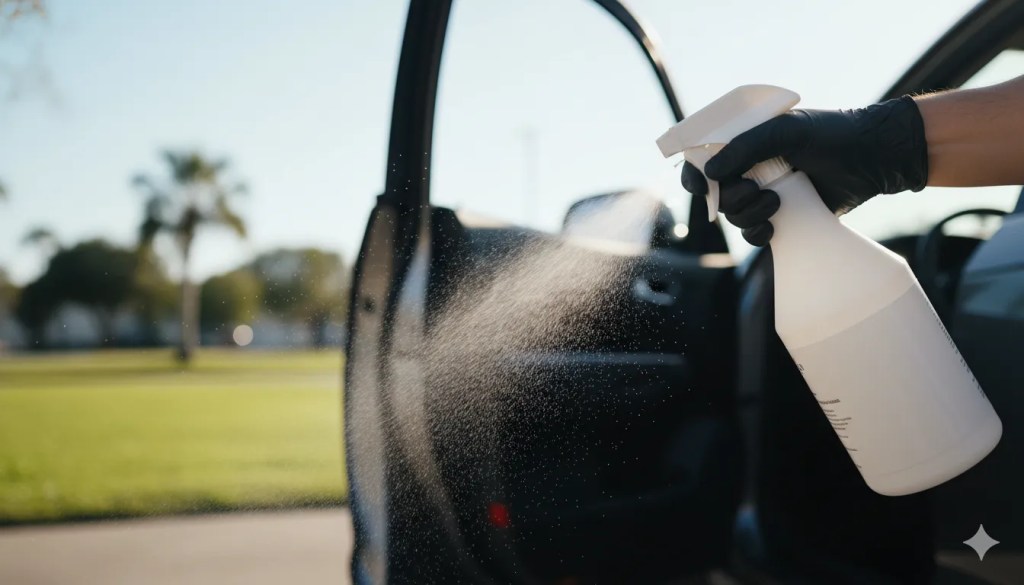
Hot Water Extraction
As described above, this is simultaneous injection and extraction. Water goes in, dirty water comes out. Professional extractors used by trained technicians operate at significantly higher temperatures and suction levels than consumer-grade rental machines. That difference in equipment performance directly affects how clean the carpets get and how quickly they dry.
Steam Cleaning
True steam cleaning uses vaporized water at temperatures above 212°F to sanitize carpet fibers. The extremely high heat kills bacteria, dust mites, and mold spores on contact. Steam cleaning works well as a sanitizing step but doesn’t remove dissolved stains as effectively as extraction because there’s no simultaneous suction to pull contaminants out of the fibers.
Many professional detailers combine steam application with hot water extraction for best results: steam first to sanitize and loosen, then extraction to remove. Read the full breakdown in steam cleaning vs. shampooing for car seats.
Shampooing
Carpet shampooing uses a rotating brush applicator to work cleaning foam into carpet fibers. The foam encapsulates dirt particles, which are then extracted after drying. Shampooing is effective for overall cleaning but can leave residue in fibers if not properly rinsed, which attracts new dirt faster. Professional seat shampooing services at Dennis Auto Details always include a rinse extraction step to eliminate this problem.
Stain-Specific Treatment: Why It Matters
Not all stains respond to the same chemistry. Using the wrong cleaner on a stain can set it permanently into the carpet fibers. Professional technicians assess each stain type before applying any chemical treatment.
Pet accidents (urine, vomit, feces) require enzymatic cleaners. These products contain active enzymes that biologically break down organic waste molecules rather than just masking the odor. Standard carpet cleaners suppress odor temporarily but leave the organic material in place, so the smell returns as temperature and humidity fluctuate. Enzymatic treatment eliminates the source. As Chemical Guys explains in their mold prevention guide, addressing organic material completely — not just surface-cleaning — is the only way to stop odors and biological growth from recurring. For more on how odor treatment works at the molecular level, see the car odor removal and deodorizing service guide and the complete car odor removal guide.
Food and beverage stains (coffee, juice, chocolate, ketchup) respond to a combination of hot water extraction and an alkaline pre-treatment solution. The alkaline chemistry neutralizes the acidic compounds in most food stains, making them easier to extract from carpet fibers. For help with specific food stains, see the car interior stain removal service overview and the car seat stain removal techniques guide.
Grease and oil stains require solvent-based pre-treatment. Oil is hydrophobic, which means water-based cleaners alone won’t dissolve it. A solvent breaks the oil down first, allowing subsequent water extraction to remove it effectively.
Mud and dirt should always be allowed to dry completely before treatment. Wet mud pushed deeper into carpet fibers when you try to clean it immediately. Once dry, mud can be broken up with a stiff brush and vacuumed out before any wet cleaning begins.
Ink and dye stains are the most difficult to treat and sometimes cannot be fully removed, especially if the stain is old or heat has set it. Professional technicians can often significantly reduce these stains, but results depend on how long the stain has been present and what type of dye is involved.
"Most stains are gone, and an 8-year-old oil stain is significantly lightened." — Sophie E., San Diego customer
This real result from a Dennis Auto Details customer shows what professional treatment can accomplish even on long-set stains that most drivers have given up on. See more transformations in our customer stories and car detailing transformations.
Drying After Car Carpet Cleaning: This Step Makes or Breaks the Job

Improper drying after cleaning is how clean carpets turn into mold problems. Mold can begin growing in damp organic material within 24 to 48 hours under the right temperature conditions. San Diego’s coastal areas, where humidity stays higher, present more risk than inland locations.
Professional hot water extraction removes the majority of moisture immediately during the cleaning process. A quality commercial extractor can remove up to 95% of the water introduced during cleaning in a single pass. That’s what makes professional extraction so much faster to dry than any consumer approach.
After extraction, high-velocity air movers accelerate evaporation from the remaining moisture in carpet fibers. In San Diego’s warm climate, carpets cleaned professionally typically dry within 2 to 4 hours when doors and windows are left open and the vehicle is parked in direct sunlight.
For DIY cleaning with consumer machines or manual scrubbing, the drying time extends to 12 to 24 hours, which significantly increases mold risk. If you’ve ever noticed a musty smell returning inside your car after a home cleaning attempt, incomplete drying is almost always the cause. This is especially common when beach moisture and salt air combine with residual carpet dampness in coastal neighborhoods like Pacific Beach, La Jolla, Del Mar, Leucadia, and Cardiff.
After any carpet cleaning, avoid closing the vehicle up until you can confirm no residual dampness remains by pressing your hand firmly into the carpet. If it feels cool or damp, air movement is still needed. For a full breakdown of how to keep your interior fresh year-round, see the mobile interior car detailing service guide.
Professional Equipment vs. DIY: The Honest Comparison
Consumer carpet cleaning machines available at hardware stores operate at much lower water temperatures, significantly lower suction power, and smaller tank capacities than commercial equipment. This results in less effective stain removal, more residual moisture left in carpet fibers, and longer drying times.
Professional extraction equipment used by Dennis Auto Details generates enough suction to pull contaminated water from the carpet backing, not just the surface fibers. This depth of cleaning is simply not achievable with rental units, regardless of technique.
For surface-level dirt and fresh spills, a consumer approach with a wet/dry vacuum can manage the immediate situation. For deep stains, pet accidents, embedded sand from beach trips, or any situation where you want reliably dry carpets that won’t develop odors, professional service is the practical choice. See what a full professional interior detailing service covers for a complete picture, and review the interior car detailing cost and pricing guide for transparent pricing information.
If you drive a luxury vehicle, the stakes are even higher. Improper moisture management inside a BMW, Mercedes-Benz, Tesla, or Porsche can cause trim warping, odor absorption in premium leather, and electronic module damage if water reaches floor sensors. Learn how professional interior care differs for BMW detailing San Diego, Mercedes-Benz detailing San Diego, and Tesla detailing San Diego.
Between Professional Services: Maintenance Tips
Keeping carpets cleaner between professional detailing appointments is straightforward with a few consistent habits.

Use all-weather rubber floor mats on top of your factory carpet. In San Diego, these are practical year-round because they capture beach sand, mud from trails, and rain-season moisture at the entry point before it reaches carpet fibers. Rubber mats are removable, shake out easily, and can be rinsed with a hose.
Address spills immediately. The faster a liquid is blotted up, the less likely it is to penetrate carpet backing and become a set stain. Blot, don’t rub. Rubbing spreads the stain and pushes it deeper into the fibers. For a full checklist, see the top 5 interior detailing mistakes to avoid.
Vacuum weekly if you transport dogs or children regularly. For standard use, a thorough vacuum every two weeks prevents sand and fine particles from building up to the point where they begin damaging fibers. See the complete car seat cleaning guide for a broader interior maintenance routine. You can also complement carpet care with leather car seat cleaning and conditioning if your vehicle has leather seating.
For year-round interior protection from San Diego’s UV exposure, heat, and coastal humidity, pair regular carpet cleaning with a full interior car detailing San Diego service. The guide to preventing interior fading and cracking covers additional steps for protecting your vehicle’s interior during peak UV months.
Book Professional Car Carpet Cleaning in San Diego
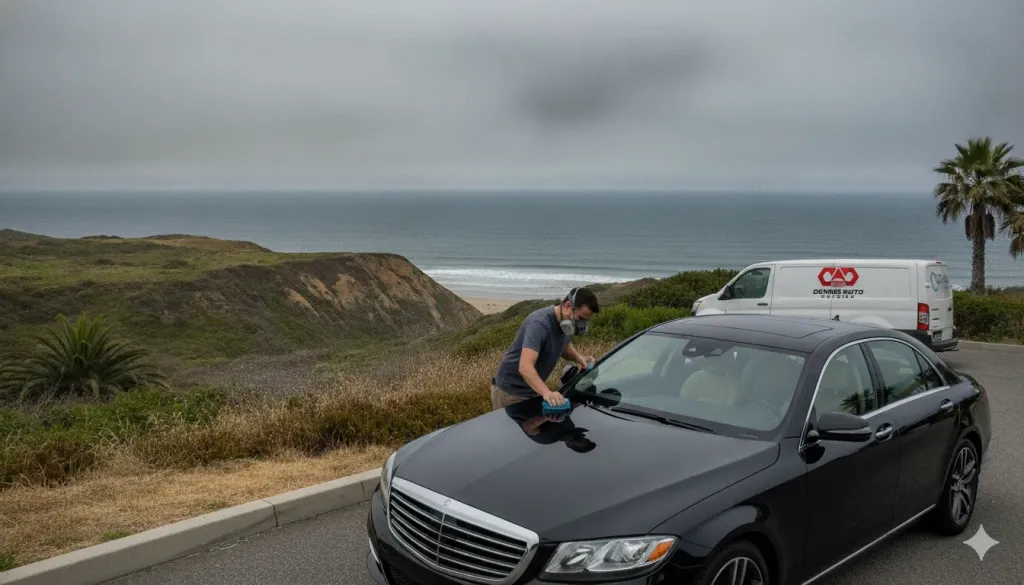
Dennis Auto Details brings professional interior cleaning directly to your home or workplace across all of San Diego County. Whether you’re in Pacific Beach, Rancho Santa Fe, Encinitas, Carlsbad, Escondido, Poway, Chula Vista, or Rancho Bernardo, the mobile service makes professional carpet cleaning convenient without disrupting your schedule. Check the full service areas list to confirm coverage in your neighborhood.
No upfront payment required. You pay after the work meets your expectations.
Schedule online at dennisautodetails.fieldd.co, fill out the contact form at dennisautodetails.com/contact-us, or call 858-295-7259. You can also find the team on Google Maps at the main San Diego listing or the Rancho Bernardo location.
Key Takeaways
- Hot water extraction is the most thorough and effective car carpet cleaning method because it removes contaminants from the carpet backing, not just the surface.
- Different stains require different chemical pre-treatments: enzymatic cleaners for organic waste, solvent-based agents for grease, and alkaline solutions for food stains.
- Proper drying after cleaning is essential to prevent mold. Professional extraction removes up to 95% of moisture immediately, reducing drying time to 2 to 4 hours.
- San Diego beach sand, coastal humidity, and active lifestyles make professional interior cleaning a practical maintenance need, not a luxury.
- All-weather rubber mats and prompt spill blotting extend the results of professional cleaning between service appointments.
- Dennis Auto Details provides mobile car carpet cleaning with no upfront payment across 40+ San Diego neighborhoods.
FAQ: Car Carpet Cleaning
How long does it take for car carpets to dry after professional cleaning?
With professional high-velocity air movers and San Diego’s warm, dry climate, most car carpets dry completely within 2 to 4 hours after hot water extraction. Parking the vehicle in direct sunlight with doors open speeds the process significantly.
Can professional cleaning remove old carpet stains from my car?
Yes. Professional hot water extraction combined with appropriate enzymatic or solvent-based pre-treatment removes most set-in stains including coffee, pet urine, blood, and food. Some deeply oxidized stains may lighten significantly but not fully disappear. A technician can assess your specific stains before service.
What is the difference between steam cleaning and hot water extraction for car carpets?
Hot water extraction injects heated water and cleaning solution into carpet fibers and immediately extracts it with powerful suction. True steam cleaning uses vaporized water at very high temperatures. Hot water extraction is generally preferred for car carpets because it removes more contaminants and leaves carpets drier than steam alone.
How do I prevent mold in car carpets after cleaning?
Ensure carpets dry completely before closing the vehicle. Use high-velocity fans, park in sunlight with windows open, and avoid driving with windows closed until carpets are fully dry. Professional extraction removes most water immediately, dramatically reducing drying time and mold risk compared to DIY methods.
How much does professional car carpet cleaning cost in San Diego?
Costs vary based on vehicle size, condition, and extent of service. Dennis Auto Details provides transparent pricing with no upfront payment required. Review the car interior cleaning cost guide for a full breakdown, or contact the team at 858-295-7259 or book online for a quote.
Do you offer ozone treatment for car odors in San Diego?
Yes. For persistent odors from smoke, mold, or severe pet accidents that extraction alone doesn’t fully resolve, Dennis Auto Details offers car ozone treatment as an advanced odor elimination option. Ozone treatment neutralizes odor-causing molecules at the molecular level and is particularly effective when combined with professional extraction.

Something went wrong. Please refresh the page and/or try again.