

Steam Cleaning vs. Shampooing Car Seats: Which One Is Better?
TL;DR
- Steam cleaning sanitizes with heat and uses very little moisture — best for leather, bacteria, allergens, and light soiling
- Shampooing penetrates fabric fibers with chemical agitation — best for set stains, deep dye penetration, and heavily soiled fabric seats
- For most cars with fabric seats and significant staining, shampooing (with hot water extraction) wins
- Pet odor and allergens respond better to professional steam than basic shampooing
- Dennis Auto Details offers both methods — your tech selects the right approach for your interior
If you’ve ever Googled “steam cleaning car seats vs shampoo,” you’ve probably found articles that pick a side without telling you the full picture. The truth is neither method is always better. The best choice depends on your seat material, the type of soiling, and what result you actually need.
This guide gives you the straight answer — for every situation.
What Steam Cleaning Does to Car Seats
Steam cleaning uses superheated water vapor (typically 250–300°F) to penetrate upholstery fibers and break down contaminants without saturating the material with water.
How it works: The steam head is pressed against the surface, and the heat emulsifies oils, bacteria, and light soiling, lifting it into a microfiber cloth or vacuum attachment. The process is nearly dry — the material absorbs minimal moisture.
What steam cleaning is good at:
- Killing bacteria, mold spores, and dust mites with heat
- Reducing allergen levels in upholstery
- Sanitizing leather and vinyl without harsh chemicals
- Removing light soiling and surface grime
- Cleaning hard interior surfaces — vents, dash, door panels
Where steam cleaning falls short:
- Deep-set stains with dye penetration (coffee, red wine, blood, urine that has dried)
- Heavy soiling from mud or repeated ground-in dirt
- Pet odor embedded deep in foam padding beneath the fabric
Professional-grade steam equipment used by detailers is a different class from consumer handheld units. Industrial steamers maintain consistent temperature and pressure across the work area — something rental or consumer devices can’t reliably replicate.
What Shampooing Does to Car Seats
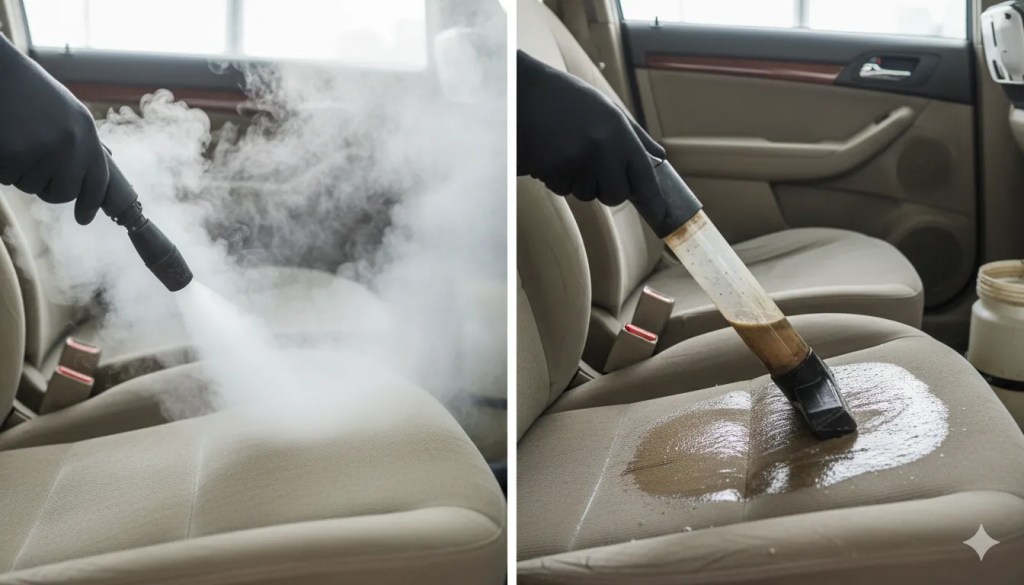
Shampooing uses a chemical cleaning solution agitated into upholstery fibers, followed by hot water extraction to pull the solution — and the dissolved soiling — out of the fabric.
How it works: The shampoo solution penetrates fabric weave, breaks down oil-based and protein-based stains at the molecular level, then a wet-vac extractor removes the solution along with loosened contaminants. Seats get wet — drying time is typically 2–6 hours.
What shampooing is good at:
- Set stains with dye penetration (coffee, juice, food, vomit)
- Heavy soiling across large seat surfaces
- Restoring heavily soiled carpet and floor mats
- Working into dense foam-back fabric where steam can’t reach effectively
Where shampooing falls short:
- Leather seats — excess moisture can dry out leather and cause cracking
- Situations where fast drying is critical
- Bacteria and allergen sanitization — chemical cleaners kill some bacteria but not all
The seat shampooing service at Dennis Auto Details uses professional hot water extraction equipment — not the rental carpet machines from the hardware store. The difference in suction power and drying speed is significant.
Direct Comparison: Steam Cleaning vs. Shampooing
| Factor | Steam Cleaning | Shampooing |
|---|---|---|
| Drying Time | 15–30 minutes | 2–6 hours |
| Best For | Leather, allergens, light soiling | Fabric, set stains, heavy soiling |
| Sanitization | Excellent — heat kills bacteria | Good — chemical agents help |
| Stain Removal | Light to moderate | Moderate to heavy |
| Moisture Level | Very low | High |
| Cost | Moderate | Moderate to high |
| Safe for Leather | Yes (carefully) | No — can damage leather |
| Safe for Fabric | Yes | Yes |
| Odor Removal | Good for surface odors | Good for fabric odors |
Best Method for Fabric Seats
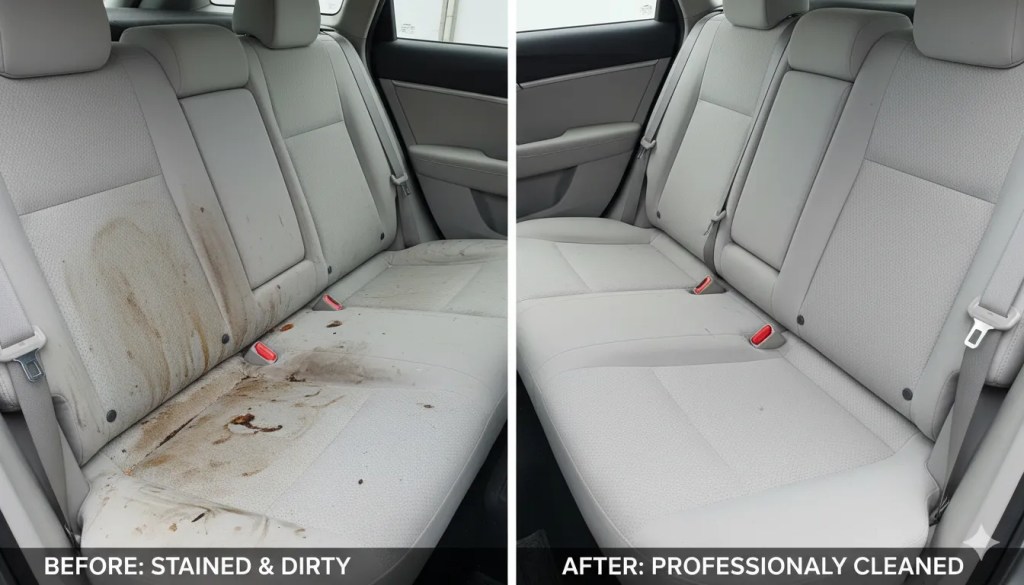
Winner: Shampooing (with extraction) for set stains. Steam for maintenance and allergens.
For fabric seats with real staining — coffee spilled on a commute, kids’ snacks ground into the weave, muddy soccer gear — shampooing with hot water extraction is more effective. The chemical solution breaks down stain compounds that heat alone can’t dislodge.
For fabric seats that aren’t heavily stained but need sanitizing — pollen season, allergy concerns, or a vehicle with frequent passengers — steam cleaning is the better choice. It kills what’s living in the fibers without soaking them.
The best professional interior detail combines both: steam for hard surfaces, door panels, and leather trim, and shampooing with extraction for fabric seats and carpet.
Best Method for Leather Seats
Winner: Steam cleaning.
Leather and moisture don’t mix. Shampooing introduces water that can seep into leather seams, dry unevenly, and cause cracking or color change. Heat from steam, applied carefully with a microfiber wrap, cleans leather without the moisture risk.
After steam cleaning, leather should be conditioned immediately. For leather car seat cleaning and conditioning, the full process matters — clean, condition, protect.
Avoid shampooing leather directly. If leather gets wet from shampooing adjacent fabric areas, dry it promptly and condition it afterward.
Pet Odor and Allergens: Which Method Wins
If you have dogs, cats, or kids with allergies in your vehicle regularly, this is the section that matters most.

Pet dander and allergens: Steam cleaning at professional temperatures kills dust mites and denatures allergen proteins. Chemical shampooing reduces allergens but doesn’t eliminate them with the same effectiveness. Steam wins here.
Pet odor: This one is more complex. Surface pet odor responds well to steam. But odor that has penetrated seat foam and backing — the kind that hits you when you open the door in summer — requires more. The Complete Car Odor Removal Guide explains when ozone treatment is the missing piece.
Pet hair embedded in fabric: Neither steam nor shampoo removes embedded hair effectively. Pet hair removal is a separate service — physical extraction with specialized tools. Dennis Auto Details offers pet hair removal as an add-on at $40/30 minutes.
For severe pet odor that persists after cleaning, ozone treatment ($129) eliminates odor at the molecular level — the only method that reaches odor embedded in foam padding and HVAC systems.
DIY vs. Professional: The Real Difference
Consumer steam cleaners and carpet shampooers are available to rent or buy. Here’s what you get versus what a professional brings:
Consumer handheld steam cleaners:
- Inconsistent temperature — often below effective sanitizing threshold
- Limited pressure — can’t reach deep into fiber weave
- Slower coverage, uneven results
Professional steam equipment:
- Industrial steam temperature maintained throughout the job
- Consistent pressure for complete fiber penetration
- Immediate extraction capability on combined units
Consumer carpet shampooers (rental):
- Adequate suction for surface soiling
- Long drying time — 8–12 hours for residential units
- Risk of over-wetting seats, leading to mold under foam
Professional hot water extraction:
- High-powered suction dramatically reduces drying time
- Precise chemical dilution for upholstery type
- Experienced technique prevents over-saturation
For the full breakdown, read Complete Car Interior Cleaning Cost Guide to understand what professional interior detailing delivers versus DIY methods.
San Diego’s Climate: Why Drying Time Matters
San Diego’s mild, low-humidity climate is actually an advantage for car interior drying — especially compared to coastal cities with high humidity. Moisture evaporates faster here, which reduces the risk of mold and mildew developing in seat foam after shampooing.
That said, La Jolla, Pacific Beach, and other coastal neighborhoods carry more moisture in the air, especially in the morning marine layer months (May through July). In these areas, fast drying after shampooing is more important. Professional extraction reduces drying time from 8–12 hours (consumer rental) to 2–4 hours, which matters in coastal San Diego.
If you’re in East County — El Cajon, Santee, or Ramona — the drier, hotter climate means seats dry even faster. The heat can be an asset after a deep interior clean.
Dennis Auto Details Interior Services
Dennis Auto Details offers comprehensive interior cleaning across all package tiers:
| Package | Interior Services Included | Starting Price |
|---|---|---|
| Standard Interior | Vacuum, surface clean, carpet & mat shampoo, window cleaning | $179+ |
| Premium Interior | Everything in Standard + full steam cleaning, surface conditioning | $229+ |
| Luxury Interior | Everything in Premium + seat shampoo & extraction, headliner spot treatment | $319+ |
| Seat Shampooing (add-on) | Individual seat deep shampoo | $20/seat |
| Pet Hair Removal (add-on) | Physical extraction from seats and carpet | $40/30 min |
| Ozone Treatment | Odor elimination at molecular level | $129 |
For a complete car seat cleaning guide that walks through what each method addresses, the Dennis blog covers it in detail.
Need a full interior and exterior package? The Complete Detail ($339+) handles both in one visit. Mobile interior car detailing brings all of this to your location across San Diego County.
⭐ What Real Customers Say About Interior Cleaning
“I got the interior done and it looks great. Most stains are gone, and an 8-year-old oil stain is significantly lightened. Dennis and Pablo also found my missing favorite pair of sunglasses!” — Sophie E., verified Google review ⭐⭐⭐⭐⭐
“They got all the dog hair out of my 2020 Jeep Wrangler, which let me tell you was no small task with 3 dogs. The hair was embedded in the seat and carpet. The inside literally looks brand new now.” — Google review ⭐⭐⭐⭐⭐
See all reviews | Rancho Bernardo reviews
Frequently Asked Questions
Is it better to steam clean or shampoo car seats? It depends on your seats and the problem. Steam cleaning is better for leather, allergens, and light soiling. Shampooing with hot water extraction is better for set stains in fabric seats. The best interior detail uses both methods in the right places.
How long does it take car seats to dry after shampooing? With professional extraction, fabric seats dry in 2–4 hours in San Diego’s climate. Consumer rental machines leave seats wetter — expect 8–12 hours. Leather seats cleaned with steam dry in 15–30 minutes.
Can steam cleaning damage car seats? Professional steam cleaning is safe for leather, vinyl, and fabric when applied at the right temperature and duration. Direct high-temperature steam held too long on delicate materials can cause damage — which is why professional application technique matters.
Does shampooing remove pet odor from car seats? Shampooing reduces surface pet odor. For deep-seated odor that has penetrated foam padding, ozone treatment is the most effective solution. Dennis Auto Details offers ozone treatment at $129.
How much does professional interior car detailing cost in San Diego? Interior-only packages at Dennis Auto Details start at $179 for Standard Interior and go up to $319 for Luxury Interior. Add-ons like ozone treatment ($129) and pet hair removal ($40/30 min) are available.
Key Takeaways
- Steam cleaning excels with leather seats, bacteria, allergens, and light soiling — low moisture, fast drying
- Shampooing excels with fabric seats, deep stains, and heavy soiling — requires extraction for best results
- Combining both methods in a professional interior detail gives the best outcome for most vehicles
- Pet odor that penetrates seat foam requires ozone treatment, not just cleaning
- San Diego’s dry climate helps seat drying, but professional extraction dramatically cuts drying time
- Dennis Auto Details brings steam cleaning and shampooing to your location across 40+ San Diego neighborhoods
Book a professional interior cleaning today.
Schedule your appointment | Contact us | 858-295-7259
Serving La Jolla, Carmel Valley, Rancho Bernardo, Carlsbad, Escondido, and all of San Diego County. We come to you.


Something went wrong. Please refresh the page and/or try again.