
Ozone Treatment for Car: The Complete Guide to Eliminating Stubborn Odors
TL;DR
- Ozone treatment destroys odor-causing molecules at the source — it doesn’t just mask them
- It works on smoke, pet, mold, mildew, food, and flood odors that standard cleaning can’t fix
- Professional treatment is safer and more effective than consumer-grade ozone generators
- Dennis Auto Details offers mobile ozone treatment in San Diego for $129
You’ve vacuumed the seats. You’ve used three different air fresheners. You’ve even tried that baking soda trick someone posted online. And yet — the moment you open your car door, that smell hits you like a wall.
Whether it’s cigarette smoke from a previous owner, your dog’s signature scent after beach trips, or mildew that crept in after a rainy week, some odors go deeper than any surface clean can reach. They live in the fabric, the foam, the carpet padding, and the ventilation system.
That’s exactly where ozone treatment for cars comes in.
This guide covers everything you need to know: how ozone treatment works, when you actually need it, what to expect before and after, and whether a professional service is worth it over a DIY approach.
What Is Ozone Treatment for Cars?
Ozone (O₃) is a naturally occurring gas made of three oxygen atoms. When ozone molecules contact odor-causing compounds — bacteria, mold spores, smoke residue, pet dander byproducts — they break those compounds apart at a molecular level.
This isn’t a cover-up. There’s no fragrance masking the smell. The odor source gets destroyed.
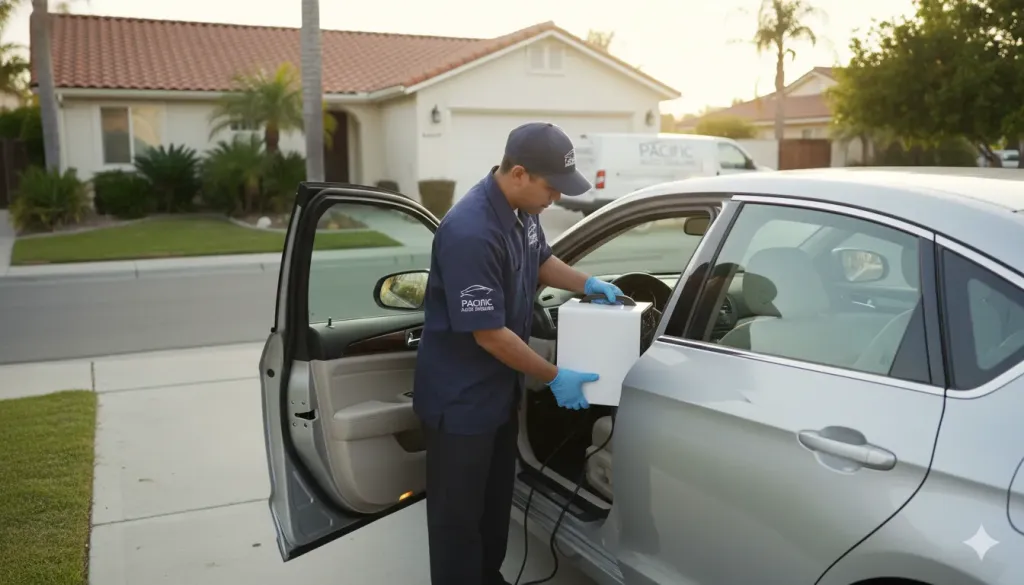
An ozone generator produces a concentrated stream of O₃ inside your sealed vehicle. The gas reaches every surface — fabric, foam, hard plastic, carpet, headliner, and ductwork — and oxidizes the compounds responsible for the smell. Once the treatment is complete and the car is ventilated, the O₃ reverts to regular oxygen, leaving no chemical residue behind.
Think of it as a reset button for your car’s air quality.
The U.S. Environmental Protection Agency (EPA) provides detailed guidance distinguishing professional ozone applications from consumer devices — an important distinction when evaluating the safety and effectiveness of the treatment.
How Ozone Treatment Works on a Car: Step by Step
Here’s what a professional ozone treatment session looks like:
1. Pre-treatment cleaning
The technician cleans the interior first. Ozone treatment works best on a clean surface. If there’s visible contamination — pet hair, food debris, mold — a full interior detail happens before the ozone cycle runs. Check out the range of interior detailing services at Dennis Auto Details to see what a pre-treatment clean covers, or look at the interior detailing cost breakdown to understand the pricing options.
2. Sealing the vehicle
Windows go up. All vents are set to recirculate. The car is sealed so the ozone gas stays concentrated inside the cabin.
3. Generator placement
A professional-grade ozone generator gets placed inside the vehicle. The machine runs for a set duration — typically 30 minutes to 2 hours depending on odor severity.
4. Ventilation
After the cycle ends, the car airs out for at least 30–60 minutes with windows open. This allows the O₃ to convert back to O₂. You should not enter the vehicle until this ventilation period is complete.
5. Follow-up inspection
The technician checks for residual odor. Severe cases — like smoke-saturated interiors or flood damage — may require a second treatment cycle.
When Do You Actually Need Ozone Treatment?
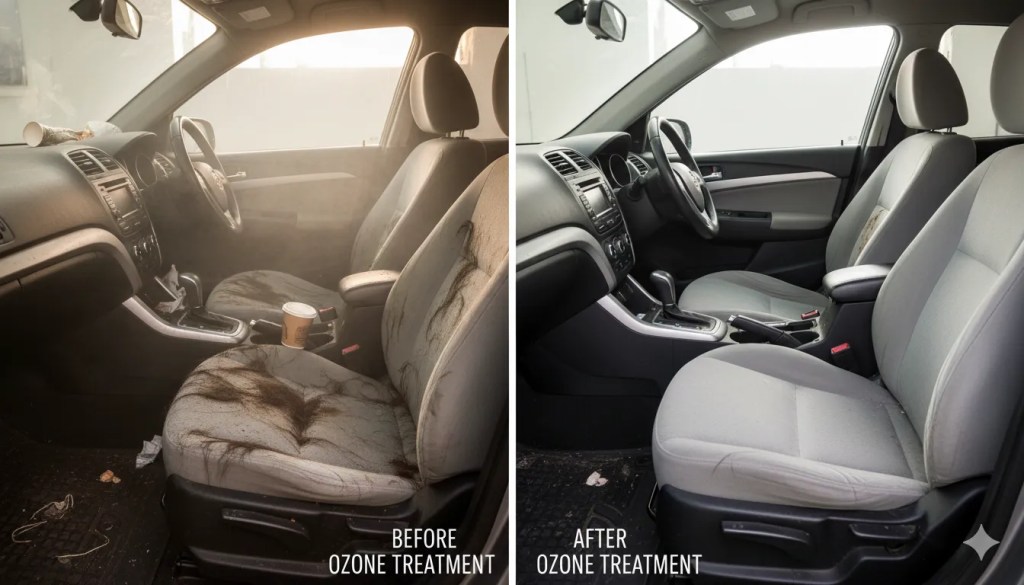
Standard cleaning removes surface-level dirt and smells. Ozone treatment is necessary when the odor source is embedded in porous materials or has been present long enough to penetrate deeply.
Here are the situations where ozone treatment is the right call:
Cigarette or cigar smoke — Smoke particles bond to upholstery, headliners, and HVAC systems. No amount of shampooing removes the smell completely. This is one of the most common reasons San Diego car owners reach out to Dennis.
Pet odors — Urine and dander create persistent smells that survive cleaning. If your dog rides with you on every trip from Carlsbad to Dog Beach, ozone treatment is worth scheduling regularly. For heavy pet hair buildup, pair it with the pet hair removal add-on service.
Mildew and mold — San Diego’s coastal humidity, especially in areas like Pacific Beach and La Jolla, creates conditions where moisture gets trapped under carpets and in seat cushions. Once mold starts, the smell spreads fast.
Food spills — Leftover spills in seat crevices and under floor mats ferment over time. If you’ve detailed the interior and the smell remains, ozone gets what cleaning missed.
Flood or water damage — Vehicles that took on water during a storm or car wash flood scenario often develop deep mildew that ozone treatment addresses effectively.
Used vehicle purchases — Buying a car from a smoker or pet owner? Schedule an ozone treatment before you start driving it daily.
The California Air Resources Board (CARB) recommends against consumer ozone units in occupied spaces and underscores why professional-only use matters when odor elimination is the goal.
As Dennis Auto Details notes in their terms and conditions: “Odors cannot be removed by cleaning alone. They must be treated with ozone treatment.” That’s a policy statement based on real-world experience — not just a sales pitch.
What to Expect: Duration, Results, and Timeline
How long does it take?
The treatment cycle itself runs 30 minutes to 2 hours. Add 30–60 minutes for ventilation. Budget 2–3 hours total for a standard appointment.
When will I notice results?
Most odors are gone immediately after ventilation. Severe smoke or mold odors may require a second cycle within 24–48 hours for full elimination.
How long do results last?
Ozone treatment permanently destroys the current odor-causing compounds. Results last as long as the source doesn’t return. If your dog rides in the car daily, you’ll want a maintenance schedule — quarterly treatments pair well with the Standard Interior Detail to keep the cabin consistently fresh. Browse the full interior detailing services overview to find the right combination.
Is there a smell after treatment?
Yes, briefly. Ozone has a faint metallic or “clean laundry” scent that dissipates within a few hours of ventilation.
DIY vs. Professional Ozone Treatment
Consumer ozone generators are available online for $50–$200. So why pay for a professional service?
Safety is the primary reason.
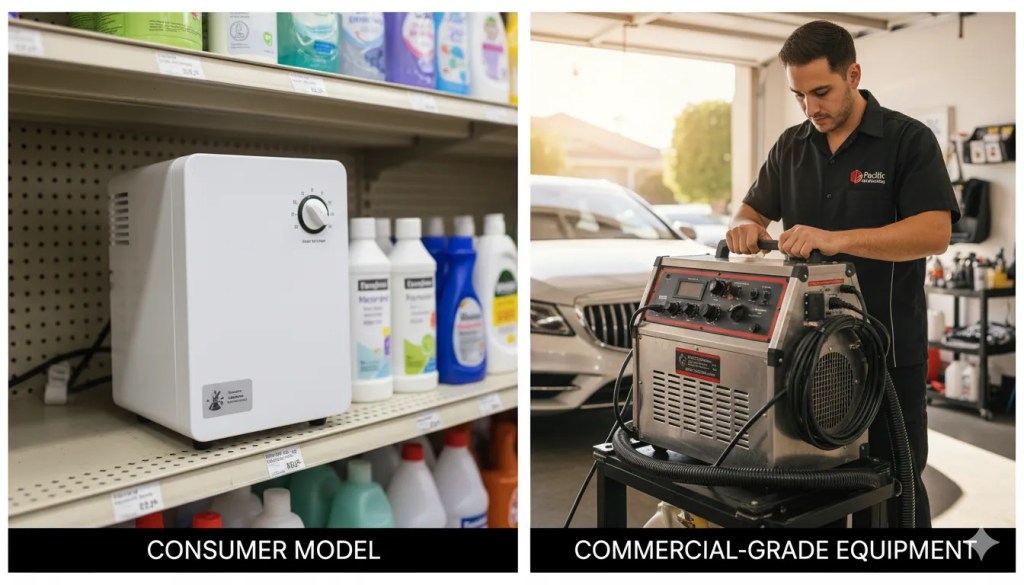
Ozone is harmful to breathe at the concentrations needed to eliminate embedded odors. The New York State Department of Health has documented ozone safety risks from consumer-grade units and advises against unsupervised use in occupied spaces. Professional-grade machines produce significantly higher output than consumer units — and that level of output requires proper handling protocols.
A professional technician knows how long to run the cycle, how to seal the vehicle, and how long to ventilate before the car is safe to enter.
Consumer units often run at concentrations too low to fully treat the odor but still high enough to be dangerous if you enter the car too early. The result? You spend money, wait hours, and the smell comes back within days.
Professional service includes pre-treatment cleaning, commercial-grade output, proper safety monitoring, and a service guarantee. Consumer units offer none of that.
Dennis Auto Details offers mobile ozone treatment across 40+ San Diego neighborhoods — they bring the equipment to your driveway or office parking lot. Check availability in your area: Rancho Bernardo, Carmel Valley, Poway, La Jolla, Escondido, and more.
Cost and Value: Is Ozone Treatment Worth It?
Ozone treatment at Dennis Auto Details is $129. That’s a flat rate.
Compare that to:
- Repeated rounds of air fresheners that don’t fix anything: $30–$60 and counting
- A standard interior detail that can’t eliminate deep smoke odor: $179–$319
- Replacing fabric or carpet to eliminate the smell: $500–$2,000+
For $129, you get a permanent solution.
If you’re buying or selling a vehicle, ozone treatment is also one of the highest-ROI steps you can take. A smoke-free, odor-free car commands a noticeably higher asking price and sells faster — especially in San Diego’s competitive used car market.
Pair it with a Premium Interior Detail ($229+) for the best results before listing or trading in.
San Diego Climate Makes Odors Worse
San Diego weather is beautiful — but it accelerates odor development inside vehicles.
Coastal humidity from La Jolla to Coronado traps moisture in seat cushions and carpet padding. That moisture feeds mold and mildew growth, especially in cars parked in garages with poor airflow.
Inland heat in areas like Escondido, El Cajon, and Santee bakes odors into materials. A hot, sealed car concentrates smells and accelerates bacterial growth.
Beach trips introduce salt, sand, and wet gear. Damp towels left in a car overnight create the exact conditions mildew needs.
Year-round warm temperatures mean San Diego vehicles never get a “cold reset.” Regular ozone treatment — especially after beach season or camping trips — is a smart maintenance habit for any San Diego driver. It pairs well with seasonal exterior care; read the seasonal car care guide to build a full year-round maintenance plan.
What San Diego Customers Are Saying
“I highly recommend Dennis for any car detailing or ozone treatment needs in the San Diego Escondido area. I had a crazy situation with my car involving a dead rat that was seriously uncool and resulted in a horrible smell. He went above and beyond and worked with me to help get my car back to new.” — Drew Hova, Local Guide, Google Review
“I had a full interior cleanup and ozone treatment done by Dennis Auto Details to get rid of a lingering smoke smell, and the results were amazing. My car looks spotless and smells fantastic now.” — Alexis Telford, Google Review (Rancho Bernardo)
Book Mobile Ozone Treatment in San Diego
Dennis Auto Details serves 40+ neighborhoods across San Diego County — from Carlsbad to Rancho Bernardo to La Jolla — with same-day availability and mobile service that comes to you.
Ready to eliminate the smell for good?
Book your ozone treatment online or call 858-295-7259.
Find us on Google Maps — San Diego or Google Maps — Rancho Bernardo.
Key Takeaways
- Ozone treatment eliminates odor at the molecular level — not just masks it
- Works on smoke, pet urine, mold, mildew, food, and flood damage
- Safe and effective when performed by a professional — not DIY generators
- San Diego’s coastal humidity and heat make odors develop faster in vehicles
- $129 flat rate beats repeated failed alternatives by a wide margin
- Pairs well with interior detailing for maximum freshness before listing a vehicle
Frequently Asked Questions
Is ozone treatment safe for my car interior?
Yes. Ozone gas reverts to regular oxygen after treatment and leaves no chemical residue on surfaces. Fabrics, leather, plastic, and rubber are unaffected. The only caution is human exposure — no one should be inside the vehicle during the treatment cycle, which is why professional handling matters.
How long does the smell stay gone?
Permanently — for the current source. If the odor source returns (a dog that rides daily, ongoing smoking inside the vehicle, recurring moisture), the smell will return too. For recurring situations, quarterly ozone treatment paired with regular interior detailing keeps the interior fresh year-round.
Can I do ozone treatment myself at home?
You can purchase consumer ozone generators, but the output levels are typically too low to fully treat embedded odors and the process requires proper safety protocols. Professional units run at significantly higher concentrations and include pre-treatment cleaning for better results. The $129 professional service is a smarter investment for guaranteed results.
What odors does ozone treatment NOT fix?
Ozone is highly effective on organic odors — smoke, pet, mold, mildew, food, and biological waste. Chemical spills or gasoline smells may require specialized treatment beyond ozone alone. Dennis Auto Details will assess your situation and recommend the right approach.
How soon can I drive after ozone treatment?
After the ventilation period of 30–60 minutes following the treatment cycle, the vehicle is safe to enter and drive. Total service time is typically 2–3 hours.


Something went wrong. Please refresh the page and/or try again.