
Is Ceramic Coating Worth It in San Diego? An Honest Answer
TL;DR
- Ceramic coating is not magic — it blocks UV, repels water and contaminants, and adds scratch resistance, but it won’t fix deep scratches or prevent rock chips.
- San Diego’s 266+ sunny days, coastal salt air, Santa Ana dust, and marine layer make the ROI stronger here than in most other markets.
- Over 5 years, regular waxing costs $1,000 to $4,000 with zero permanent protection. A ceramic coating is a one-time investment lasting 2 to 9 years.
- Ceramic coating makes the most sense for new cars, leased vehicles, luxury vehicles, and any car you plan to keep for 5+ years.
You’ve done the research. You’ve seen the before-and-after photos. You’ve heard from a neighbor in Carmel Valley that his Tesla still looks brand new after four years. But you’re wondering: is ceramic coating actually worth the money — or is it something detailers oversell?
This is the honest answer. No sales pitch. Just the facts about what ceramic coating does, what it doesn’t do, and whether the investment makes sense for your specific situation in San Diego.
What Ceramic Coating Actually Does
Ceramic coating is a liquid polymer that bonds chemically with your vehicle’s clear coat. Once cured, it forms a rigid, semi-permanent protective layer over the paint surface.
Here is what that layer delivers in plain terms:
UV protection. The coating absorbs and deflects ultraviolet radiation before it reaches the clear coat. UV exposure is the primary cause of paint oxidation, color fade, and clear coat failure. In San Diego, where the UV index runs at 8 to 11 for most of the year, this protection is not a nice-to-have — it is essential.
Hydrophobic surface. The coating creates a surface so slick that water beads and rolls off rather than sitting on the paint. Water that rolls off takes salt, brake dust, and environmental contaminants with it. This reduces water spotting, staining, and the frequency of washing needed to keep the car clean.
Chemical resistance. Bird droppings, tree sap, fuel splatter, and road chemicals sit on the coating surface rather than reacting with the paint underneath. The coating is chemically resistant to mild acids and alkaline contaminants that would otherwise etch directly into unprotected clear coat.
Scratch resistance. The hardened ceramic surface adds measurable resistance to micro-scratches — the fine swirl marks that accumulate from washing, parking lot contact, and daily driving. This is not bulletproof armor, but it is a meaningful layer of protection that uncoated paint does not have.
According to Chemical Guys, ceramic coating provides a semi-permanent bond with clear coat that wax and sealants simply cannot match — making it the most effective long-term paint protection available for daily-driven vehicles.
What Ceramic Coating Cannot Do
This is where honesty matters. Several claims made about ceramic coating are exaggerated, and knowing the limitations helps you make the right decision.
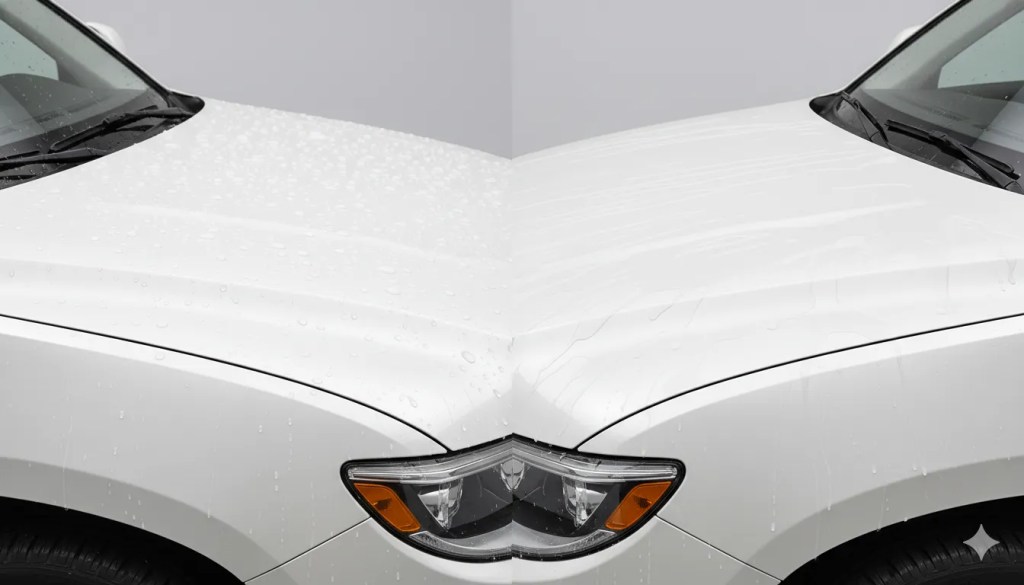
It will not fill or hide existing scratches. Ceramic coating is a protective layer, not a filler. If your paint has scratches, swirl marks, or oxidation before the coating goes on, those defects will be visible through the coating — and locked in permanently. This is why paint correction must happen before any professional coating application.
It will not prevent rock chips. A stone thrown from the vehicle ahead of you at 65 mph on the 5 hits with enough force to crack through any ceramic coating. Rock chip protection requires paint protection film (PPF), not ceramic coating.
It is not permanent without maintenance. Ceramic coating requires proper care to reach its rated lifespan. Automatic car washes with brushes, harsh chemical cleaners, and neglecting a periodic booster spray will shorten the coating’s life significantly. A 9-year coating treated poorly might last 4 to 5 years.
It will not protect against physical damage. Shopping cart dings, door edges hitting your fenders in a parking lot, or careless detailers with power tools will damage a coated car just as easily as an uncoated one.
Know what you’re paying for and you’ll get full value from the investment.
The San Diego Case for Ceramic Coating
San Diego is one of the most demanding environments for vehicle paint in the United States. The combination of environmental threats here creates a uniquely strong ROI argument for ceramic coating.
266+ sunny days per year means your car absorbs UV radiation almost every day without break. There is no winter hibernation for San Diego vehicles the way there is for cars in Denver or Chicago. UV exposure accumulates continuously.
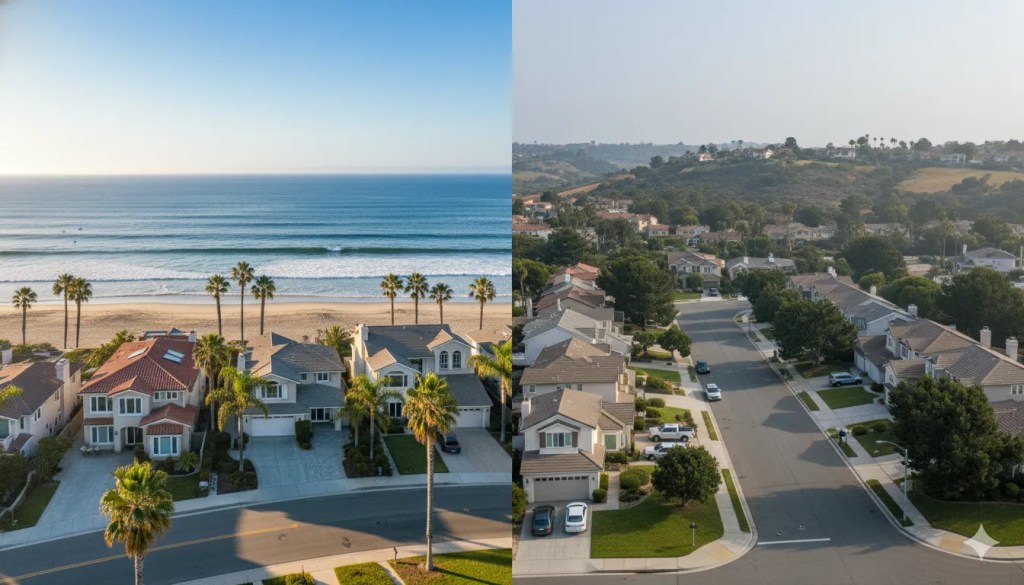
Coastal salt air affects the entire coastal strip from Chula Vista to Oceanside. Salt particles carried by ocean breeze settle on paint and initiate electrochemical corrosion at the clear coat level. Vehicles parked within a mile of the coast see accelerated degradation compared to inland vehicles.
Santa Ana wind events occur primarily in fall and early winter, carrying fine dust, dried debris, and particles from inland desert areas. These events deposit abrasive material on paint surfaces that scratches clear coat when vehicles are wiped or rinsed hastily.
Marine layer cycling adds a daily moisture pattern in coastal neighborhoods — June Gloom mornings create condensation that carries salt and pollutants. As the layer burns off, those contaminants are left behind on the paint surface.
Year-round driving means no seasonal break in paint wear. San Diego vehicles accumulate road contaminants, UV exposure, and environmental damage 12 months a year with no pause.
Ceramic coating neutralizes all of these threats simultaneously with a single application. That coverage, for a San Diego vehicle, delivers returns that drivers in most other markets simply don’t experience at the same level.
Not sure if your vehicle qualifies? Browse our car detailing prices San Diego page for transparent service and package pricing.
“Best detailing service I have ever had. Dennis was professional, thorough, and the results were beyond what I expected. My car looks better than it did when I bought it.” — Google Review, Dennis Auto Details
The 5-Year Cost Comparison: Wax vs. Ceramic Coating
This is where the math becomes clear. Let’s run a realistic comparison for a San Diego vehicle owner over 5 years.
Regular waxing:
- Professional wax application: $50 to $100 per session
- Recommended frequency in San Diego coastal conditions: every 3 months (UV and salt break down wax quickly)
- Total over 5 years: 20 sessions at $50–$100 = $1,000 to $2,000
- Additionally: wax provides no UV blocking, no chemical resistance, and no meaningful scratch resistance
- Paint still requires correction every 2 to 3 years to address accumulated swirl marks and oxidation: add $300 to $600
- 5-year total: $1,300 to $2,600, with paint still degrading underneath
Ceramic coating (5-year tier):
- One-time professional application: $699
- Maintenance: pH-neutral soap ($20/year), ceramic booster spray ($30/year) = ~$250 over 5 years
- No paint correction needed mid-cycle (the coating protects the clear coat from degrading)
- 5-year total: approximately $949
The ceramic coating wins on cost after roughly 18 months. It wins more decisively every subsequent year. And at the end of 5 years, your paint is in better condition than the waxed car because the coating actually blocked the environmental damage rather than just temporarily washing it off.
To understand what lifespan you can realistically expect from each tier, read our full breakdown on how long ceramic coating lasts in San Diego.
Resale Value: What Clean Paint Is Worth
Ceramic coating does not just protect your paint while you own the car. It protects the value you recover when you sell it.
Buyers evaluating used vehicles respond strongly to paint condition. A vehicle with clean, swirl-free, oxidation-free paint signals care and low abuse to a buyer. A vehicle with faded, scratched paint signals the opposite — even if the mechanical condition is identical.
A showroom-quality paint job at trade-in or private sale consistently supports $500 to $2,000 more in perceived value compared to a same-model vehicle with degraded paint. For a $35,000 sedan, that is a meaningful return. For a $90,000 luxury vehicle, it is significant. Our luxury car detailing San Diego service is designed specifically for owners protecting high-value assets.
Leased vehicles are a specific case where this matters even more. At lease turn-in, paint defects are charged as excess wear. A ceramic-coated lease vehicle arrives at turn-in in better condition, reducing or eliminating excess wear charges that can run $500 to $1,500 on luxury leases.
Who Ceramic Coating Is NOT For
Being honest means saying this clearly: ceramic coating is not the right investment for every vehicle or owner.
High-mileage beaters. If your car has 180,000 miles, aging paint, and is heading to auction in 12 months, a ceramic coating investment does not make financial sense. The cost exceeds the realistic return.
Vehicles with severely damaged paint. Paint that is deeply scratched through to the base coat, heavily rusted, or peeling requires bodywork and respray — not ceramic coating. Coating over severe paint damage wastes money.
Owners who use automatic car washes regularly. Brushes in automatic car washes will degrade a ceramic coating prematurely. If you’re committed to using an automated car wash every week, the coating’s lifespan will be shortened substantially and the investment loses value.
Who Ceramic Coating Is Perfect For
New car owners. The ideal time to apply ceramic coating is on paint that has never been exposed to contamination or UV damage. New car owners who coat immediately get the full rated lifespan from the product.
Leased vehicles nearing turn-in. A coating applied at the beginning of a lease protects through the entire term and reduces excess wear charges at return.
Luxury and exotic vehicle owners. The ROI on a $1,299 to $1,799 coating applied to a $100,000 vehicle is straightforward. The protection value scales with the vehicle’s value.
Vehicles you plan to keep 5+ years. Long-term ownership makes the cost-per-year math increasingly favorable. A 9-year coating applied to a car you keep for 9 years costs less annually than a gym membership.
Coastal San Diego residents. The environmental conditions described above apply to every vehicle near the coast. The ROI in San Diego is stronger than the national average because the threats are more constant and more severe.
Dennis Auto Details Ceramic Coating Options
Dennis Auto Details offers three tiers of professional ceramic coating, applied mobile at your home, office, or wherever your vehicle is parked across San Diego County. See our service areas to confirm coverage in your neighborhood.
2-Year Ceramic Coating — starting at $299 Best for budget-conscious owners or vehicles being prepped for sale. Provides genuine UV and hydrophobic protection with a 2-year rated lifespan.
5-Year Ceramic Coating — $699 The most popular choice for daily drivers and family vehicles. Five years of protection covers the average vehicle ownership cycle in one application.
9-Year Ceramic Coating (including graphene) — starting at $1,299 The correct choice for luxury vehicles, new cars, and coastal San Diego owners who want maximum long-term protection. Graphene technology adds heat dispersion, anti-static properties, and the strongest hydrophobic performance available.
All coating services include a full decontamination wash and paint prep. Paint correction is assessed and priced separately based on your vehicle’s current condition. If your vehicle needs prep work first, our 1-step paint correction and 2-step paint correction services address light to moderate surface defects before coating.
Book Your Ceramic Coating Assessment
Dennis Auto Details serves 40+ neighborhoods across San Diego County, including La Jolla, Carlsbad, Encinitas, Del Mar, Rancho Santa Fe, Chula Vista, Escondido, and El Cajon.
Same-day availability. 10% deposit required at booking. 4% card transaction fee applies.
- Book online: https://dennisautodetails.fieldd.co/
- Call or text: 858-798-6657
- Contact form: https://dennisautodetails.com/contact-us/
Find us:
Key Takeaways
- Ceramic coating blocks UV, creates a hydrophobic surface, resists chemicals, and reduces micro-scratches — but won’t fill deep scratches or stop rock chips.
- San Diego’s unique combination of UV intensity, coastal salt, Santa Ana dust, and marine layer makes ceramic coating more cost-effective here than most markets.
- Over 5 years, ceramic coating costs significantly less than regular waxing while delivering superior protection.
- Clean paint at resale adds $500 to $2,000 in perceived vehicle value.
- Ceramic coating is ideal for new cars, leased vehicles, luxury vehicles, and long-term owners — less so for high-mileage vehicles near the end of their life.
FAQ
How is ceramic coating different from a regular wax or sealant? Wax and sealant sit on top of the paint surface and wear off within weeks to months. Ceramic coating bonds chemically with the clear coat and forms a semi-permanent layer that lasts years. Wax provides minimal UV or chemical protection. Ceramic coating provides genuine UV blocking, chemical resistance, and scratch hardness that wax simply cannot match.
Will ceramic coating make my car self-cleaning? Not entirely. Ceramic coating makes the surface hydrophobic so water and loose contaminants shed more easily, reducing how often you need to wash. But the car will still get dirty in normal use and still requires washing — just less frequently and more easily.
Does ceramic coating work on older vehicles? Yes, if the paint is in reasonable condition. Paint correction is typically required on older vehicles to address accumulated oxidation and swirl marks before the coating goes on. Once corrected and coated, an older vehicle can maintain that corrected condition for years.
What happens if I get a rock chip after ceramic coating? The chip goes through the coating and into the paint underneath, just as it would on an uncoated surface. The ceramic around the chip remains intact. Rock chips on a coated vehicle should be addressed with touch-up paint to prevent rust, just as on any vehicle.
How do I know which coating tier is right for my car? A quick assessment of your vehicle’s age, paint condition, and how long you plan to keep it tells the story. Dennis evaluates every vehicle before recommending a tier and can walk you through the options when you book.
Something went wrong. Please refresh the page and/or try again.