
How Often Should You Wash Your Car in Summer? A San Diego Guide
TL;DR
- Wash your car at least once a week during San Diego’s summer months
- Bird droppings, UV rays, and salty coastal air bake into paint within hours in summer heat
- Skipping washes leads to permanent paint etching and clear coat damage
- Avoid washing in direct sunlight — morning or shaded washing produces better results
- Ceramic coating dramatically reduces how much effort summer car maintenance requires
- Interior protection matters too — UV dashboards, leather, and trim all suffer in peak heat
Summer Is the Most Damaging Season for San Diego Paint
Most car owners assume rainy weather is the worst time for their vehicle’s finish. For San Diego drivers, summer is actually the most damaging season of the year for car paint — and most people don’t realize it until the damage is already done.
Here’s why: heat acts as an accelerant. Every contaminant that lands on your car — bird droppings, tree sap, industrial fallout, ocean salt spray — becomes significantly more corrosive when it cooks under San Diego’s 80–100°F summer sun. What would take weeks to etch paint in moderate temperatures can permanently damage your clear coat in hours.
If you’ve ever noticed that your car’s paint feels rough to the touch after a San Diego summer, or that the surface has lost some of its depth and gloss, paint etching is almost certainly the cause.
The fix starts with consistent washing. This guide tells you exactly how often to wash your car in summer in San Diego, the right methods to use, and how to protect your investment through peak season.
How Often Should You Wash Your Car in Summer in San Diego?

The answer is clear: wash your car once a week during summer.
San Diego’s summer months bring peak UV intensity, temperatures that regularly exceed 90°F inland, coastal salt air, and Santa Ana wind events that deposit dust and debris across the county. Each of these factors accelerates the bonding of contaminants to your paint’s clear coat.
Weekly washing removes this buildup before it bonds permanently. If your car is parked outdoors daily, washing every five to six days during peak heat is even better.
Two-week washing intervals — which many drivers treat as normal — leave contaminants on your paint long enough to cause micro-etching in San Diego’s summer heat. That damage is cumulative and permanent.
Quick-clean rule: If a bird drops something on your car, a tree drips sap, or you drive through construction dust, don’t wait for your scheduled wash. Remove it the same day using a waterless wash product or a damp microfiber cloth. Time matters more than frequency when dealing with acute contaminants.
Why San Diego Summers Are Harder on Paint
Four specific factors make summer in San Diego uniquely damaging for vehicle paint:
UV Radiation San Diego’s summer UV index regularly hits 8–11 (Very High to Extreme). UV rays don’t just fade paint — they break down the clear coat’s polymer structure at the molecular level. A car parked outdoors in San Diego absorbs more UV in one summer than a vehicle in Seattle absorbs in three years. The UV damage on San Diego cars is one of the primary reasons paint correction services stay busy year-round.
Bird Droppings and Tree Sap Bird droppings are uric acid. In temperatures above 85°F, they can etch into clear coat within two to four hours. Tree sap becomes increasingly viscous and adhesive in heat — the longer it sits, the harder it is to remove without causing scratches. San Diego’s summer brings more outdoor parking under trees as drivers seek shade, which ironically increases exposure to these two contaminants.
Coastal Salt Air Marine layer salt deposits coat cars parked near the coast in neighborhoods like Pacific Beach, Encinitas, and Carlsbad. Salt draws moisture and holds it against surfaces, accelerating corrosion of exposed edges, chips, and wheel wells. During summer, the marine layer retreats mid-morning but leaves behind salt crystals that the afternoon sun bakes onto your clear coat.
Santa Ana Winds and Inland Dust Late summer and early fall Santa Ana events pull hot, dry air from the desert through passes into San Diego. This air carries fine particulate matter — dust, pollen, road debris — that settles across every exterior surface. The gritty deposits from Santa Ana events are abrasive enough to cause fine scratching if wiped without proper lubrication.
What Happens If You Don’t Wash Regularly
Skipping regular washes during San Diego summers leads to a predictable chain of damage:

Clear coat etching — Contamination bonds to the clear coat’s surface. Early-stage etching appears as dull spots or surface roughness. Advanced etching becomes permanently visible as matte patches that no amount of waxing will fix.
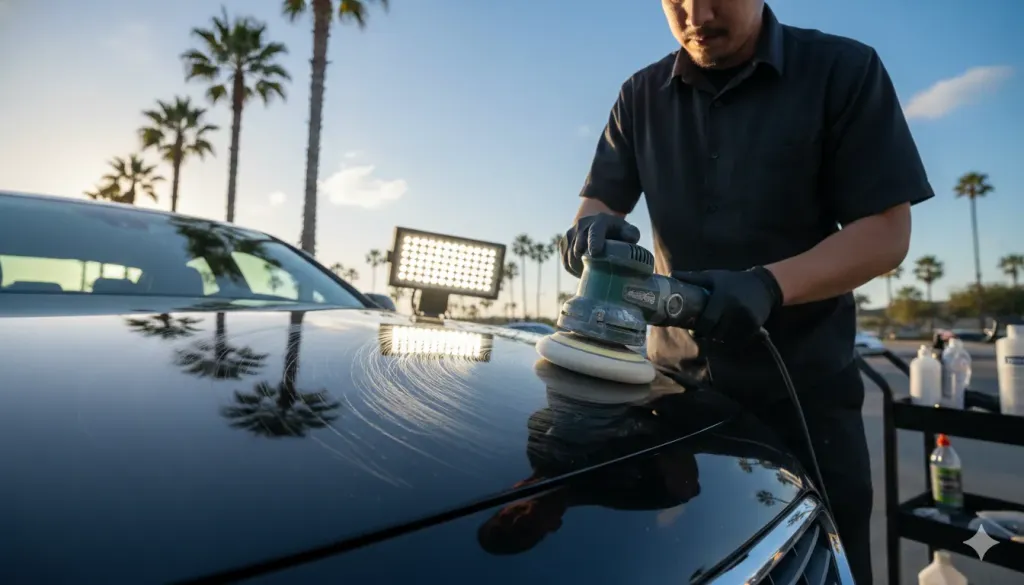
Paint oxidation — UV degradation breaks down paint pigment and the clear coat’s UV inhibitors. Once oxidation sets in, paint appears chalky and loses depth. Professional paint correction can address this, but it costs significantly more than a summer of regular washes. In severe cases, even full exterior detailing won’t restore the original finish without a polishing stage.
Water spot damage — Summer water sources — sprinklers, morning dew, coastal humidity — deposit minerals onto paint as they evaporate. Repeated mineral deposits leave visible water spots that require polishing to remove.
Contamination buildup — Layers of fallout, salt, and organic material create a surface film that becomes progressively harder to remove and increasingly corrosive over time. This is exactly the kind of buildup that a full car detail with clay bar decontamination addresses.
Safe Washing Methods for Summer in San Diego
How you wash your car in summer matters as much as how often you wash it:
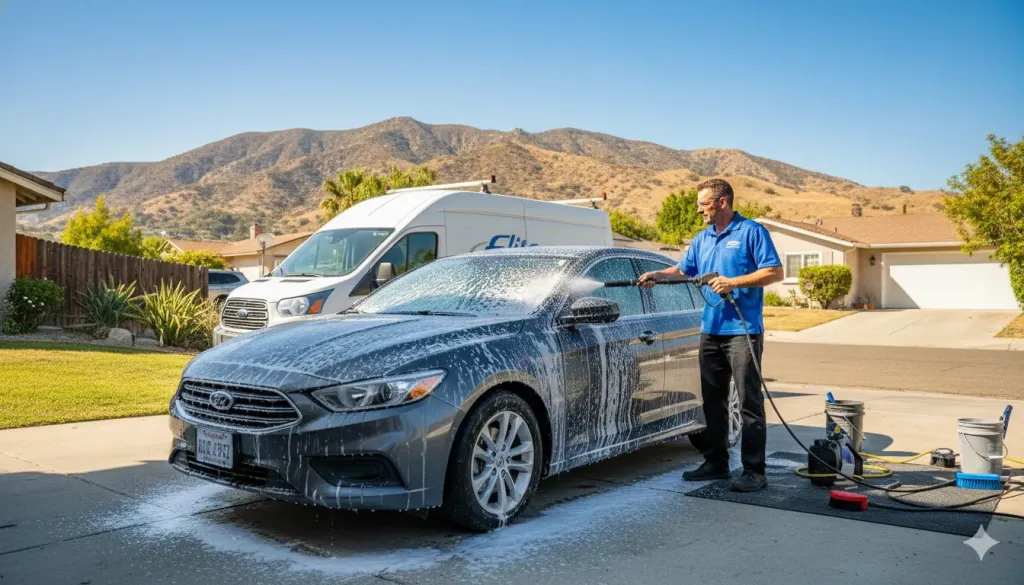
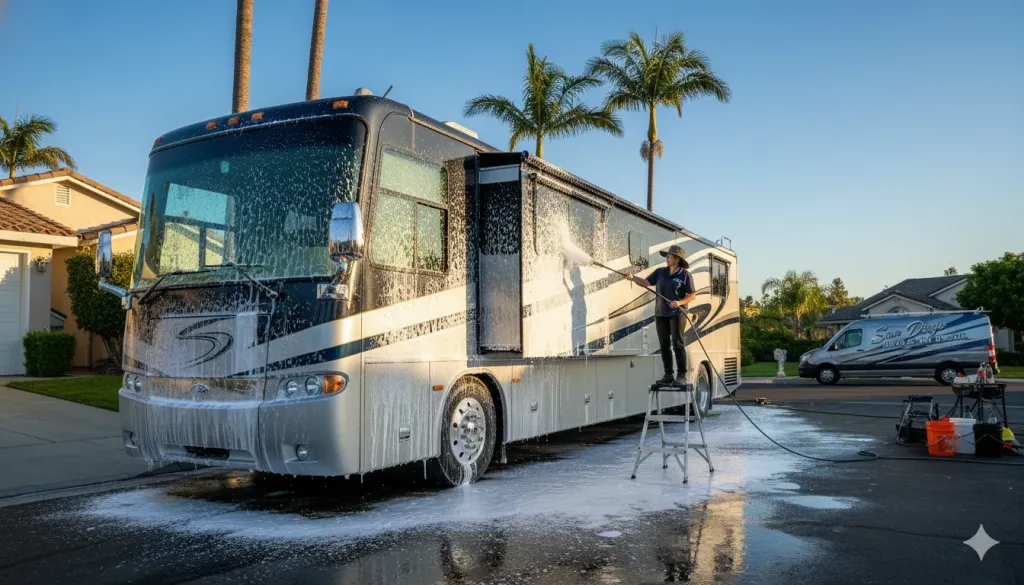
Wash in the morning or in shade. Never wash a hot car or a car in direct sunlight. Heat causes soap to dry before you can rinse it off, leaving water spots and soap residue. Aim for before 9 a.m. in summer. If morning isn’t practical, use a mobile detailing service that brings professional equipment — they’ll select the ideal conditions regardless of when you book.
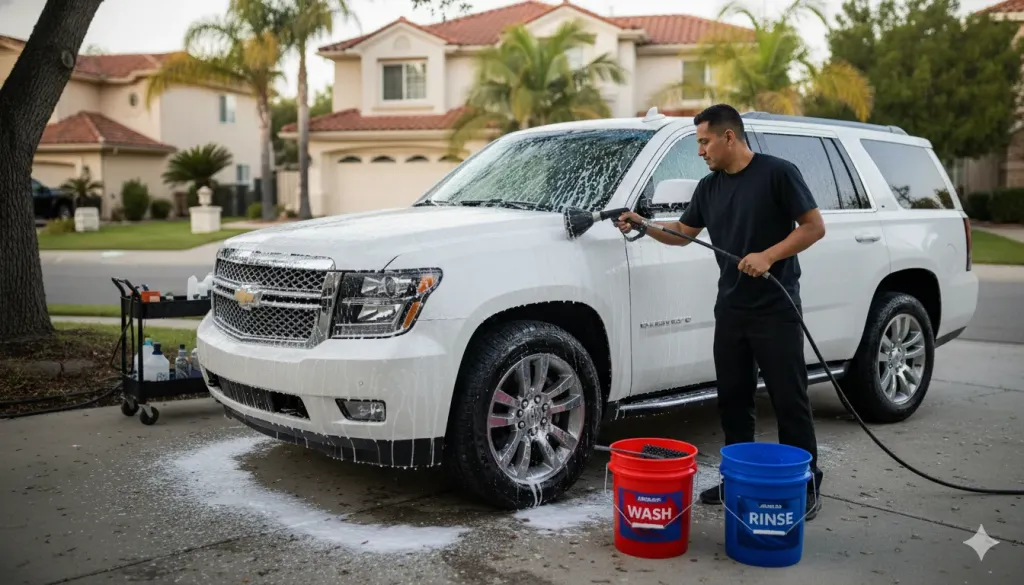
Use the two-bucket wash method. One bucket holds clean soapy water. The other holds clean rinse water for your wash mitt. This method prevents reintroducing grit from your wash mitt back onto the paint — the primary cause of fine scratches during DIY washing.
Use a waterless wash between full washes. Quality waterless wash products lift dust and light contamination safely without water. They’re ideal for quick cleanups between weekly washes, especially for removing light dust deposits from Santa Ana events or coastal salt accumulation.
Use a pH-neutral car shampoo. Dish soap and household cleaners strip existing wax and protective coatings. A dedicated car shampoo preserves your protection layer while cleaning effectively.
Wax and Ceramic Coating: Your Summer Defense Layer
Regular washing removes contamination, but it doesn’t prevent it from bonding in the first place. That’s where protective coatings change the equation.
Wax creates a sacrificial barrier between contaminants and your clear coat. Summer heat accelerates wax degradation — most paste and liquid waxes last only four to eight weeks in San Diego conditions. During summer, plan to reapply wax every six weeks for active protection.
Ceramic coating is a fundamentally different solution. Instead of sitting on top of your paint, ceramic coating bonds chemically to your clear coat at the molecular level — creating a glass-hard, hydrophobic surface that repels water, salt, bird droppings, and UV radiation for two to nine years.
Understanding how ceramic coating hardness ratings work helps you choose the right package. On a ceramic-coated car, contaminants don’t bond as aggressively. Weekly washing becomes faster because there’s less for grime to grip — and the risk of inadvertent paint damage during washing drops significantly.
Our ceramic coating service is the highest-value summer investment for any San Diego car owner who parks outdoors regularly.
Interior Summer Protection: Don’t Overlook It

San Diego summers are brutal on car interiors too. The interior of a car parked in direct sun can reach 150–170°F. At these temperatures:
Dashboard and trim crack, fade, and become brittle without UV protection. Apply a UV-protective interior dressing every four to six weeks in summer.
Leather seats dry out rapidly in low-humidity Santa Ana conditions. Monthly conditioning prevents cracking. Our interior detail services include proper leather conditioning and UV-protective treatments formulated for San Diego’s climate.
Seat fabrics and carpets trap heat and hold odors more aggressively in summer. If your interior smells stale by late summer, an ozone treatment eliminates embedded odors at the source — without masking them with fragrance.
For vehicles with dirty or stained seats, our seat shampooing service and interior steam cleaning are effective ways to reset the interior condition before summer heat bakes odors and stains deeper into the fabric.
How Dennis Auto Details Helps San Diego Cars Survive Summer
Our full detail service covers interior and exterior cleaning, clay bar decontamination, and protective treatments. Combined with ceramic coating, your summer maintenance routine becomes significantly less demanding — and your paint stays protected through July, August, and September without constant intervention.
We serve drivers across all of San Diego County — from Carlsbad and Encinitas on the coast to Escondido and El Cajon inland.
Key Takeaways
- Weekly washing is the minimum during San Diego’s summer peak (July–September)
- Bird droppings can etch clear coat in as little as 2–4 hours in high heat
- Waterless wash products let you clean between full washes quickly and safely
- Never wash in direct sunlight — always use morning light or a shaded area
- Protective coatings like wax and ceramic coating slow contamination bonding significantly
- Interior UV protection is as important as exterior washing in San Diego summers
Schedule Your Summer Detail Before Peak Season
Book your summer detail appointment now before our July and August schedule fills up.
⭐ “I’ve been using Dennis for three summers now. My car always looks clean and they come right to my driveway. Makes keeping up with the San Diego sun so much easier.” — Google Review, Dennis Auto Details San Diego
Call: 858-780-4515
Book Online: dennisautodetails.fieldd.co
Contact Form: dennisautodetails.com/contact-us
Find us on Google Maps: Dennis Auto Details

Something went wrong. Please refresh the page and/or try again.